
How to Wear 90s Style Over 50 the Way You Always Wanted To
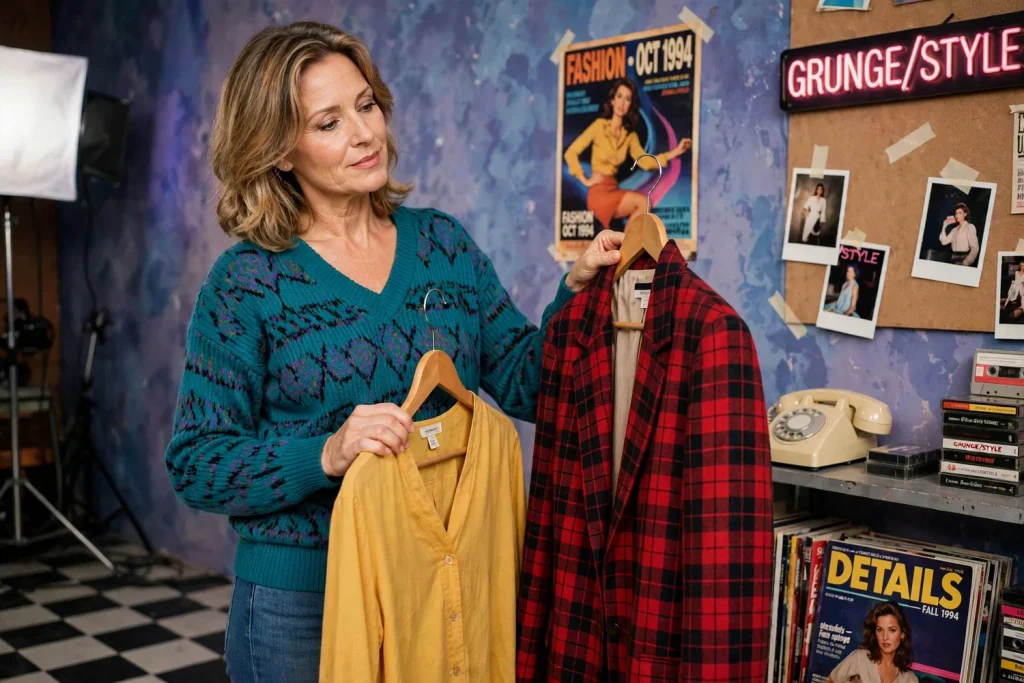
There is something oddly personal about watching 90s fashion come back around. You actually lived it the first time — the slip dresses, straight-leg jeans, leather jackets, loafers, tiny sunglasses, and those quiet minimalist outfits — so pulling those pieces back on today lands very differently than it did thirty years ago.
The upside is that no one over 50 needs to rebuild the decade piece by piece. In truth, the most stylish outfits for women over 50 borrow the decade’s clean lines and easy confidence, then leave behind anything that feels stiff, impractical, or like a costume. You get the mood without the theme party.
Keep the denim, the unfussy tailoring, the rich neutrals, the sleek shoes, and the effortless layering — those were always the strong parts. The shift now is in choosing better fabrics, smarter proportions, and cuts that fit the life you actually live: the work you do, the walking you do, the weekends you have. When a straight jean sits right at your waist and a knit skims instead of clings, the 90s reference reads as modern rather than nostalgic.
Think of this guide as a gentle edit of the decade rather than a full revival. Each section takes one 90s signature — denim, tailoring, slip dresses, shoes, color, proportion — and shows how to wear it now, starting with pieces you may already own and a few smart upgrades worth adding.
Begin With the 90s Silhouette, Skip the Costume
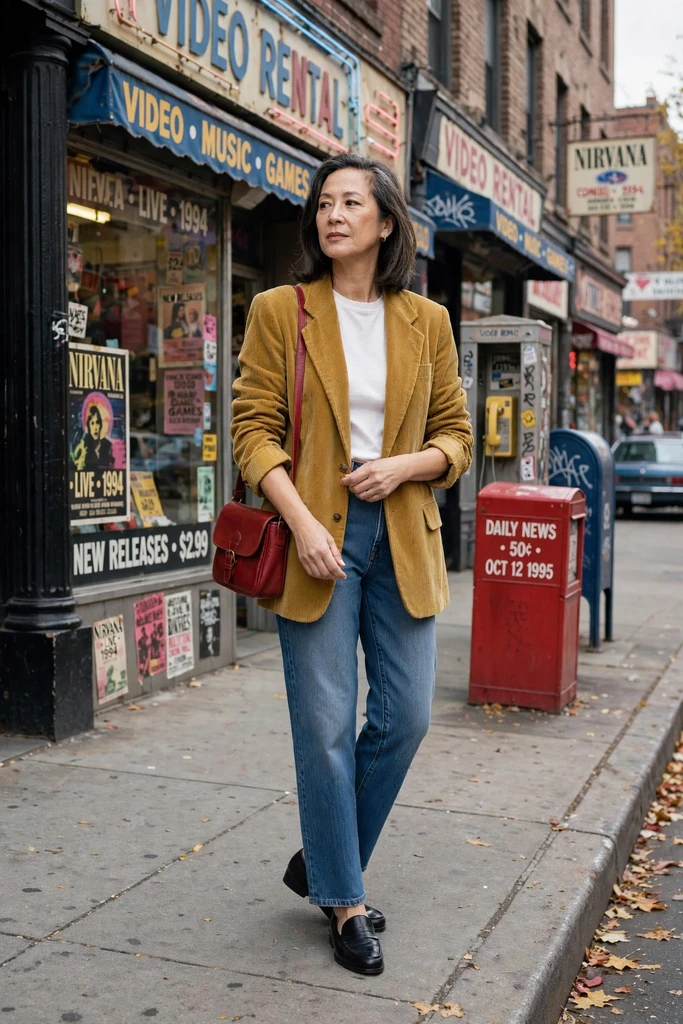
There is a reason the wearable side of 90s fashion keeps coming back: at its best, it was surprisingly simple. Picture straight trousers, fitted knit tops, relaxed jeans, long coats, column dresses, crisp shirts, and clean leather shoes — pieces defined by cut rather than decoration.
That restraint is exactly why the decade translates so well today. A great outfit does not need five competing trends shouting at once. One strong silhouette supported by a few quiet basics reads far more modern — and far more confident.
Take the classic combination: straight-leg jeans, a fine-knit top, and leather loafers. It carries the unmistakable mood of the era without a hint of fancy dress. Layer a long wool coat over the same base and you are suddenly polished enough for dinner.
If you loved the decade the first time, consider this your chance to edit it with the wisdom of experience. Keep the shape, the mood, or the fabric you always adored — and quietly drop the details you never found comfortable, like paper-thin denim or fussy closures.
The little comparison below is a handy way to separate wearable inspiration from literal revival:
The goal is recognition, not reproduction. You want a friend to notice that your outfit looks cool and current — never to wonder which decade you dressed for.
| Leave This Literal Revival Behind | Try the Updated Take Instead |
|---|---|
| All-over grunge, worn head to toe | Straight-leg jeans, an easy tee, and a single leather jacket |
| Ultra-low-rise denim | A mid rise, or a comfortable high rise, in a straight leg |
| A shrunken, tight little cardigan | A fine-knit cardigan that skims with a soft, gentle shape |
| Heavy chunky shoes with every single outfit | Polished loafers, sharp ankle boots, or clean sneakers |
| Stacking several obvious 90s trends at once | One throwback piece paired with thoroughly modern basics |
Let Straight-Leg Jeans Carry the Outfit
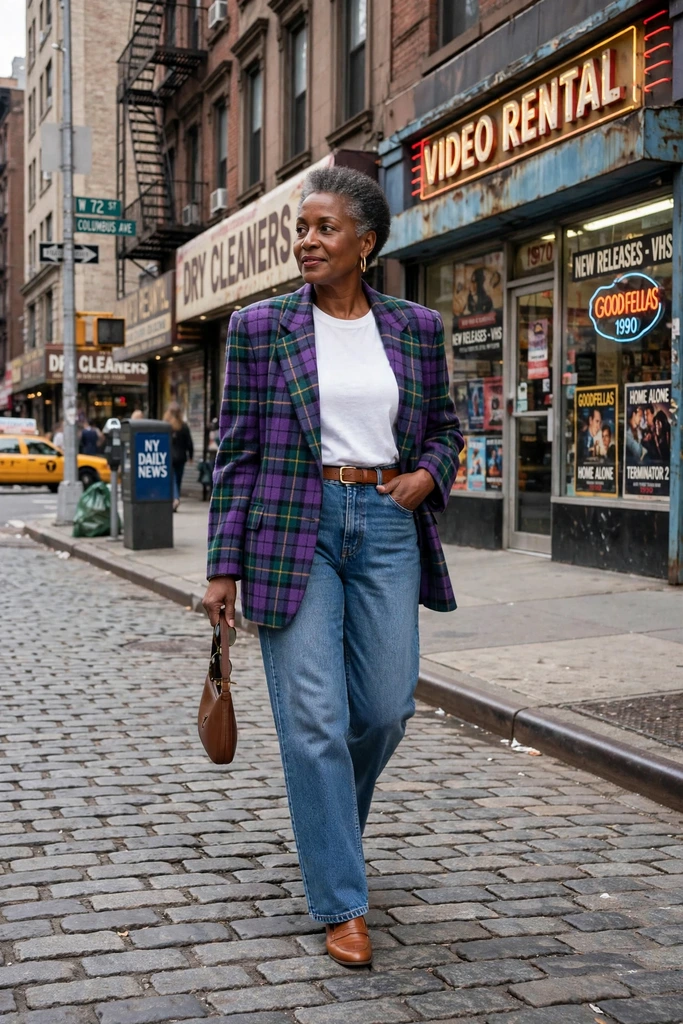
Denim might be the easiest doorway into 90s dressing. The useful part of the revival has nothing to do with shredded knees or exaggerated baggy cuts — it is the return of straighter, calmer shapes that sit cleanly on the body.
A true straight-leg jean draws one smooth line from hip to ankle, which is why it pairs effortlessly with loafers, ankle boots, sneakers, or a low heel. The rest of your outfit stops needing constant adjusting once the denim behaves.
Shop for denim with enough body to hold its shape through a long day, but with enough give that sitting, walking, and traveling stay comfortable. Very thin, high-stretch denim tends to cling in spots where a slightly firmer fabric would skim — a small difference you feel all day.
Fit tip: Judge a jean from the side as well as the front. If the waistband feels right but the fabric collapses or gathers heavily through the upper thigh, a different cut will almost certainly give you a cleaner, more flattering line.
For an easy daytime look, pair straight jeans with a crewneck knit and loafers, then add a long coat when the same combination needs to read more polished. A dark rinse works after hours; a mid-blue wash keeps weekends relaxed.
This pairing also makes a dependable base for casual outfits for women over 50, because every piece is practical enough for errands, lunch dates, travel days, or a relaxed workday without a second thought.
Use Quiet 90s Tailoring to Make Basics Look Deliberate
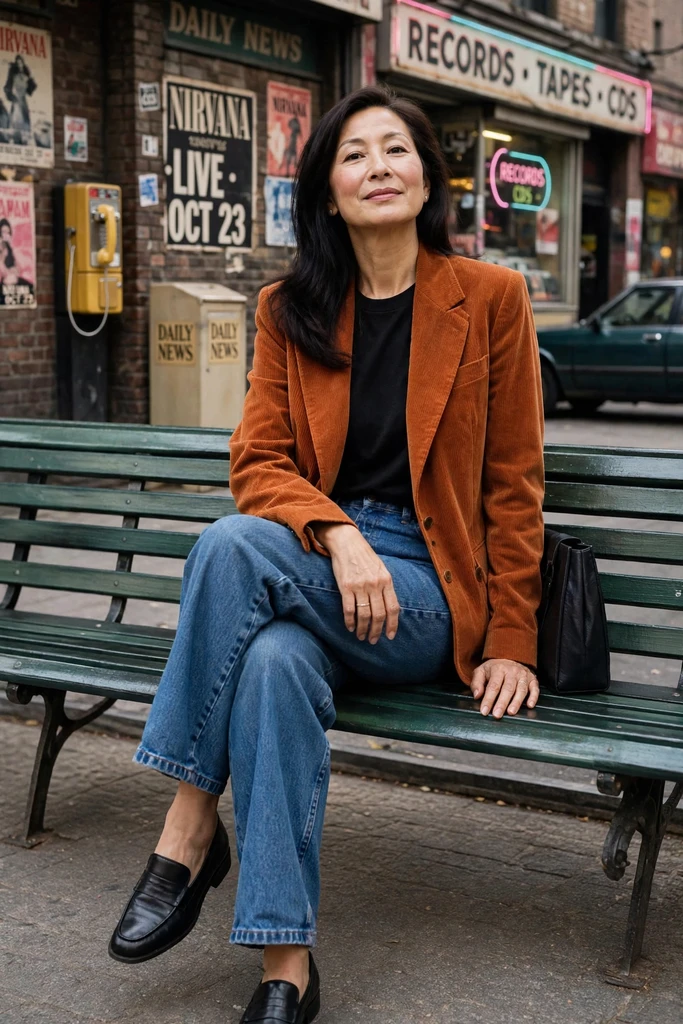
Some of the best 90s style lived in its relaxed tailoring. Jackets were uncomplicated, trousers were clean, and an outfit leaned on shape rather than embellishment to look finished.
You can borrow that idea without hunting down a giant shoulder-padded blazer. A softly structured jacket with comfortable room through the shoulders gives even a plain tee or simple knit instant presence.
The same logic applies to trousers. A flat-front pair that falls smoothly from the hip creates one long, unbroken line — elongating without ever feeling stiff or boardroom-formal.
When you compare two similar pieces in the fitting room, pay attention to how the fabric behaves in motion, not just how it hangs on the rail.
Fabric tip: Texture carries more weight when the outfit itself is simple. Wool blends, cotton poplin, denim, suede, leather, and smooth knits all give a basic outfit depth and interest, no extra accessories required.
And try wearing the blazer open instead of cinching it into a sharply fitted waist. The two vertical front edges draw the eye up and down, which makes the whole look feel relaxed and polished at the same time. The quick reference below shows what to look for in each tailored staple:
| The Item | What Makes It Work | Why It Flatters |
|---|---|---|
| Blazer | Gentle structure with a neat shoulder line | Gives shape without any stiffness |
| Trousers | Fluid cloth with a smooth, flat front | Builds length without clinging |
| White shirt | Cotton with a little natural drape | Reads crisp yet moves with you |
| Knit top | A fine to medium-weight knit | Slides neatly under jackets |
| Long coat | A straight or softly shaped cut | Ties the simplest outfits together |
Wear Slip Dresses Again Without Feeling Exposed
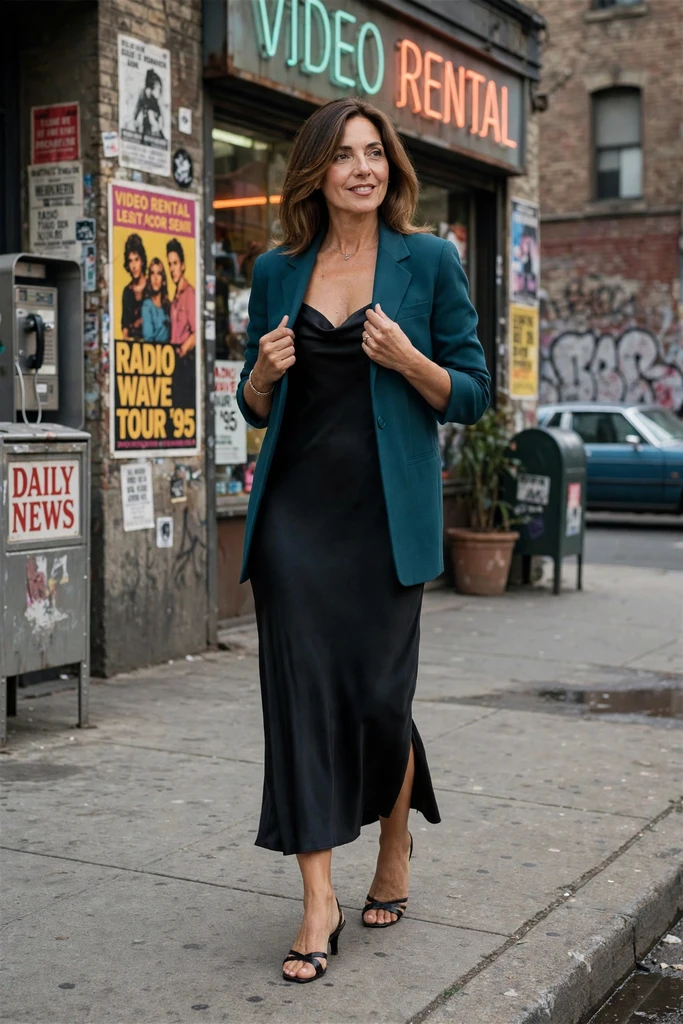
The slip dress is back, but nobody is asking you to wear it exactly as it was styled in 1994. A touch more fabric weight and some thoughtful layering make this shape far easier — and far more enjoyable — to live in.
Start with satin, crepe, or another fluid material that has enough substance to skim the body instead of clinging to it. A midi length opens up more shoe choices and feels naturally right for dinners, events, and holiday dressing.
If spaghetti straps leave you feeling exposed, layer with intent: a soft blazer, a cropped cardigan, a light sweater, or even a fine knit worn underneath the dress. Each option keeps the 90s line while giving you real coverage.
You can also sidestep the lingerie look entirely and choose a slip-inspired dress instead — a wider strap, a whisper of waist shaping, or a slightly higher neckline preserves the clean 90s silhouette while offering noticeably more support.
Keep everything else quiet. A small shoulder bag, understated earrings, and one sleek shoe are usually all the support the dress needs; anything more starts competing with its simplicity.
When the weather cools, trade sandals for ankle boots and add a long wool coat. That single swap gives the dress visual weight and frees it from feeling like a warm-weather-only piece.
Let Loafers, Boots, and Sneakers Be Your 90s Shortcut
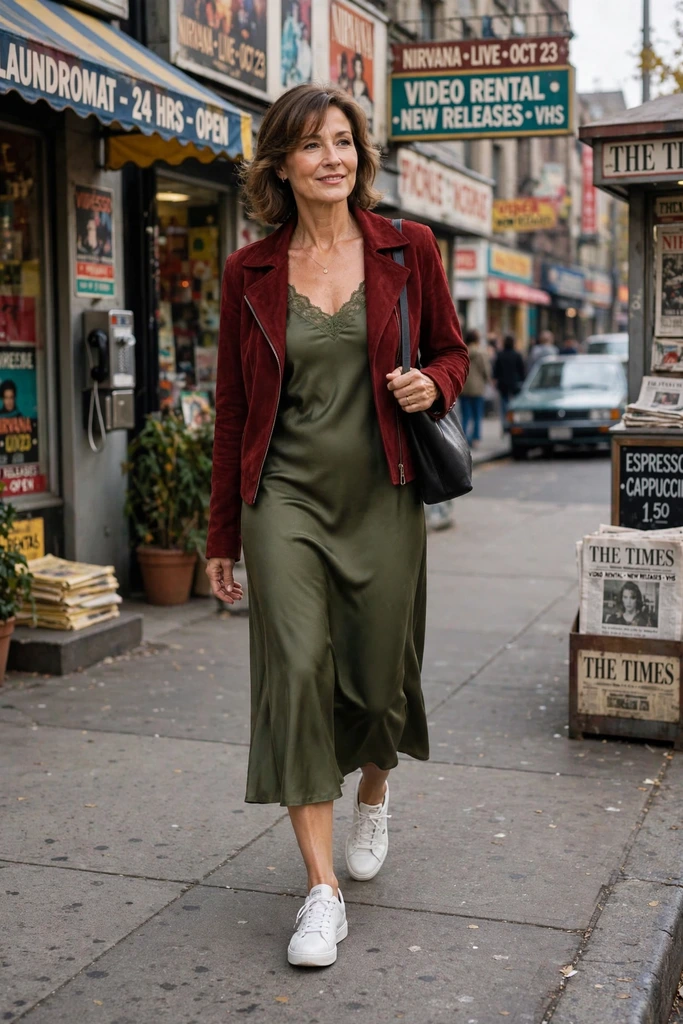
Shoes change the mood of an outfit faster than almost any other single choice — which makes them the perfect shortcut if you like the 90s look but have no interest in rebuilding your whole wardrobe around it.
A loafer brings instant minimalist polish to trousers or jeans. A simple ankle boot sharpens both dresses and denim. A streamlined sneaker keeps those same outfits relaxed and walkable. Three shoes, three entirely different readings of the same closet.
Try these pairings whenever you need a quick starting point:
- Straight-leg jeans and loafers for lunch dates or errands
- Easy fluid trousers with clean sneakers on travel days
- A midi slip dress with sleek ankle boots for dinner out
- A crisp white shirt with jeans and a low block heel for smart-casual plans
Comfort still rules the decision, though. A shoe that looks perfect but makes you dread walking is not earning its place in your closet, however on-trend it may be.
Comfort upgrade: If dead-flat loafers bother your feet, look for a pair with a small heel, a cushioned sole, or a slightly thicker base. You keep the exact same visual effect — the foot just gets a kinder ride.
Keep Your 90s Palette Deep, Calm, and Easy to Mix
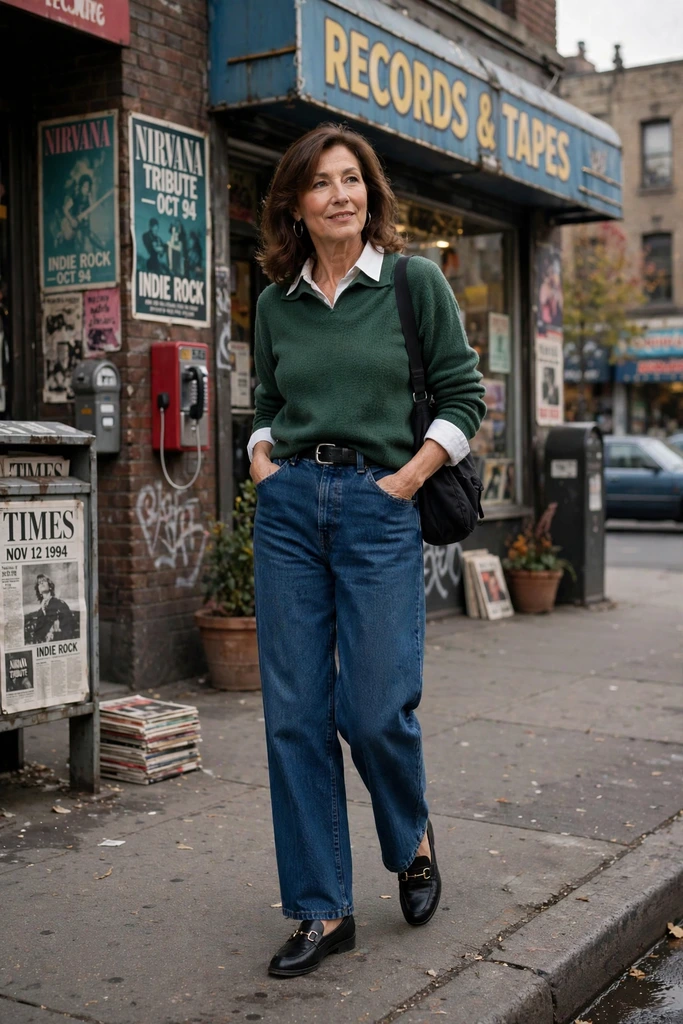
Black, cream, chocolate brown, camel, gray, navy, denim blue, olive, burgundy, and deep red all sit naturally inside a 90s-inspired wardrobe — the decade’s palette was deep, calm, and quietly rich.
Those shades also make getting dressed faster, because nearly everything combines without a second thought. That ease is what helps simple outfits for women over 50 feel deliberate rather than default.
You do not need to wear neutrals head to toe, either. A deep red knit, a forest green bag, or a burgundy loafer can wake up a basic black-and-denim combination in seconds — one strong accent is plenty.
If black worn near your face feels harsh, simply move it lower in the outfit. Try cream, warm beige, soft blue, or another favorite shade on top, and reserve black for trousers, belts, shoes, or bags, where it reads as grounding rather than stark.
The same base outfit can travel through the seasons without losing its 90s feel — just shift the weights and layers. The guide below shows how each base piece adapts:
That kind of limited palette is also what makes a capsule wardrobe over 50 work so well: fewer pieces, far more combinations, and nothing that clashes on a rushed morning.
| Your Base Piece | For Warmer Days | For Cooler Days |
|---|---|---|
| Straight-leg jeans | Cotton tee plus loafers | Fine-knit sweater plus ankle boots |
| Slip-style midi dress | Simple sandals with a light cardigan | Boots with a long wool coat |
| Tailored trousers | Sleeveless knit with flat shoes | Crewneck sweater with loafers |
| White shirt | Rolled sleeves worn with denim | Layered under a blazer |
| Black column skirt | Tee with minimal sandals | Knit top with tall boots |
Balance Your Proportions When You Go Oversized
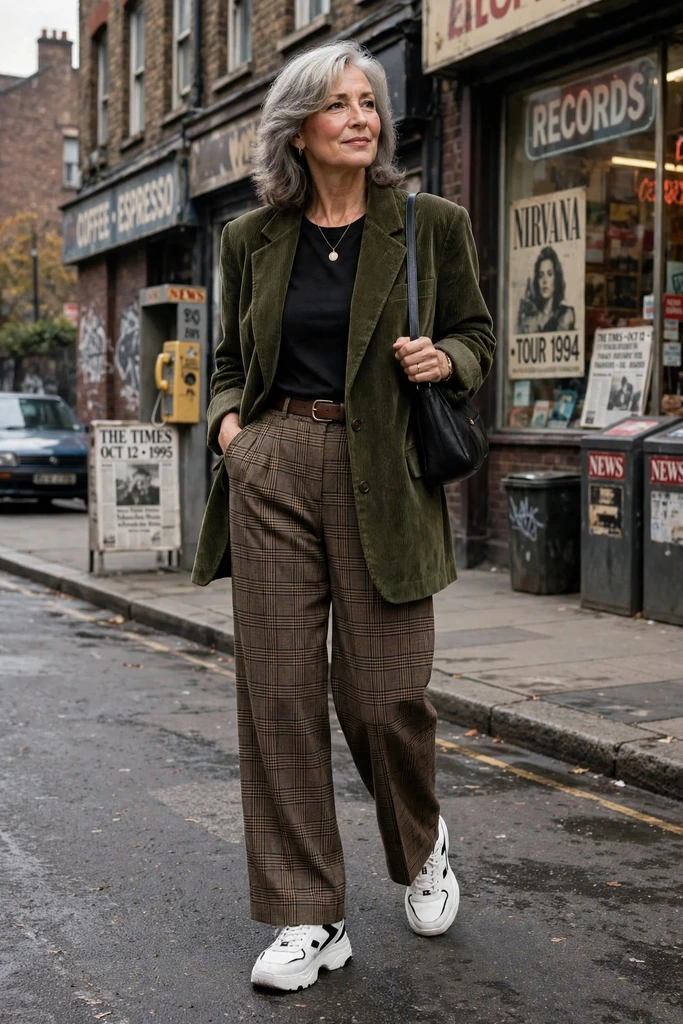
Relaxed 90s shapes can look thoroughly modern — the trick is remembering that oversized does not mean everything oversized at once.
Pair one generous piece with something cleaner and the outfit gains intention. A roomy blazer sits beautifully over straight trousers or a neat jean; wider jeans settle down next to a trimmer knit or shirt.
That contrast is what keeps the look deliberate rather than simply too big — the eye reads balance, not bulk.
A few common styling frustrations have surprisingly easy fixes:
- If an oversized blazer overwhelms your frame, try one with softer shoulders or a slightly shorter length.
- If wide jeans feel bulky at the ankle, choose a shoe that shows a little shape around the foot.
- If a long coat swallows the whole outfit, wear a closer-fitting layer underneath to anchor it.
- If a boxy shirt feels shapeless, add a partial tuck or switch to a fabric with better drape.
Think of these as options, not rules. The right proportion is simply the one that gives you the balance and comfort you want when you catch your own reflection.
Build a 90s Outfit Formula You Can Repeat Endlessly
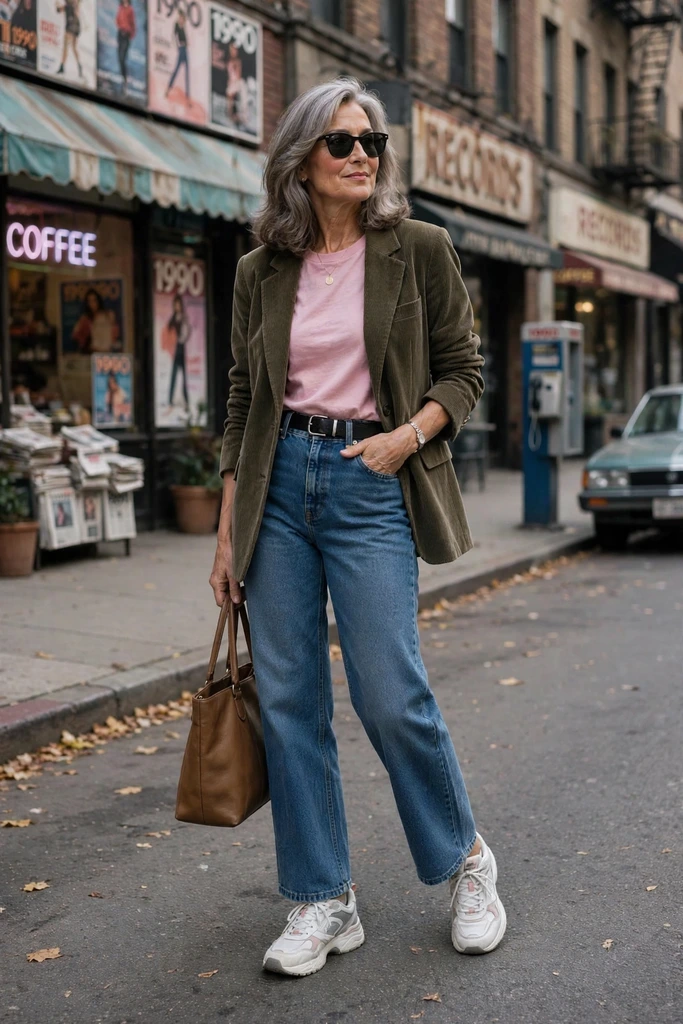
A personal outfit formula takes most of the guesswork out of the morning — and the 90s practically hands you one.
Formula: straight jeans + simple knit or tee + structured outer layer + clean leather shoe
The outer layer can be a blazer, a trench, a leather jacket, or a long coat. The shoe can be a loafer, an ankle boot, or a streamlined sneaker. The skeleton never changes; only the pieces do.
Once your base works, adjust one element at a time. Trade blue denim for black trousers, swap the tee for a fine knit, or exchange loafers for sneakers — small moves, fresh outfits.
That is how the best everyday outfits for women over 50 become personal instead of trend-driven: you repeat a silhouette you trust while changing just enough detail to keep it interesting.
For dinner, reach for black trousers and a silky shell. For errands, jeans and sneakers. For travel, softer trousers and a cardigan that layers easily on the plane.
The formula stays familiar even as the outfit changes — which is precisely why it works on the busiest mornings.
FAQs
Yes — and the key is editing, not copying. Borrow the decade’s silhouettes, fabrics, and color palette instead of recreating a full vintage outfit head to toe. One or two 90s-inspired pieces worn with modern fits will always read current, never costumey.
Straight-leg jeans, long coats, relaxed blazers, simple knit tops, midi dresses, loafers, ankle boots, and clean white shirts are the gentlest entry points. They also blend seamlessly with wardrobe basics you probably already own, so nothing feels like a leap.
Add just one or two 90s-inspired pieces to outfits that already feel current to you. Modern fit, better fabric, and cleaner accessories make the biggest difference — a straight jean with loafers feels fresh next to your favorite knit, while a vintage-looking blazer sharpens up with simple trousers.
Absolutely — the trick is wearing one relaxed piece, not a whole relaxed outfit. Try a roomy blazer with straight trousers, a loose shirt with slimmer jeans, or wide trousers with a neater knit top. Balance does all the work.
Modern versions are usually easier to wear, since today’s fabric, stretch, rise, and construction are designed around comfort. Before buying anything, check your own closet — straight denim, simple black pieces, loafers, blazers, white shirts, and long coats may already be waiting there.
Wear the 90s Better the Second Time Around
The real pleasure of revisiting 90s fashion is that you get to be selective this time around. Keep the clean denim, the strong jackets, the simple dresses, and that relaxed confidence — and leave behind everything that never truly suited you.
Dressing well over 50 was never about stricter rules. It rewards better judgment about fit, fabric, comfort, and proportion — the details that make an outfit feel like yours instead of a trend’s.
Start small: try one 90s-inspired combination this week from pieces already hanging in your closet, then adjust it until it feels unmistakably like you.