
Chasing Everyone’s Approval Ate My Sixties — 8 Regrets I Carry at 76

Handing your decisions to other people quietly steals the finest years you have remaining.
For ten years I folded my calendar, my limits, and my own voice flat in the name of harmony with people who hardly registered what it cost me. At seventy-six, stillness has arrived at last, and that lost decade will not come back.
If your choices today hinge on how they will play in somebody else’s front room, here is the pattern you have to break.
💡 💡 SMART MOVE — The One-Day Pause
Granting a request face-to-face is where the yes reflex always wins. Buy yourself an exit line and use it every time: “Let me check my calendar and get back to you tomorrow.” That single sentence snaps the automatic urge to accommodate.
The Lesson: Endless Compromise Only Raises the Asks

The steepest price of always saying yes is that your own shape gradually fades, until no one recalls that you ever had contours. You finish smothered, quietly, by your own nonstop niceness.
Across my sixties I ran on one draining belief: approval worked like a savings account. I truly thought that stacking up enough deposits of obedience — forever reshaping my days around everyone else — would one day purchase my freedom. I clung to the hope that people would finally spot my silent sacrifices and order me to rest. That fantasy payday never showed up.
Social researchers describe the mechanism plainly: accommodation only locks in a permanent baseline. When you keep rearranging your routine for other people’s comfort, they never register a noble sacrifice owed repayment. Their takeaway: you must not have preferences at all. Agree every Tuesday, refuse once on Thursday, and it lands like treason. No amount of gentle hinting springs a trap you assembled with your own hands. The only exit is to redraw that baseline completely, minus the heap of nervous apologies and invented excuses. Write the sentence down if you must; reading it aloud is easier than improvising it.
Next time a relative treats your yes as automatic, quit massaging their disappointment. Meet their eyes and tell them, “Tuesdays are off the table for me now, though I would love Sunday together.” Deliver the real sentence, seal your lips, and allow the awkward truth to settle over the quiet room.
The Praise Snare
MYTH — Staying agreeable to keep harmony eventually earns respect.
FACT — It really teaches people to treat your limits as optional starting points.
MYTH — Laying out my reasons makes the no land softer.
FACT — It simply gives them ammunition to argue against.
MYTH — Someday they will value everything I gave up.
FACT — Quiet sacrifices usually read as simply how you like things.
Table of Contents
- The Lesson: Endless Compromise Only Raises the Asks
- 1. When I Treated My Calendar Like a Court Case
- 2. The Outfits That Never Left the Closet
- 3. The Money Taps I Left Running for ‘Family’
- How Lending to Family Really Plays Out
- The Payoff You Expect
- The Bill You Actually Get
- 4. All the Words I Swallowed to Keep the Peace
- 5. Years of Holiday Hosting I Did From Guilt
- 6. The Life Decisions I Put to a Family Vote
- 🚪 Taking Your Own Life Back
- 7. The Performance I Staged for the Neighbors
- 8. Pastimes I Faked Enjoying for Years
- Proof From My Own Life That Limits Work
- FAQs
- The Big Unlearning Can Wait a Little Longer
- Start by Auditing Your Week
1. When I Treated My Calendar Like a Court Case
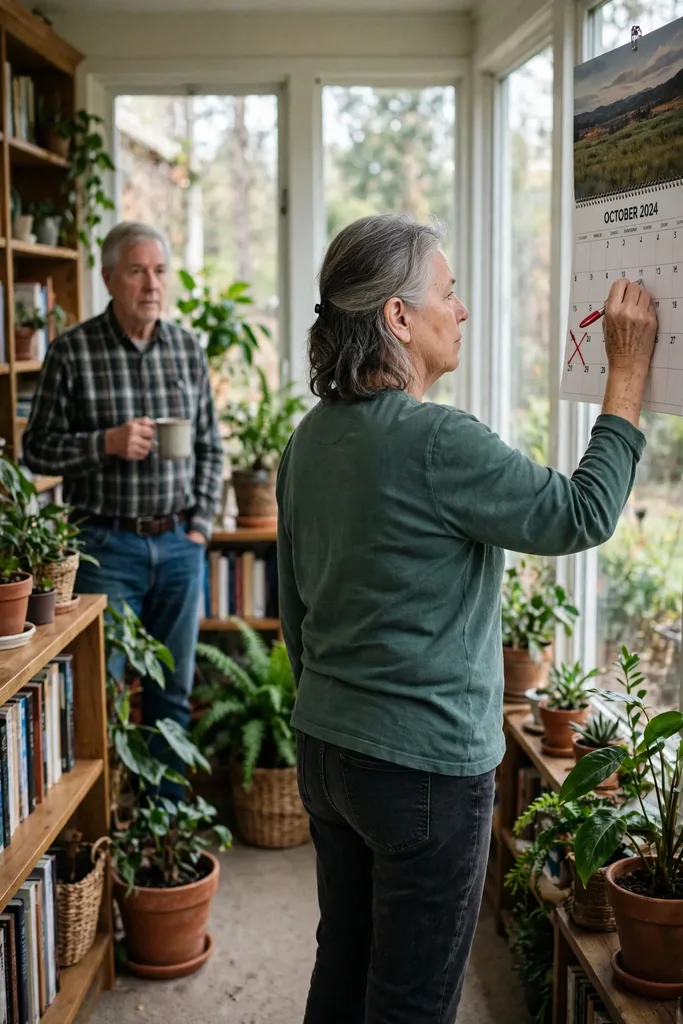
Turn down hosting the Sunday roast and the excuses start pouring out before you can stop them. Nothing costs your hours more than the explanation. Rehearse the line in the mirror once, then test it on a low-stakes ask — the dry cleaner, the telemarketer — before you ever use it on family.
Each rambling defense you deliver simply gives them a menu of problems to debate or try solving on your behalf.
Across my sixties, my free hours went on trial: every no needed exhibits and witnesses, when I should have just poured concrete.
Offer one line — “Sunday does not work; my weekend is taken” — then let the quiet sit. If they press, deliver the identical line again, with zero new information.
⚠️ ⚠️ AVOID THIS — The Sorry-First Reflex
Opening a refusal with a gushing “I feel awful saying this, but…” paints your boundary as a misstep you are begging to be pardoned for.
2. The Outfits That Never Left the Closet

“Isn’t that bright shade a touch much for a quiet family lunch?” I would fixate on the crimson wool coat, hear my sister-in-law’s certain verdict rehearsing itself in my mind, and settle on the inoffensive beige cardigan.
It registers as a tiny trade for harmony. You insist it is only fabric, a minor bargain struck to dodge the wearying weight of one barbed comment.
What that concession truly purchases is a slow, crawling bitterness measured in months and years.
Each morning you dress for another person’s visual ease, you render yourself a little more invisible inside your own story.
The price is no longer recognizing the face in the mirror. You drift through lunch like a ghost rattling around inside your own ribs. The coat hangs untouched in the dark, biding its time for a day you are permitted to fill a room. Quit waiting on a permission slip that does not exist. Today, that red coat leaves the house. Start with one low-risk outing: wear it to the bookstore or the bakery, where nobody’s commentary matters, and notice how your spine straightens.
Low-Stakes Spots to Start Dressing Boldly
3. The Money Taps I Left Running for ‘Family’

We hear endlessly that tossing a little help across a tight month is just what decent parents do.
I swallowed that line for a decade, siphoning my retirement savings to purchase short-lived peace at the Sunday table. The requests never shrank; they simply arrived earlier each month.
Elder-care researchers keep finding the same thing: open-ended support almost never builds independence. That money never bought them steadiness; it funded their resistance to change, and left you uncovered the day a hospital bill arrived.
Draw the line with no apology attached: “Lending money is no longer something I can do.” Your savings have to guard you first — arithmetic is unimpressed by their anger.
How Lending to Family Really Plays Out
A family loan rarely behaves like a real loan. No paperwork, no due date, and asking for repayment feels like declaring war.
The Payoff You Expect
Every lender tells herself a hopeful story about what the money will purchase. Here is the version running in most of our heads.
The Bill You Actually Get
Here is the invoice that actually arrives — and it is itemized in everything but cash.
Family Loans: The Honest Ledger
🕊️ The Return You Dream Of
- peace around the dinner table
- a quick patch over their money trouble
- thankfulness and admiration
- a favor repaid somewhere down the road
💸 The Price You Really Pay
- your own retirement cushion
- larger asks arriving next month
- bitterness the day you finally refuse
- their choices’ fallout, postponed
4. All the Words I Swallowed to Keep the Peace
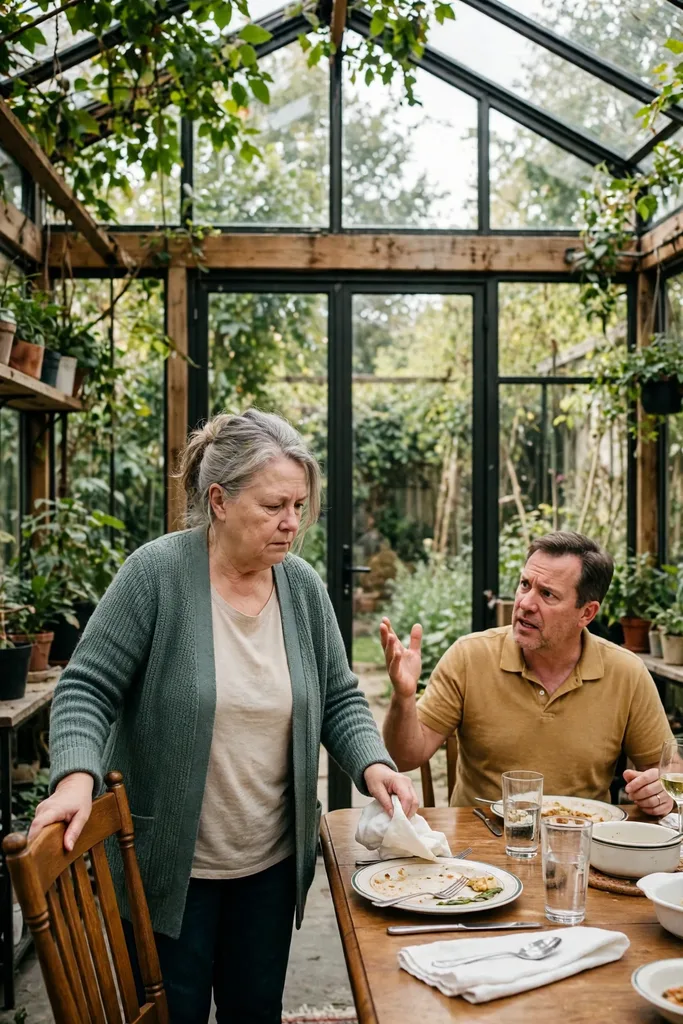
For decades I was convinced that clamping my mouth shut through a relative’s hostile tirade made me the grown-up at the table.
I took silence for the mature response to a dinner-table bully.
I figured my refusal to spar broadcast a calm, dignified high ground that would eventually settle the whole scene.
I had the purchase exactly backwards. To an aggressive person, going quiet never signals maturity — it signals an empty corridor they can keep bellowing down.
The price of playing peacemaker lands squarely in the body. Students of family systems keep reporting the same finding: years of swallowed words measurably damage the body’s resting stress level.
Gulping down your convictions never clears the tension from the room; it simply relocates the fight straight into your nervous system. Treat the clench in your jaw as the alarm bell: when you feel it, that is your cue to speak instead of swallow.
Stop volunteering as the group’s shock absorber. State your piece in a single level sentence, then walk out of the room.
What Clamping Your Jaw Shut Does to Your Body
your pulse surges while you sit still
your mind reruns the argument at 2 a.m.
the exhaustion trails you for days
Bottom line: their pressure ends up stored in your body.
5. Years of Holiday Hosting I Did From Guilt

I ran Thanksgiving for years because I honestly believed that stepping aside would scatter the family — and the blame would land on me.
We hear constantly that shared rituals glue a family together. Upholding them through pure exhaustion achieves the precise opposite.
What I read as love read to my grown children as a standing excuse never to step up.
The chasm between what they expected and how depleted I felt existed entirely because I would not set the baton down. Name one dish each person owns — the rolls, the pie — and let the sign-up list do the rest.
Give the holiday permission to wobble. Tell everyone in September that the apron stays hung up this year. A turkey craving means someone else learns the oven’s dials.
💡 💡 A Cleaner Break
Volunteering even one side dish keeps you on the hook. Cut the cord with the kitchen altogether.
Holiday Priorities, Reordered
Bodily rest first
Unhurried mornings
The feast itself
6. The Life Decisions I Put to a Family Vote

Why do we handle our own lives like corporate mergers that need a board’s sign-off before anything moves?
Picture it: you at the kitchen table, floating a modest downsizing plan, watching your adult children’s expressions for a green light to pick a new address and live a little lighter.
I put off moving somewhere smaller for four straight years because my children clung to their old bedrooms.
Each mention of those punishing stairs drew a chorus of alarm.
The standard counsel is to bring your adult children into every major transition so they feel included as the old home passes on.
I bought it. But running your autonomy past a family vote merely teaches them they hold a permanent veto over your bodily ease and your financial calm.
Selling your house needs no consensus. Framing a life choice as a proposal instead of an announcement invites debate over a decision that was already yours alone. Nobody gets a vote on your square footage but you.
Once your life becomes a group project, they get to park their nostalgia with you — and you end up polishing a vast, tiring shrine to their childhood while your own fuel runs dry.
The pivot comes when you announce the decision outright, obliging them to sit with their own feelings.
Try: “The listing is live — claim whichever boxes are yours,” then hang up.
🚪 Taking Your Own Life Back
The moment you stop auditioning your decisions, the committee dissolves on its own. No one votes on your address, your money, or your mornings but you. The first unconsulted choice feels like rebellion; by the third, it feels like Tuesday.
Start small if the leap feels huge: one unconsulted decision this month — a painter, a trip, a rearranged room — reminds everyone where the authority actually lives.
Four Moves Toward Self-Rule
7. The Performance I Staged for the Neighbors

Forty-five minutes of every Saturday morning went to sweeping an already spotless driveway.
All through my sixties, the street outside served as my silent jury, forever weighing in on my character.
A neighbor’s mower roars to life, and suddenly your book feels like contraband in your hands.
Gloves on, straight into the blazing noon — hand-trimming a dirt strip for neighbors whose surnames escape you.
My Saturdays became theater: grueling yard work performed for people I barely knew.
See the street as set dressing for your real life, never as a tribunal.
An untidy garden is no moral failure; it is evidence you spent the afternoon with a book instead of a trowel. If you genuinely love your roses, tend them for yourself — ten happy minutes beats forty-five resentful ones.
Give the grass permission to grow tall. Hedge inspectors plainly have empty calendars, and you owe them nothing at all.
8. Pastimes I Faked Enjoying for Years

We pour years into pastimes we only pretend to enjoy.
There you are in the clubhouse lot, hands locked on the wheel, bracing for four hours of stiff small talk and topped drives.
You go for one reason only: three other guys count on seeing you there.
Add it up: roughly three hundred Tuesday mornings, gone.
Ask yourself honestly: if the whole thing folded tomorrow, would you feel loss or relief?
Genuine disappointment means keep the tee time. If relief is the real answer, retire the clubs today. Spend one of those reclaimed mornings testing replacements: the driving range alone, a museum, a long walk with a podcast.
Take your Tuesday back for a slow coffee and the crossword.
Proof From My Own Life That Limits Work

Must you really draw a hard line with every demanding soul who crosses your path?
Reviewing my sixties, I have landed on an honest no — this disruptive route simply does not suit everyone.
If being leaned on hard truly energizes you, stepping back will only spark a pointless identity crisis.
Adjust only if the indispensable-martyr role leaves you emptied out rather than genuinely valued.
Why mend a machine that is already running fine?
This pivot belongs to the person who is finally done being universally liked at crushing personal cost. Leave the working parts alone and spend your courage where the friction actually lives.
Take stock of whose voice steers your days right now. Then open your diary and identify precisely who gains from your decades without fences — and delete every commitment that exists to keep another person comfortable.
FAQs
The Big Unlearning Can Wait a Little Longer
Today is not the day you must tear down a lifetime of people-pleasing.
The neighbors can keep talking while you muster the courage to tell your sister the holiday dinner is off your plate this year.
Take one small plot of ground this week. The remaining repairs can wait until your energy returns.
That quiet is yours by right.
A Small First Step
Open the coming week’s calendar and delete a single engagement you took on from guilt alone.
Start by Auditing Your Week
That is the entire assignment: one week, one honest look, one cancellation. Small removals compound, month after month, into a life that finally feels like your own.