
I Gave Up My Career at 62 to Live Near My Grandkids — 9 Surprises Nobody Mentioned

2,400 miles.
Those miles carried me out of quiet Arizona desert mornings and onto a busy little street near my grandkids. I had never lived more than an hour from my own mother; suddenly I was the one making the pilgrimage.
Almost every grandparent who relocates falls into the same trap: believing nearness guarantees closeness. I pictured nightly sitcom dinners and endless pop-ins, never stopping to realize I was wedging myself into a household that hummed along perfectly well before I arrived.
What follows is the collision I never saw coming — and the lessons it taught me.
Table of Contents
- Recognize the Moving-Closer Honeymoon for What It Is
- 1. Realize You Stepped Into Their World, Not the Other Way Around
- 2. Keep Your Parenting Opinions to Yourself
- 3. Never Show Up Without Warning
- 4. Put Firm Childcare Limits in Place
- 5. Cultivate a Full Life Beyond the Family
- 6. Be There When It Truly Counts
- How I Sort Real Emergencies From Everyday Noise
- When I Go Ahead
- When I Stay Out
- 7. Let the Old Life Go — With Grief
- 8. Rethink Your Call-and-Text Habits
- 9. Sit Down for the Reset Talk
- Take Stock of Where You Two Stand
- Spend a Weekend Entirely on Yourself
- FAQs
- Put One Local Outing on This Week's Calendar
- Review Your Boundaries This Week
Recognize the Moving-Closer Honeymoon for What It Is

Three Saturdays after the move, I found myself at their table while roast chicken scented the whole house and the kids pulled me to the window to show off their favorite parks. Nobody could stop smiling — least of all me. The grandkids had appointed themselves my tour guides, and they took the job seriously.
That glow is a welcome tour — not real life. Ninety days of adrenaline and good manners will disguise how awkward the logistics really are — until month four. Then the novelty wears off, work takes over their evenings again, the big dinners fade into ordinary weekends, and you discover what it actually costs to merge two grown-up lives.
Brace for that dip to sting like rejection — it stung me. Then flip the frame: no more fanfare means no more guest treatment. You are family now, and family is gloriously ordinary. Ordinary, I learned, is the highest compliment a family can pay you.
1. Realize You Stepped Into Their World, Not the Other Way Around

I crossed the country to lighten their load — so why did I constantly feel like furniture in the way? My boxes were barely unpacked and already the daily welcome carried a guarded edge. The hard truth: I had treated the move like a corporate merger.
Nobody joined my life — I parachuted into a system that ran flawlessly without me. A decade of mornings, weekends, and chore charts predated my arrival — a machine everyone was quietly proud of. I kept waiting for someone to hand me the manual; it never came.
Dropping into their neighborhood on a daily basis knocked that balance sideways, however kindly I meant it. Their days were already spoken for before my truck pulled in — and squeezing myself into their routines manufactured friction where I had pictured pure relief.
Settling in demands patience and a deliberate decision to hang back. I spent the early months as an observer of their household — no assigned role, no claimed territory — until a genuine invitation gave me one.
Ask your daughter to share the family calendar instead of guessing the week’s shape. Reading pickup times ahead beats reading the room every evening.
💡 Try This: When the thought is small, text it instead of placing a call.
⚠️ A MISTAKE I MADE
Assuming You Will Fit In Overnight
My kids’ routines were years in the making; demanding a seat at their table every night in week one earned me eye-rolls, not warmth.
2. Keep Your Parenting Opinions to Yourself

Everyone calls it a golden second chance at parenting. It is nothing of the sort — and treating it like one will quietly push your own kids away from you. The restraint felt unnatural for months, like holding my breath underwater.
It is Tuesday at their place — past eight, the fridge untouched, and small feet thundering circles through the living room. Every parenting instinct I ever earned started shouting about the bedtime catastrophe ahead.
Jumping in feels like a rescue mission. What they actually hear is a single verdict: you think we are failing.
Correct the schedule and tonight turns frosty — while next week’s invitation mysteriously evaporates. These days my power is in staying quiet; my role is cheerful background extra. So I zip it and volunteer for plate duty instead.
I now keep a private list of topics that are permanently off-limits for my commentary:
- How much TV they watch
- How many sweets they eat
- Their actual bedtime
- What they wear outside
3. Never Show Up Without Warning
Nothing torches your welcome faster than a move costing zero dollars, zero planning, and five flat minutes.
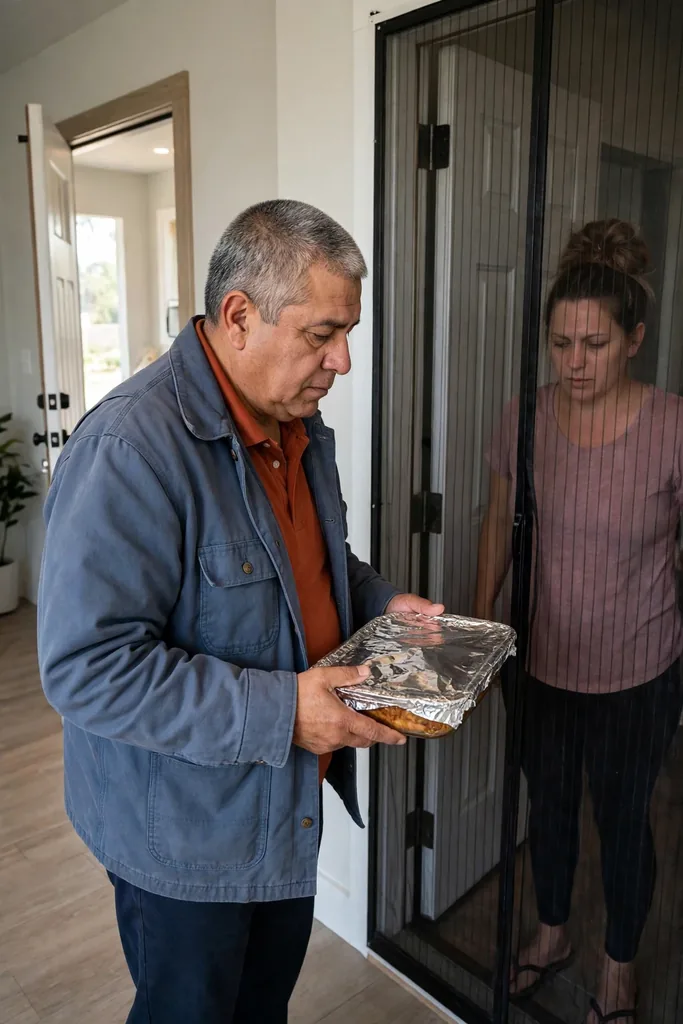
Up the driveway you go, casserole steaming, braced for hugs and gratitude and a little shared warmth. Instead: blinds snapping shut, a locked door, a shushed dog, and quiet stretching past comfortable.
You and they just watched two completely different movies.
In your mind you are the hero with dinner, delivering comfort to an exhausted midweek household. In theirs you are a pop quiz on their only quiet hour — grabbing their last energy and proving you don’t respect their space.
Consider the heads-up text non-negotiable — the toll for nearby living that keeps you from menacing their calm. It took three awkward porch standoffs before that lesson truly sank in.
Their home deserves the same courtesy you would extend to any busy friend. Always warn them well ahead of time, then send a note like: I made too much soup — I will leave some by your door around five, no need to answer. A no today just means more soup for your own fridge.
My doorstep rule: text a photo of the dish on the mat, then drive off — no knock, no lingering. The food arrives as a gift instead of an inspection.
💡 Remember This: That spare key is for true emergencies only — house fire, burst pipe, nothing less.
📋 Rate How You Drop By
4. Put Firm Childcare Limits in Place

I once believed an open calendar was the grand prize of this move. Sunrise on the sofa awaiting small footsteps at the door — that picture, I told myself, proved my generosity.
Round-the-clock availability earned no gratitude.
Instead you become the free, full-time backup sitter — apparently with nothing better to do — as bitterness quietly builds at both ends. Draw the lines before they draw themselves: lock in your days, lock in your hours, and require advance warning. That structure protects your stamina and the relationship alike. Saying it out loud felt rude at first; saying nothing had felt worse.
My Childcare Ground Rules, Summarized
📅 Schedule
Same days every week
⏰ Heads-up
A full day minimum
🚨 Real emergencies
Call anytime, day or night
💰 Money
A clear spending cap
5. Cultivate a Full Life Beyond the Family

Hand your kids the job of running your social life and your company turns from a gift into a chore — for everyone.
Hand them the keys to your week and every call advertises how empty your days are. That kind of guilt never pulls two people together; it trains them to hold you at arm’s length to defend their time.
One exception: that first month, while boxes tower and street names blur, borrowing their weekend plans is fair game.
The next chapter is yours alone to write. Take up hiking with a neighborhood crew, shelve books at the library, or adopt a corner table at a distant café. Absence sharpens fondness — pulling back a little is what makes them eager for your company. Walk into Sunday dinner armed with new friends and fresh stories, and you turn into the guest everyone hopes will come — not the duty they endure. My calendar filled faster than I expected, and the Sunday dinners got better, not worse.
6. Be There When It Truly Counts

A household with small kids and a four-day stomach bug has no logistics left. With deadlines piling onto zero sleep, their careful routine simply implodes.
Only a genuine crisis earns you permission to blur the lines and take on the unseen chores. Skip the ‘what do you need’ text — putting them in charge of you only grows their to-do list. Leave a casserole by the door, take the wired dog around the block, and cover school pickup without announcing yourself.
The price: your calm days on hold, swapped for a frantic burst of housework.
Over the next year, that investment matures into rock-solid trust. Attack the laundry pile unasked, then retreat behind your normal boundaries when the storm passes — proving your help carries no hidden price. That is how they start seeing you as backup instead of an intruder. Nobody keeps score, but everybody remembers.
I keep a crisis kit ready: two freezer meals, the pediatrician’s number on my fridge, a spare car seat installed. When the midnight call comes, I move instead of scrambling.
My Jump-In / Hold-Off Rules
✓ Go Ahead
- Health scares
- A lost job
- Childcare they asked for
- Dinners we planned ahead
✕ Stay Out
- Clashes about how they discipline
- A messy house
- Advice nobody asked for
- Plain old boredom
How I Sort Real Emergencies From Everyday Noise
When I Go Ahead
- Health scares
- A lost job
- Childcare they asked for
- Dinners we planned ahead
When I Stay Out
- Clashes about how they discipline
- A messy house
- Advice nobody asked for
- Plain old boredom
7. Let the Old Life Go — With Grief

One gray afternoon I admitted to myself, “I would give anything for the familiar aisles of my old supermarket some days — grandkids and all.”
Researchers say thirty boxed-up years spend your social capital in a single withdrawal. I purchased front-row seats to family life — and forfeited the neighbor who collected my post and the physician who knew my chart cold.
Grief ambushes you at the oddest moments. Give yourself full permission to miss that comfortable old life — otherwise you will hand your kids an impossible invoice: filling a void left by friendships they can never replace. Mourning what you left is not disloyalty to what you chose.
📈 How the Feelings Unfold After the Move
The emotional arc most relocated grandparents describe.
8. Rethink Your Call-and-Text Habits

For months I rang my daughter every afternoon for a casual check-in, honestly baffled by the breathless irritation in her hello. Therapists have a name for this friction: to a working twenty- or thirty-something, a surprise call means emergency, not conversation.
Cling to the daily call and your name on her screen becomes a small spike of dread.
So I switched to their channel: text, and mostly pictures. My opener became a photo with the caption — saw the first robin of spring today, hope things are calm on your end, no need to answer. Once answering felt optional, they started writing first. Small, frequent, and pressure-free — that became my whole communication philosophy.
9. Sit Down for the Reset Talk

Sunday night finds you alone at their sink, scrubbing counters while the house goes silent around you and your grown child herds the kids to bed. The meal sat heavy, the goodbyes will be painfully awkward, and weeks of unspoken resentment are about to boil over — all because you were only trying to help.
You have become a crowd around the very people you moved your whole life to support. The round-the-clock togetherness suffocates more than it supports — and they feel it most.
Be straight with yourself: who calls time on your visits? Take their yawns about early mornings as your exit cue — lingering past that means overstaying in spirit.
Most grown kids are too guilt-ridden to admit feeling smothered. Instead they go quiet with frustration, hoping you will read the room before they have to play the villain. They love you; that is precisely why they cannot say it.
De-escalation duty falls to you. Walk away from the sink and get ready to say the one sentence that lets the air out of the room.
Say it like this, then stop: “I have been around too much — your household’s rhythm matters more to me than my hovering.” Then go quiet and let the silence work. No gushing apology, no fishing for reassurance, no defense of your intentions.
Rehearse the sentence aloud beforehand, and choose a calm Saturday — never the night something boiled over. The same words land as love at peace and as an attack mid-crisis.
Take Stock of Where You Two Stand

Am I carrying this whole relationship on my back? Answering that honestly means parking your ego and scrolling back through your texts.
Audit who starts the contact in a typical week. If every call and every Saturday plan originates with you, you have quietly become a recurring obligation, not a bright spot. Chances are they answer from duty, not delight. Duty answers the phone; delight plans the next visit.
Stop pulling, let the rope go slack, and wait.
True emergencies get a pass — a newborn, a health scare — moments when their bandwidth hits zero and your only job is to appear. Beyond those fires, grown-up bonds run on reciprocity. Vanish for a fortnight and let them notice the silence, then wait for them to suggest Sunday dinner.
Spend a Weekend Entirely on Yourself

Two-week audit: glance at your calendar and tally the plans that don’t involve your kids. A blank calendar means you are secretly hoping they will invent a life for you.
No family should have to carry that much pressure.
This Friday, try the boldest move in the book: announce you are booked solid all weekend with your own plans — and keep that promise to yourself.
Fill the weekend your way: a state-park day trip, a noisy food festival, a slow wander through a historic town — no kids required. Let the thriving be visible. When they witness you building a full life that never orbits their living room, the entire household exhales. Independence, it turns out, is the most attractive thing a grandparent can wear.
FAQs
Put One Local Outing on This Week’s Calendar
The move pays off once the city feels like yours.
Stop hovering by the phone hoping for a dinner invite — go discover the neighborhood yourself. Sign up for a class, find your own coffee-shop corner, and shape days that belong to you alone. Start small — one class, one corner table, one new face.
Best of all, the grandkids get a new world to visit: yours.
Review Your Boundaries This Week
Glance at the pop-in checklist above, then make one vow for next time: always text first.