
Italian Style Over 50 for Real Life: Dress Well Beyond the Vacation
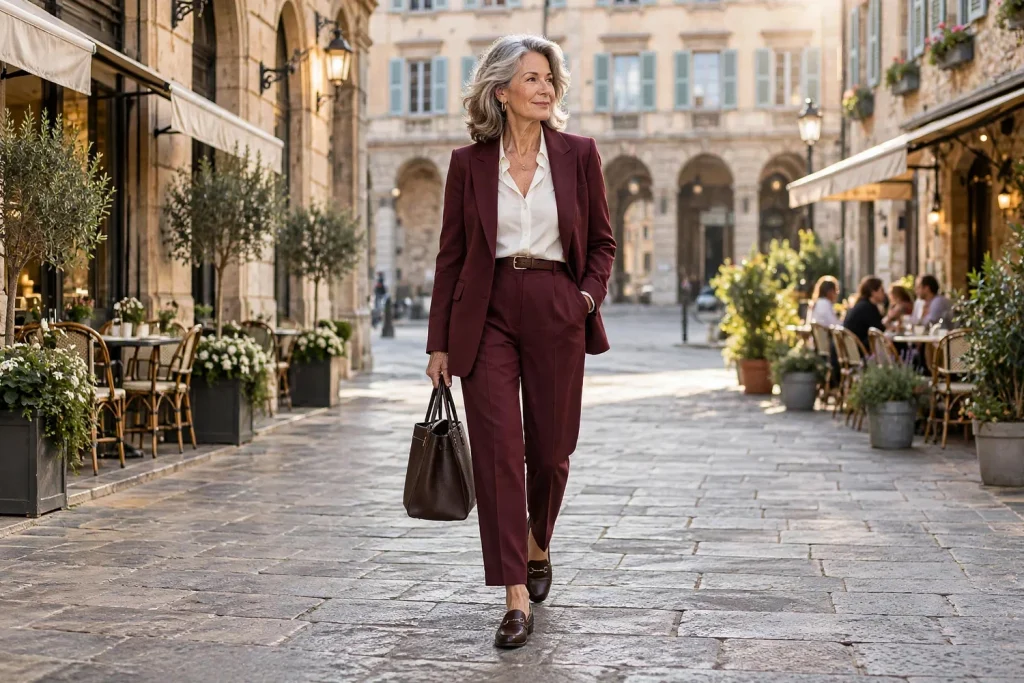
Italian-inspired dressing looks effortlessly chic in photographs, yet it can feel surprisingly tricky to recreate on a regular weekday. A flowing linen dress in Rome belongs to a fantasy version of life. The real test comes on an ordinary Tuesday: school runs, grocery shopping, a long workday, coffee with friends, or an afternoon of errands. For women over fifty, the struggle is almost never a shortage of clothes. It is usually the quieter challenge of making familiar pieces feel more deliberate, without slipping into overdressed, uncomfortable, or costume-like territory. That is exactly where Italian-inspired dressing over 50 earns its place in your wardrobe thinking. The true lesson is not about copying a particular outfit from a street-style photo. It is about understanding how relaxed tailoring, honest fabrics, controlled color, minimal accessories, and confident proportions can lift everyday clothes into something genuinely polished.
The appeal of this style is that it rewards editing rather than shopping. Most of us already own the raw ingredients: good jeans, a shirt that fits well, a favorite blazer, a knit that drapes nicely. Italian dressing teaches you to combine those pieces with intention, so that ten items can produce twenty outfits instead of ten forgettable ones. Over the next sections, we will walk through restraint, relaxed tailoring, proportion, fabric and color, quiet accessories, the rules worth dropping, a repeatable outfit formula, and finally how to make the whole approach unmistakably yours.
Start With Restraint: The Real Secret of Italian Style Over 50
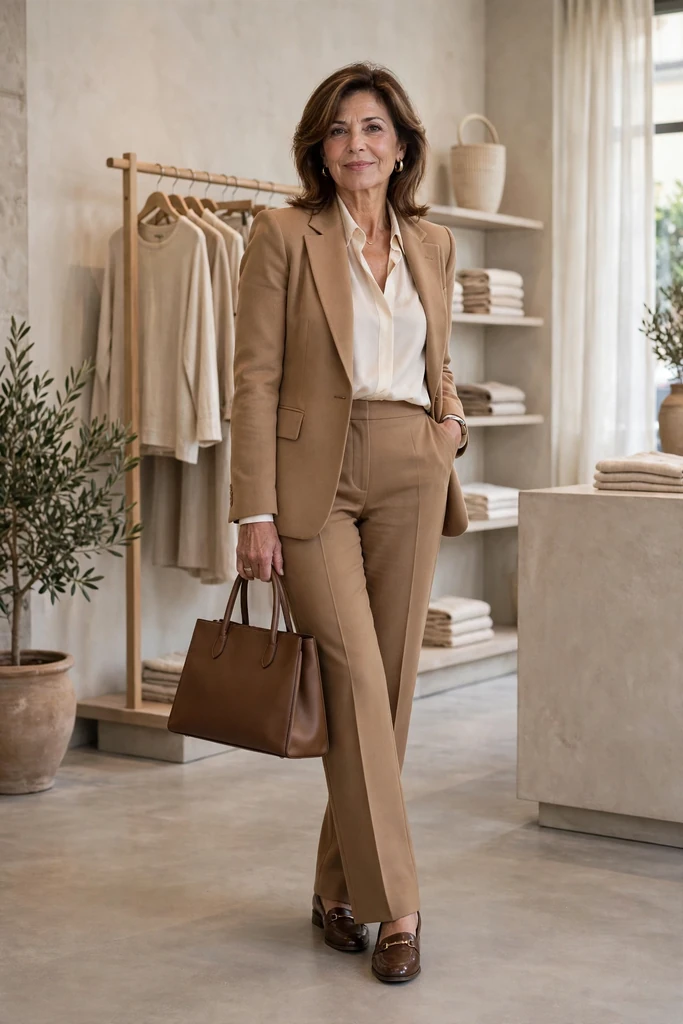
When people picture Italian dressing, the mind fills quickly with beautiful coats, buttery leather bags, classic loafers, silk scarves, and sharp tailored trousers. Every one of those pieces has its place, but the deeper principle beneath them is far simpler: restraint. An outfit reads as polished when each piece clearly earns its spot, rather than when five lovely things fight for the same square inch. You do not need a handful of statement items all shouting at once. A better starting point is the clothing you already reach for week after week. Straight trousers, dark jeans, a crisp shirt, a fine knit top, a blazer, or an uncomplicated midi dress can all carry the look. The transformation comes from the pairing, not the purchase. Rather than forcing every element of the outfit to be interesting, pick a single focal point. Perhaps it is a rich camel jacket, a pair of sculptural earrings, red flats, or one beautiful leather bag. Everything else can afford to be quiet. This mindset pays off especially well when dressing over 50, because it strips the noise out of the wardrobe. You can build genuinely stylish outfits for women over 50 from fairly ordinary clothes, as long as the fit, the texture, and the proportions look considered. Try laying tomorrow’s outfit on the bed before you get dressed; the calm or chaos of it is usually obvious at a glance.
Before you head out the door, step back and take in the whole outfit instead of judging each piece on its own. If three items are all demanding attention at once, soften or remove one of them. A small edit here is usually the difference between an outfit that feels busy and one that feels serene.
Relaxed Tailoring That Makes Everyday Outfits Look Deliberate
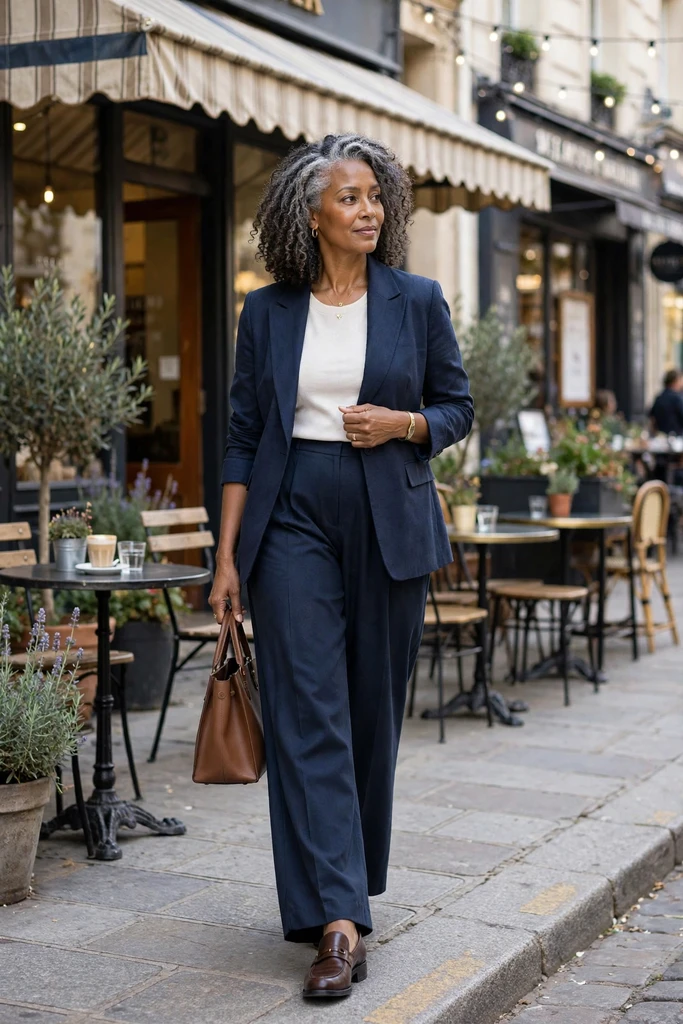
Italian-inspired dressing almost never relies on clothes being tight. Its shape comes from structure, drape, and proportion working together. A softly tailored blazer thrown over a plain knit can instantly give jeans more authority. Fluid trousers can look polished without cinching the waist or clinging to the thighs. The aim is to let the clothing hint at the body’s shape instead of squeezing every curve into the spotlight. When it comes to trousers, look for a clean waistband, generous room through the hip, and a leg that falls in one smooth line. Straight cuts, gently tapered legs, and relaxed wide-leg silhouettes can all work, depending on your own proportions. A jacket deserves the same thought: enough internal structure to hold its line, without turning stiff or corporate. Even a hint of shoulder definition can make a simple T-shirt or knit look far more finished. The checklist below is a handy reference when you are auditing pieces you already own, so you can spot which ones are doing the quiet work of good tailoring and which ones might need a tailor’s touch.
When an outfit reads as slightly untidy, examine the shoulders, the trouser length, and the sleeve length before doubting your figure. These small fit corrections usually matter more than swapping the whole outfit out.
Play With Proportion Instead of Chasing Slimness
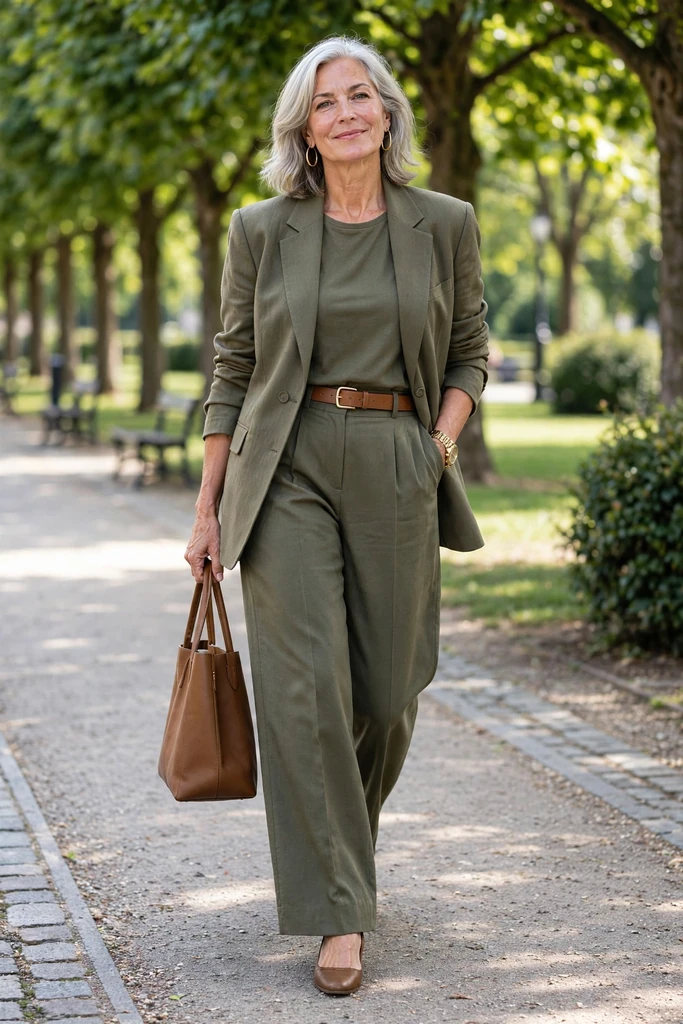
One reason Italian-inspired outfits project such quiet confidence is that volume gets balanced rather than erased. A generous shirt can look beautiful with straighter trousers. Wide-leg pants turn polished next to a shorter knit or a neatly tucked blouse. When both the top and bottom are roomy, adding one small moment of structure keeps everything in check. You might reveal the waistband, push your sleeves to the forearm, wear the jacket open, or pick a more defined shoe. Small gestures like these tell the eye exactly where to find shape. Here are a few dependable pairings to try:
- With wide-leg trousers, choose a fitted knit, a waist-length jacket, or a tucked-in shirt.
- With an oversized button-down, keep the lower half slimmer or let part of the waistband show.
- With a long midi skirt, pick a top that finishes nearer the waist instead of falling halfway down the hips.
- With a relaxed blazer, keep the layers underneath relatively uncomplicated.
None of these are commandments about what you are permitted to wear. They are simply tools for directing where the eye lands on shape. That is what makes simple outfits for women over 50 feel intentional instead of oversized or unfinished. Over time, proportion becomes instinct: you will start sensing when an outfit needs one more structured element and when it is already done.
A half tuck or an open jacket builds gentle definition without any tight waistband or body-hugging top. It is the easiest way to look shaped while staying completely comfortable all day.
Natural Fabrics and Rich Neutrals That Elevate Simple Clothes
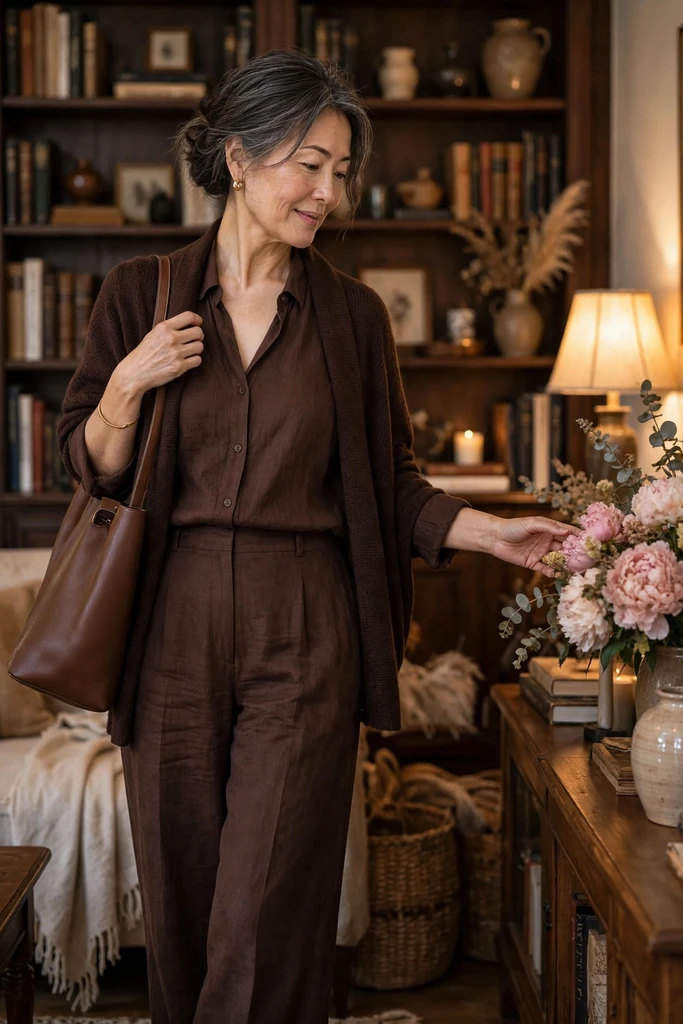
Italian-inspired style does not demand an all-beige wardrobe. But a disciplined color palette makes getting dressed noticeably easier. Cream, navy, chocolate brown, camel, charcoal, olive, black, denim blue, and warm white form a dependable foundation. From there, a single richer accent can carry all the personality you need. Picture burgundy loafers against navy trousers. Imagine a tomato-red cardigan over cream jeans. Or an olive jacket layered on black and ivory. Fabric deserves equal attention. Cotton, linen blends, wool blends, denim, silk, soft leather, and weighty knits give clothing visible texture, and that texture is often what makes a plain outfit look thought through. You certainly do not need the expensive version of every cloth. A well-cut cotton shirt you wash easily may serve you far better than a costly blouse that is awkward to launder or hard to pair. Cost per wear tells a truer story than any label. The most valuable wardrobe essentials for women over 50 tend to be the pieces you can reach for in different settings without overthinking them. A navy blazer that works with jeans, trousers, and a dress has earned its place. So has a cream knit that layers under jackets, pairs with skirts, and stands alone on mild days. When a piece keeps answering “yes” in the morning, keep it.
Let Shoes, Bags, and Jewelry Whisper, Not Shout
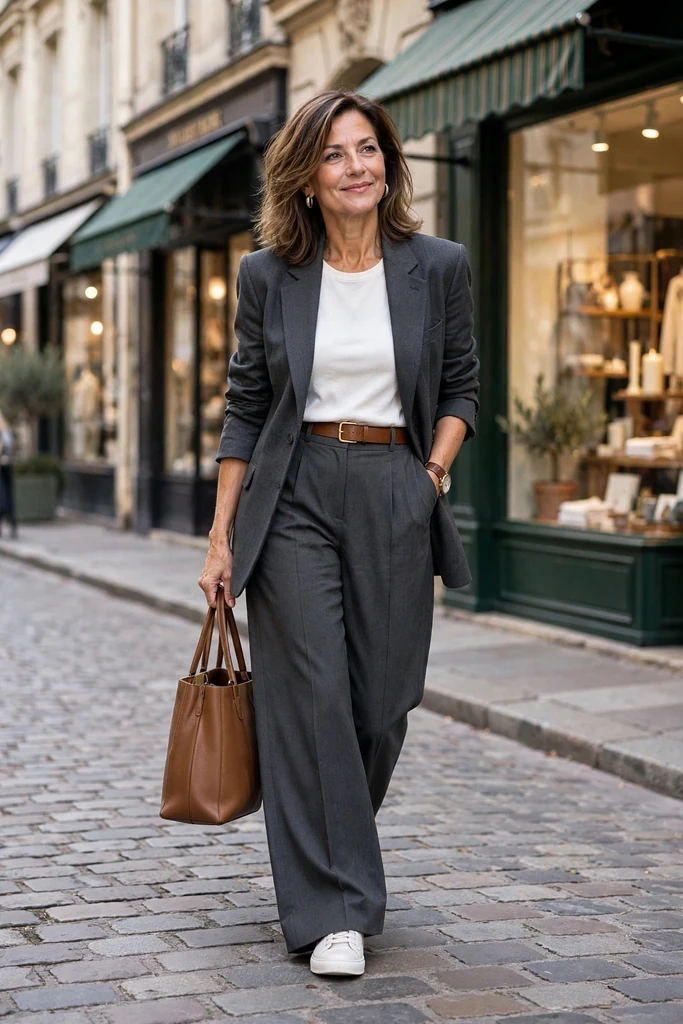
Accessories are the point where Italian-inspired dressing can look either effortlessly convincing or far too staged. Nobody needs a scarf, sunglasses, statement earrings, red lipstick, a structured handbag, and dramatic shoes competing in the same outfit. Pick one or two finishing details and let them breathe. A slim leather belt can lend structure to trousers and jeans. A pair of loafers can sharpen a knit-and-denim combination instantly. Simple gold-tone or silver-tone jewelry works beautifully because it brings light up toward the face without hijacking the outfit. Shoes merit special thought, because the same clothes can tell completely different stories depending on them. Dark jeans with trainers feel easygoing. The identical jeans with loafers look considerably more refined. Add a low block heel or a sleek flat, and the outfit is suddenly ready for dinner. Your bag does not need to match your shoes precisely, either. A similar level of polish counts for more than matching colors. A clean leather tote, crossbody, bucket bag, or structured shoulder bag can all work beautifully, depending on what you genuinely carry day to day.
Drop the Old Rules That Turn Italian Style Into a Costume
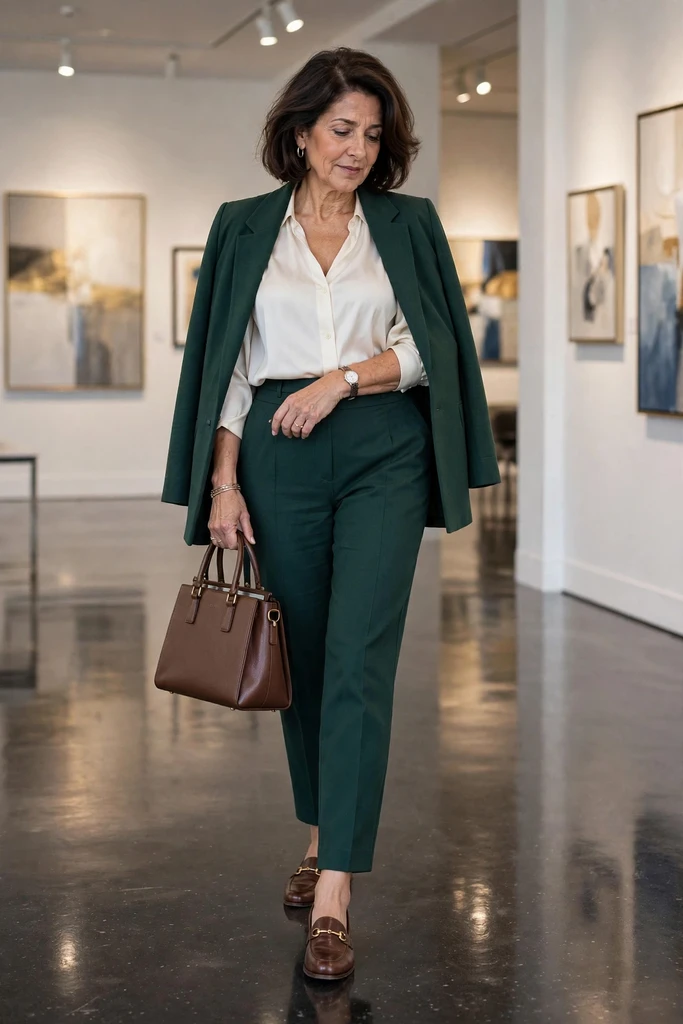
The objective is never to look as though you walked off a film set in Milan. Your clothes still have to answer to your climate, your schedule, your body, and your comfort. In fact, some of the most repeated style advice can make this aesthetic harder than it needs to be. The comparison below offers a more realistic way to think about each familiar rule. If silk scarves feel too formal for your life, leave them out. If loafers hurt your feet, choose streamlined trainers or cushioned flats instead. If beige drains the color from your face, put navy, olive, burgundy, chocolate, or another beloved shade near it. Italian-inspired dressing should simplify your mornings, not hand you a fresh set of fashion laws to worry about.
Build Every Italian-Inspired Outfit Around One Strong Base
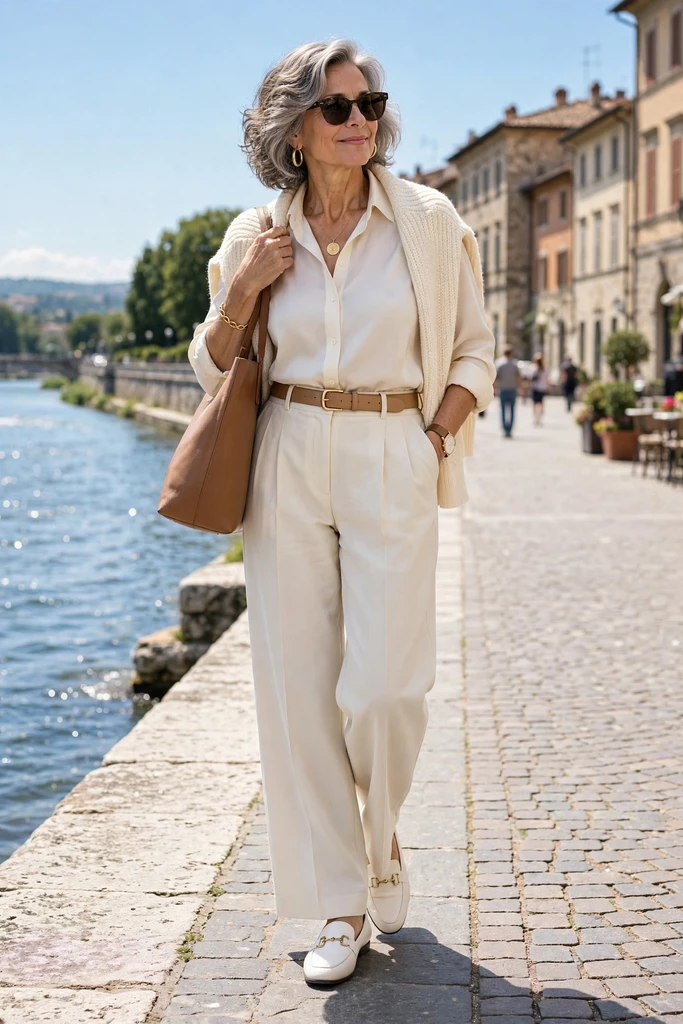
The simplest way to make this style genuinely practical is to build a personal uniform. Begin with two or three pieces that already suit your real life, then vary the layer, the shoe, the bag, or the color according to the day ahead. Take a classic combination as an example:
The trousers draw a clean line, the knit keeps the whole outfit comfortable, and the blazer adds just enough structure. Change loafers for trainers or flats to suit the day, and the formula still holds.
That same thinking generates a whole wardrobe of reliable formulas. The table below maps a few to the occasions where they shine:
These formulas endure because they repeat. You can swap cream trousers for navy, trade loafers for trainers, or replace a blazer with a cropped jacket, all without rebuilding the outfit from scratch. That is the heart of a genuinely useful capsule wardrobe over 50. The clothes support one another, instead of each piece demanding an entirely separate outfit around it.
Make It Yours: Italian Style That Feels Like You
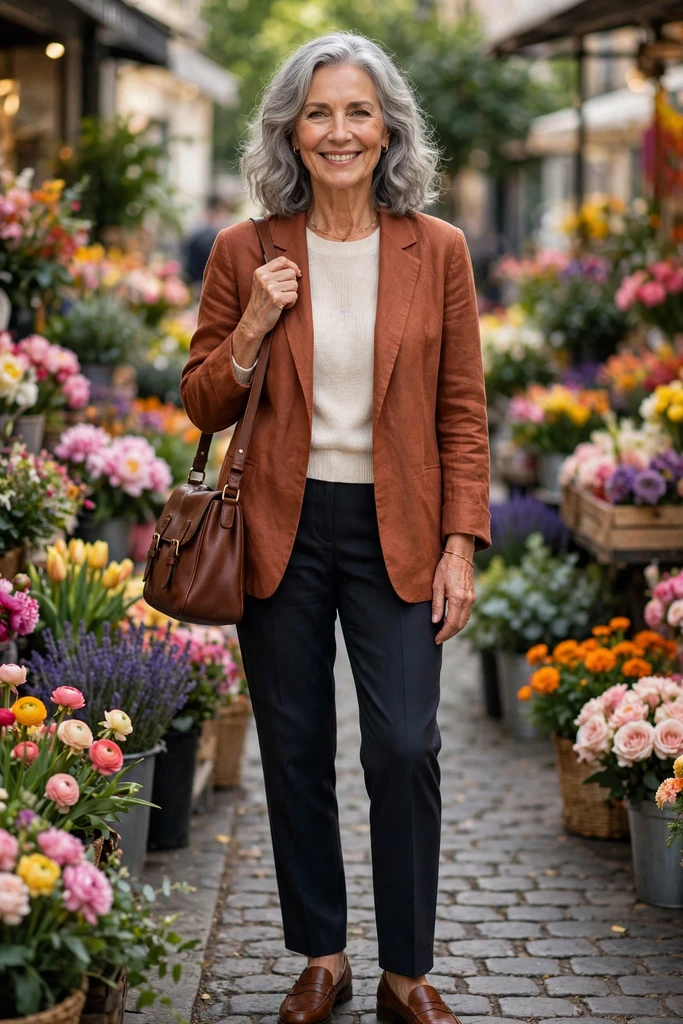
The most convincing version of Italian-inspired dressing still looks like you on your best day. Perhaps you adore relaxed trousers but have no patience for blazers. A cardigan with enough structure can do exactly the same job. Maybe you prefer trainers to loafers, silver jewelry to gold, or confident color to a sea of neutrals. Keep every one of those preferences. Personal style gets much easier the moment you stop treating an aesthetic as a uniform to copy perfectly. Instead, notice which part of the Italian approach actually solves a problem in your own closet. Maybe you need fewer prints and stronger basics. Perhaps your trousers could use better tailoring. Or maybe your outfits already work well, and it is only your shoes keeping everything a notch too casual. You might even discover that one good leather belt, plus a sleeve pushed neatly to the forearm, is all it takes to make familiar clothes feel current again. That discovery is far more valuable than rebuilding your wardrobe around someone else’s vision of chic outfits for women over 50.
FAQs
It is less about a particular age or a fixed set of garments and more about polished simplicity. Think well-considered proportions, dependable basics, natural-looking fabrics, disciplined color, and a few thoughtful accessories. You can apply those principles to the jeans, dresses, trousers, knitwear, and comfortable shoes you already own.
Not at all. A high price tag cannot rescue poor fit or clothes that clash with everything else you own. Start with better proportions, steam or press your clothes, check your hems and sleeves, and favor pieces you can wear in several different ways.
Black, navy, cream, camel, brown, charcoal, olive, and denim are easy foundations because they all mix effortlessly. From there you can introduce burgundy, red, forest green, cobalt, rust, or any shade that flatters you and coordinates with your existing clothes.
Yes, absolutely. Clean, streamlined sneakers pair beautifully with trousers, jeans, midi skirts, and simple dresses. Keeping the rest of the outfit a little structured helps the sneakers look like a deliberate choice rather than a purely sporty afterthought.
Pair one polished piece with your most familiar everyday clothes. A blazer over jeans, tailored trousers with a simple knit, or loafers with a classic shirt all strike that balance. Keeping your accessories restrained also helps the outfit feel natural enough for ordinary days.