
What to Wear as Mother of the Groom Over 50 and Get It Perfectly Right
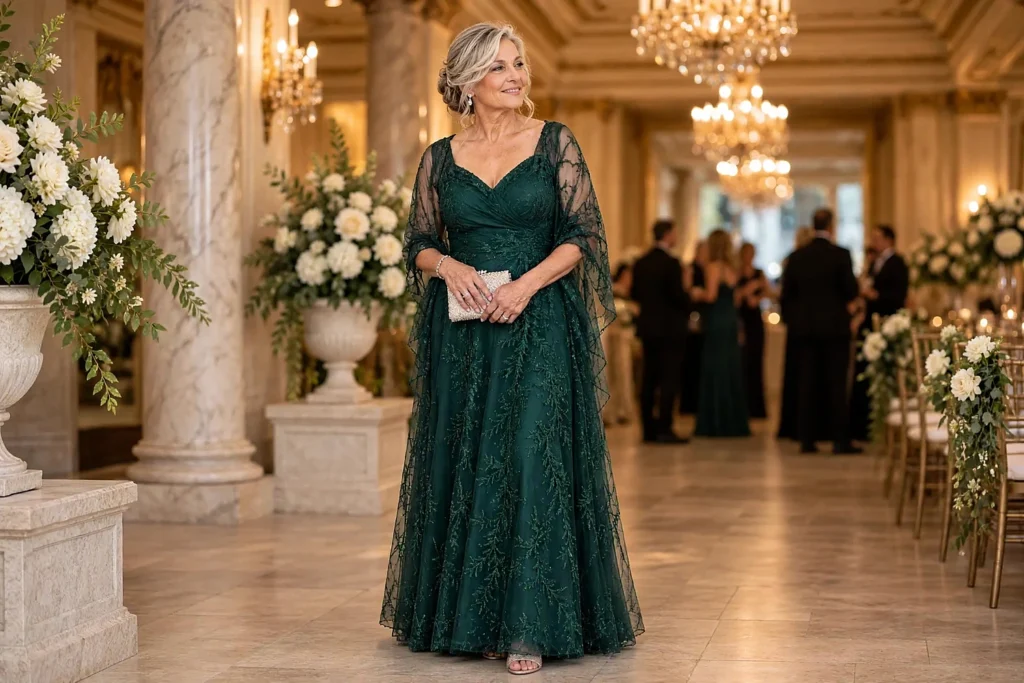
There is a particular kind of pressure that comes with being the mother of the groom. You want to look unmistakably special on the day, relaxed enough to laugh and dance your way through it, and polished without ever appearing to compete with the bridal party.
Past fifty, the hunt is rarely about finding a beautiful dress — it is about finding one that feels like you. Too many formal options come across as fussy, skimp on coverage, or lean on trends that start to wilt somewhere between the ceremony and the final dance.
The most elegant outfits for women over 50 are built on proportion, fabric, cut, and considered coordination — not on piling sparkle on top of sparkle.
No dramatic transformation is required. A handful of deliberate choices about formality, silhouette, color, footwear, and the pieces that finish the look will settle the whole outfit into place.
Let the Wedding Itself Set Your Level of Formality
Before you start weighing navy against burgundy, or sleeves against sleeveless, work out what kind of celebration you are actually dressing for.
An evening ballroom reception asks for something entirely different from an afternoon garden ceremony. The venue, the hour of the day, the wording on the invitation, the season, and even the way the bridal party is styled all leave useful clues.
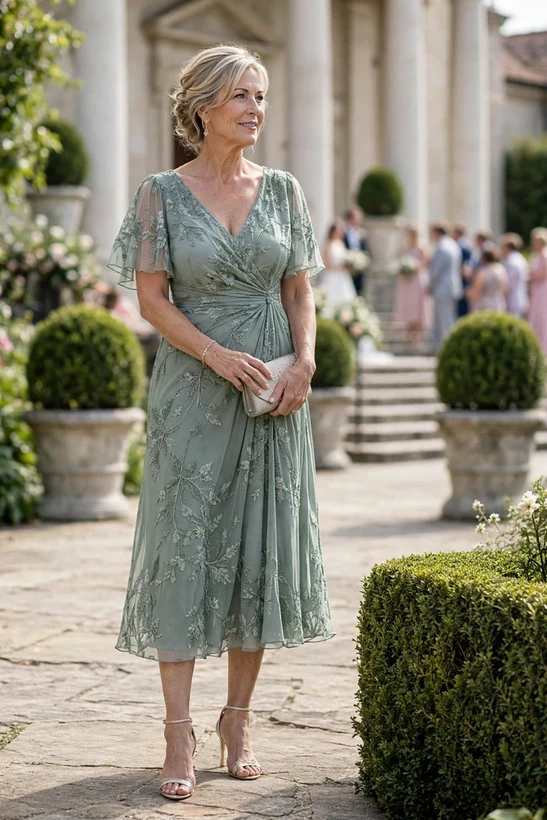
For a formal black-tie evening, a floor-length gown, a refined column dress, or an elegant formal jumpsuit can all be right. For a daytime garden wedding, a midi dress in soft crepe, chiffon, or a structured floral fabric tends to feel far more natural.
The aim is never to be the most formally dressed person in the room. It is to look completely at ease inside the setting.
If the dress code is unclear, ask the couple before you go shopping. Knowing the expected level of formality can save you from buying a gorgeous dress that simply feels wrong on the day.
| The Setting | What to Wear | Why It Shines |
|---|---|---|
| Formal evening wedding | Floor-length gown or a graceful column dress | Matches the grandeur of an evening celebration |
| Cocktail wedding | Midi dress, tea-length dress, or a polished jumpsuit | Dressy without feeling overly ceremonial |
| Garden wedding | A fluid midi dress with refined, walkable shoes | Suits daylight, movement, and softer surroundings |
| Beach wedding | Lightweight maxi or a flowing midi dress | Stays polished without any heavy fabric |
| Intimate restaurant wedding | A tailored dress or an elegant trouser set | Sophisticated without looking overdressed |
Pick a Silhouette That Lets the Fabric Drape Beautifully
One of the biggest missteps in formal dressing is starting with the size instead of the shape.
The number on the label matters far less than what happens once the garment is on your body. Study the shoulder line, the waist placement, the fit across the bust, the movement of the skirt, and the way the fabric behaves when you sit down and walk around.
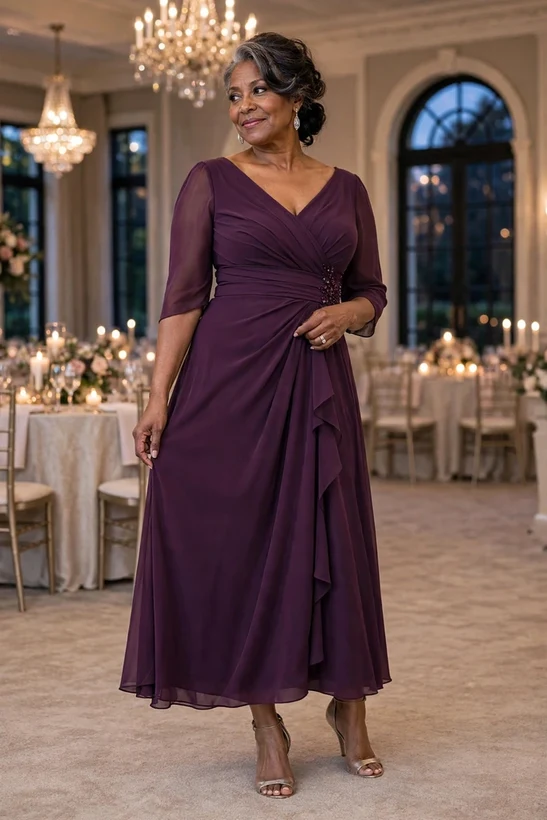
A softly defined waist usually gives a formal outfit its structure without making it feel tight. A-line skirts create graceful movement, while column shapes can look beautifully modern when the fabric has enough weight to skim rather than cling.
Sleeves can be genuinely useful, but they are not compulsory. If you prefer some arm coverage, consider flutter sleeves, elbow-length sleeves, sheer sleeves, or a softly tailored jacket before defaulting to a heavy long sleeve.
Fit note: Try your outfit sitting down as well as standing. A dress that looks wonderful in the fitting-room mirror can pull across the waist, ride upward, or feel restrictive once you are seated through a full ceremony.
Fabric carries just as much influence as the silhouette itself. This is where dressing past fifty shifts from following rules to truly understanding clothes — when fabric, shape, and proportion are working together, you need far fewer decorative details to look ready for the occasion.
| Fabric or Detail | What to Choose | The Payoff |
|---|---|---|
| Crepe | Medium weight with a fluid, easy drape | Skims smoothly and photographs beautifully |
| Chiffon | Soft, layered panels rather than big volume | Brings movement without any heaviness |
| Satin | A substantial weave with a gentle sheen | Looks dressy without needing embellishment |
| Lace | A refined pattern over a clean lining | Adds texture while staying elegant |
| Stretch-woven fabric | Tailored structure with a little give | Makes sitting, dining, and dancing easier |
| Sequins or beading | Concentrated sparkle rather than all-over shine | Keeps things festive without overwhelming the look |
Coordinate With the Wedding Colors Without Matching Them Exactly
The mother of the groom usually looks most polished when her outfit feels connected to the wedding rather than copied from it.
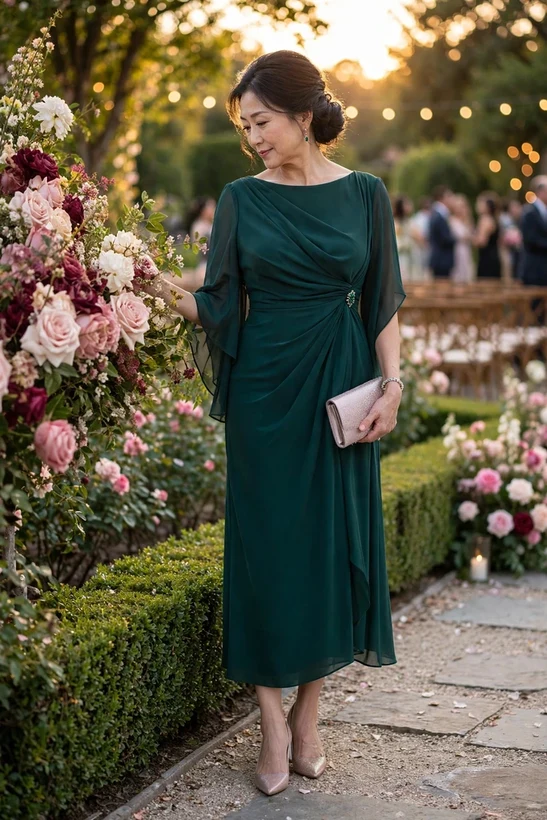
You do not need to wear the exact shade chosen for the bridesmaids. In fact, a neighboring tone often photographs as the more considered choice.
If the bridesmaids are wearing dusty blue, you might look at navy, slate blue, soft silver-blue, or deep teal. If the wedding palette runs through blush, champagne, and burgundy, a plum, rosewood, soft bronze, or muted berry dress can sit beautifully alongside it.
It is also worth finding out what the mother of the bride plans to wear. Neither of you needs a matching dress, but it helps if one person is not arriving in a heavily embellished floor-length gown while the other turns up in a casual floral day dress.
Color also has to work with your complexion and your own wardrobe instincts. A fashionable shade is not automatically the right shade for you. If you feel most confident in deep jewel tones, rich neutrals, muted pastels, or soft metallics, begin there.
Black can work beautifully at many modern weddings, particularly in the evening, unless the couple has requested otherwise. White, ivory, cream, and very pale shades that could photograph as bridal are better cleared with the couple before you wear them.
Why Shoes and Layers Deserve More Thought Than You Think
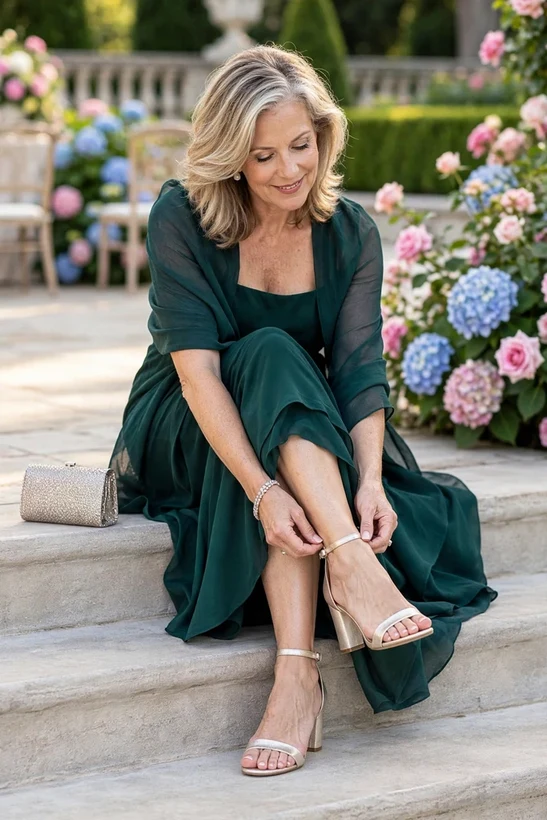
A mother-of-the-groom outfit has to survive far more than the mirror test.
Think about everything the day will ask of you: standing through photographs, crossing grass, greeting a long line of guests, sitting through dinner, and then spending several hours on the dance floor. That turns shoes into part of the outfit strategy rather than an afterthought.
A block heel, an elegant low heel, a refined slingback, a pointed flat, or a dressy low wedge can look every bit as polished as a very high heel. The best choice is the pair that lets you move naturally, rather than the one that has you thinking about your feet for the whole reception.
The layer you choose deserves the same care. For cooler weather, consider a cropped tailored jacket, a soft wrap, an elegant bolero, or a longline evening coat that works with the dress instead of swallowing it awkwardly. For warm-weather weddings, a lightweight wrap can still earn its place when the reception moves into strong air conditioning.
Shoe swap: If you want height for the photographs but know you will be dancing later, bring a second pair of polished flats or lower heels that still work with your hem length. The outfit should look completely intentional with either pair.
Let Your Accessories Support the Dress, Not Compete With It
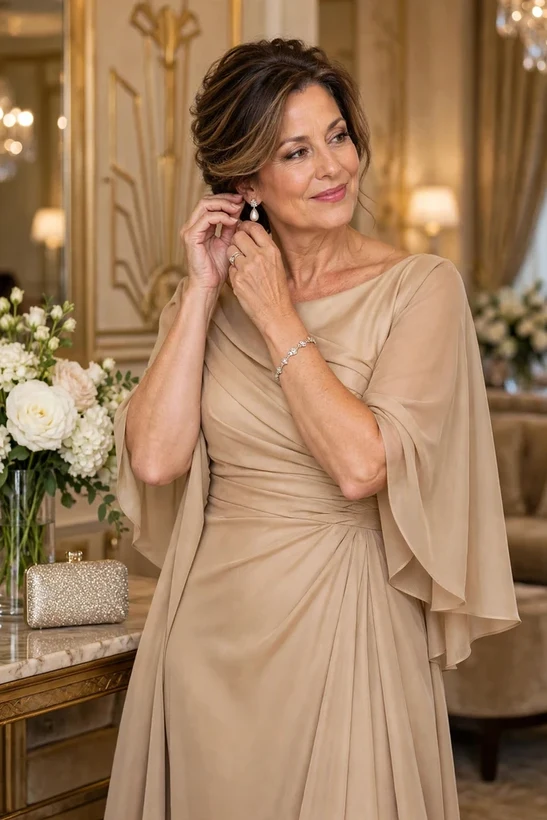
Formal occasions have a way of making us feel we need to add more: more jewelry, more sparkle, more embellishment, more makeup.
Usually, one strong focal point is plenty.
If the dress carries beading at the neckline, a pair of simple earrings may be all it needs. If the gown is clean and minimal, a statement earring, an elegant necklace, or a beautiful clutch can add exactly the right amount of interest.
Keep your handbag small enough to feel formal, but large enough for the things you will actually reach for. A phone, lipstick, tissues, glasses, and a few essentials should all fit comfortably.
The same principle applies to hair and makeup. You should still recognize yourself when you look in the mirror. A polished version of your everyday style almost always looks fresher than a completely unfamiliar hairstyle or dramatic makeup chosen simply because the event feels important.
This restraint is one of the simplest ways to build stylish outfits for women over 50 that feel confident rather than costume-like.
The Small Styling Mistakes That Can Throw the Whole Outfit Off
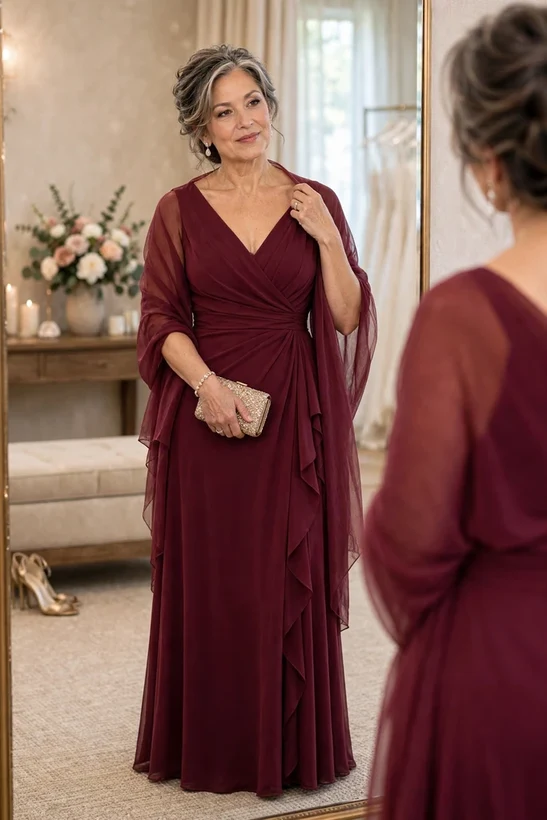
Sometimes the dress itself is not the problem. The proportions around it are.
A heavy shoe under a delicate chiffon dress can anchor the look in the wrong way. A very long jacket over a full midi skirt can hide the waistline and pile on more volume than you intended.
A few gentle adjustments usually put everything right:
- If the dress feels too plain, reach for a stronger earring, a textured clutch, a metallic shoe, or an elegant wrap before you decide to replace the dress itself.
- If the look feels too busy, take away one decorative element. A beaded dress rarely needs a large necklace, elaborate shoes, and statement earrings all at once.
- If the proportions feel heavy, look at the hem length, the jacket length, and the shape of the shoe before assuming you need a different size.
- If the outfit feels dated, simplify the accessories and consider a cleaner shoe or a less structured cover-up.
Tailoring is often the quiet finishing step that changes everything. A shortened hem, a corrected shoulder, an adjusted waist, or a refined sleeve length can make an ordinary dress look far more expensive.
| If You Are Tempted To… | Try This Instead |
|---|---|
| Match the bridesmaid color exactly | Choose a related shade with its own depth |
| Wear very high heels because the event is formal | Pick a polished heel height you can actually walk in |
| Add jewelry everywhere | Commit to one focal accessory |
| Hide the dress under a heavy jacket | Choose a layer shaped to the dress silhouette |
| Buy a smaller size for a “better” fit | Fit the widest point comfortably, then tailor the rest |
A Dependable Mother-of-the-Groom Outfit Formula
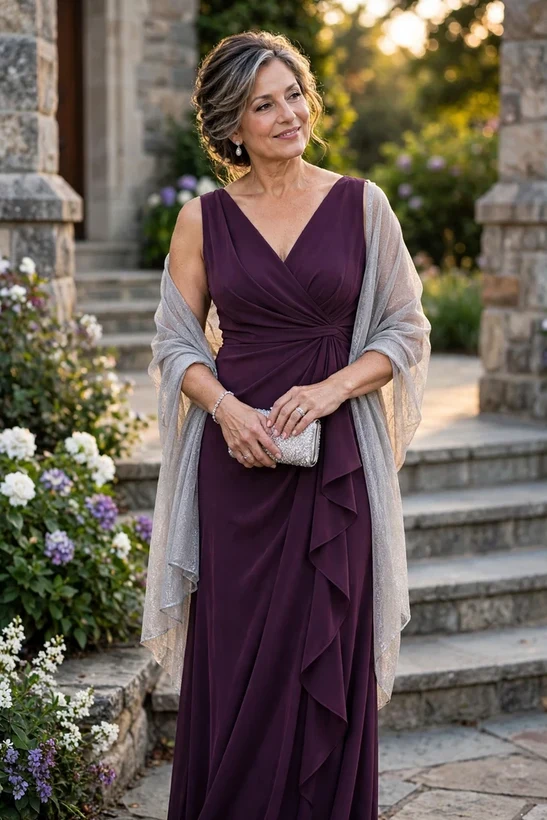
When the shopping starts to feel overwhelming, come back to one dependable formula.
Formula: a beautifully fitted dress or jumpsuit + polished, comfortable shoes + one refined accessory + an optional coordinated layer.
That really is enough.
For a formal evening wedding, that might mean a deep navy crepe gown, low metallic heels, sculptural earrings, and a soft wrap. For an afternoon wedding, it could be a plum midi dress, elegant slingbacks, a small clutch, and simple earrings. For a less traditional celebration, a flowing wide-leg jumpsuit with a softly defined waist can be every bit as appropriate as a dress, as long as the fabric and finishing details feel dressy.
This is the same thinking that makes a good personal uniform work in everyday life. Once you know the proportions and pieces that leave you feeling comfortable and pulled together, you can change the color, the neckline, the jewelry, or the season without starting from zero.
And that matters far more than chasing the latest mother-of-the-groom trend.
FAQs
Choose a color that works with the wedding palette without matching the bridesmaids exactly. Navy, plum, teal, berry, slate blue, rose, soft metallics, and sophisticated neutrals can all be lovely, depending on the season and the dress code. As a courtesy, it is sensible to check with the couple before choosing white, ivory, cream, or any other shade that could photograph as bridal.
No. The length of your dress should follow the wedding’s level of formality rather than a fixed mother-of-the-groom rule. A floor-length gown suits many formal evening weddings, while a midi or tea-length dress can feel far more natural for a cocktail, daytime, garden, or restaurant celebration.
The two of you do not need to match, but your outfits should feel reasonably balanced in formality. Sharing a few basic details about color, length, and dressiness before the wedding helps both mothers look harmonious in the family photographs without appearing coordinated like bridesmaids.
Absolutely. A refined jumpsuit, a flowing trouser suit, or an elegant two-piece can look thoroughly sophisticated when the fabric, fit, shoes, and accessories suit the wedding’s dress code. Look for fluid trousers, a defined waist, clean tailoring, and dressy fabric rather than a standard business suit.
Aim for a level of formality that respects the wedding setting while still feeling natural on you. You should look clearly dressed for an important family occasion, but there is no need for excessive embellishment or an uncomfortable gown to achieve that.
A Graceful Goodbye to the Guesswork
Your son’s wedding is one of those rare days when the photographs outlive the celebration itself. Choosing an outfit that lets you be fully present — comfortable in your skin, at ease in the setting, and quietly radiant — is the surest way to love looking back on those pictures for years to come.
Start with the wedding’s formality, let the fabric and silhouette do the talking, and finish with one or two pieces you genuinely love. Do that, and you will not just look like the mother of the groom — you will look unmistakably like you, at your very best.