
The Real Closet Essentials for Women Over 50: A No-Fluff Guide
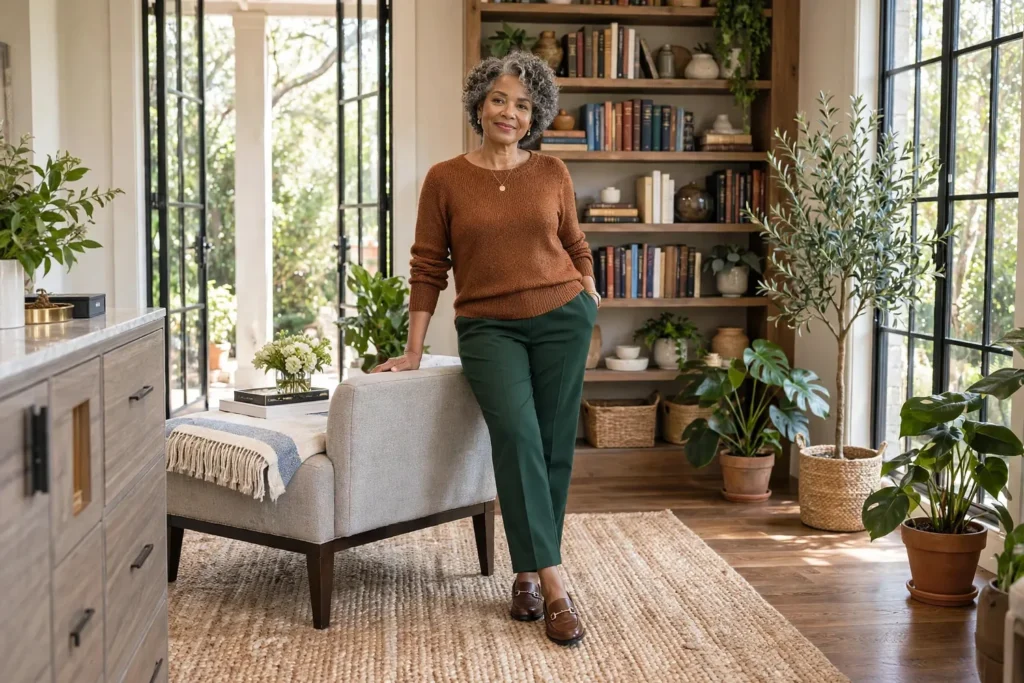
A wardrobe can be bursting at the seams while you stand there sure there’s nothing to put on. Fits shift a little with the years, old favorites lose their spark, and half the trends scrolling past only make the morning decision harder.
Past fifty, another spontaneous shopping spree almost never fixes that. What actually moves the needle is a foundation of dependable wardrobe essentials for women over 50 — pieces matched to your real life that lift everything else hanging beside them.
Nobody needs a beige uniform, and nobody needs to blow a fortune on a total reset. The real formula is simpler: solid foundations, layering pieces that earn their keep, shoes that never punish you, and a handful of items that turn ordinary clothes into deliberate outfits.
That no-fluff mindset is the thread running through this whole guide — every piece below has to earn its hanger.
Table of Contents
- The Three Questions Every Closet Essential Has to Answer
- Tops That Frame Your Face Without the Constant Tugging
- Trousers and Jeans That Follow Your Shape, Not Fight It
- The Third Piece That Makes Basic Outfits Look Done
- One Dress and One Skirt That Style Themselves
- Comfortable Shoes That Actually Work With Your Hemlines
- Small Finishing Touches That Stop Basics Looking Boring
- Three Outfit Formulas Worth Building Your Closet Around
- FAQs
The Three Questions Every Closet Essential Has to Answer
First, let’s settle what ‘essential’ actually means here, because it is not a shopping list every woman is obliged to follow. An essential is a piece you grab week after week, that plays well with plenty of other items, and that never demands a full styling session before it can leave the house.
A gorgeous top that requires a certain bra, a certain trouser, and a certain forecast may be lovely to look at — but it’s doing almost nothing for your wardrobe.
The most dependable wardrobe essentials for women over 50 tend to clear three quick hurdles: they feel good on your body right now, they partner happily with plenty of things you already own, and they suit the rhythm of your actual week.
Remote work from the kitchen table calls for a different mix than five days of in-person meetings. How often you travel, your climate, your social calendar, how far you walk, even how frequently you feel like doing laundry — it all belongs in the calculation.
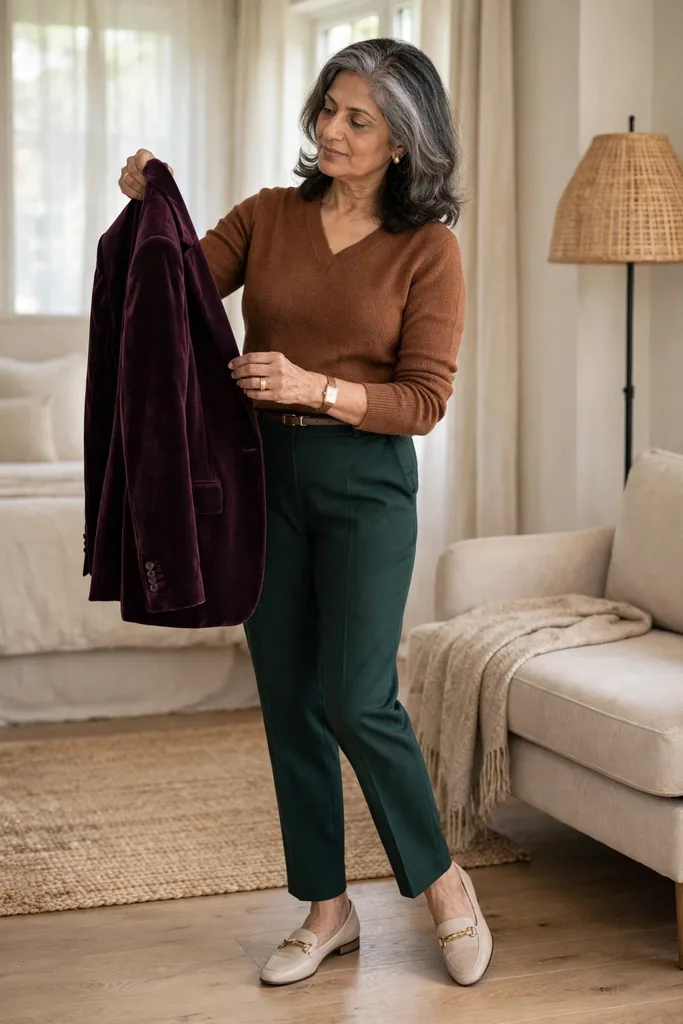
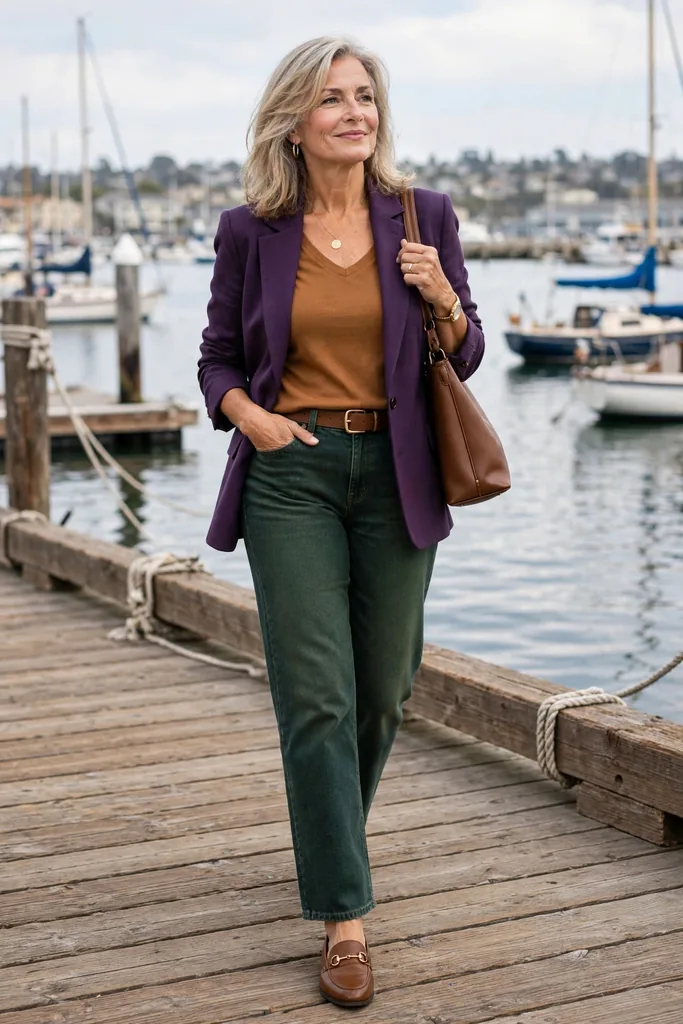
Before anything new earns a hanger, run it through the framework below. Notice the bronze knit, forest trousers, and plum blazer in the photo above — each one pulls its weight across half a closet, which is exactly the standard.
| Essential Piece | What Earns It a Spot | Pairs Effortlessly With |
|---|---|---|
| Daily top | Easy neckline, shoulders that sit right, fabric that keeps its line | Jeans, trousers, skirts, layering jackets |
| Mid or dark-rinse jeans | Smooth through waist and hip with no bunching | Knit tops, shirts, blazers, sneakers |
| Smarter trousers | Fabric that drapes or holds a soft structure, rise that stays comfortable all day | T-shirts, sweaters, loafers, jackets |
| Go-to jacket | Room for a light layer beneath it | Dresses, jeans, trousers, skirts |
| Easy dress | Forgiving at the waist and shoulders, a neckline your regular bra can handle | Flats, boots, sandals, jackets |
| Walk-all-day shoes | A secure fit, a heel or sole you can actually live in, a color that goes with plenty | Nearly every casual outfit |
The specific items on your list can evolve over the years. The jobs they do should not.
Tops That Frame Your Face Without the Constant Tugging
Your everyday top should behave itself — no hoisting it back into place, no safety pins, no emergency layering, no advance planning before you can walk out the door.
Look for neck shapes that feel airy and flattering at the neckline. Classic crews, soft Vs, boat necks, open collars, and gentle scoops all earn their place.
After that, proportion does the heavy lifting. When a top runs roomy, a tidier trouser or jean underneath usually keeps the whole silhouette from going sloppy.
Flip it when your lower half carries more volume: a sleeker knit or tucked shirt rebalances things the other way.
Fabric deserves as much attention as the cut. Cotton blends and fine-gauge knits are reliable starting points. Linen mixes, soft poplin, and modal with a touch of stretch belong in the same camp — each drapes far cleaner than thin, clingy jersey.
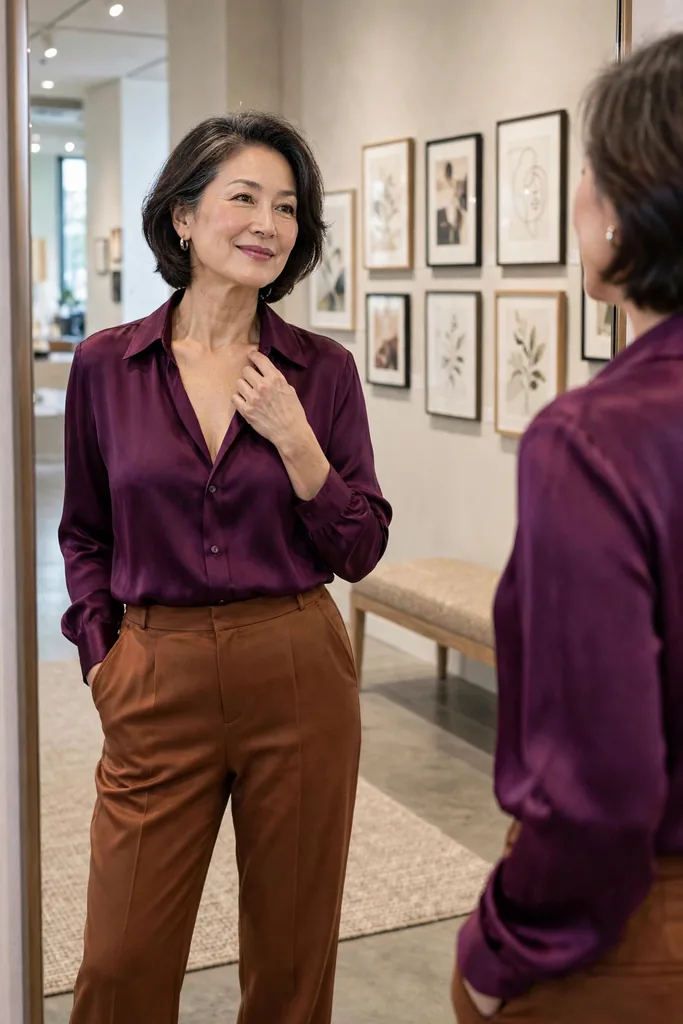
A crisp button-front ranks among the hardest-working pieces you can own — and white isn’t mandatory. Soft blue, ivory, and navy are strong alternatives — and depending on what you already own, olive, pale pink, or a subtle stripe might earn even more wear. The plum blouse in the photo above shows how a rich color can do the same job with more personality.
Fit note: Study the shoulder seam first — the size tag can wait. Nail the shoulder fit and relaxed cuts suddenly look intentional.
Trousers and Jeans That Follow Your Shape, Not Fight It
Trouble getting dressed usually begins at the waistline.
You fall for a top, then every trouser you own pinches at the waist, sags through the thigh, drags on the floor, ends at an awkward crop, or turns miserable the moment lunch is over.
The answer is not to abandon trousers — get fussier about rise, fabric, and leg shape instead.
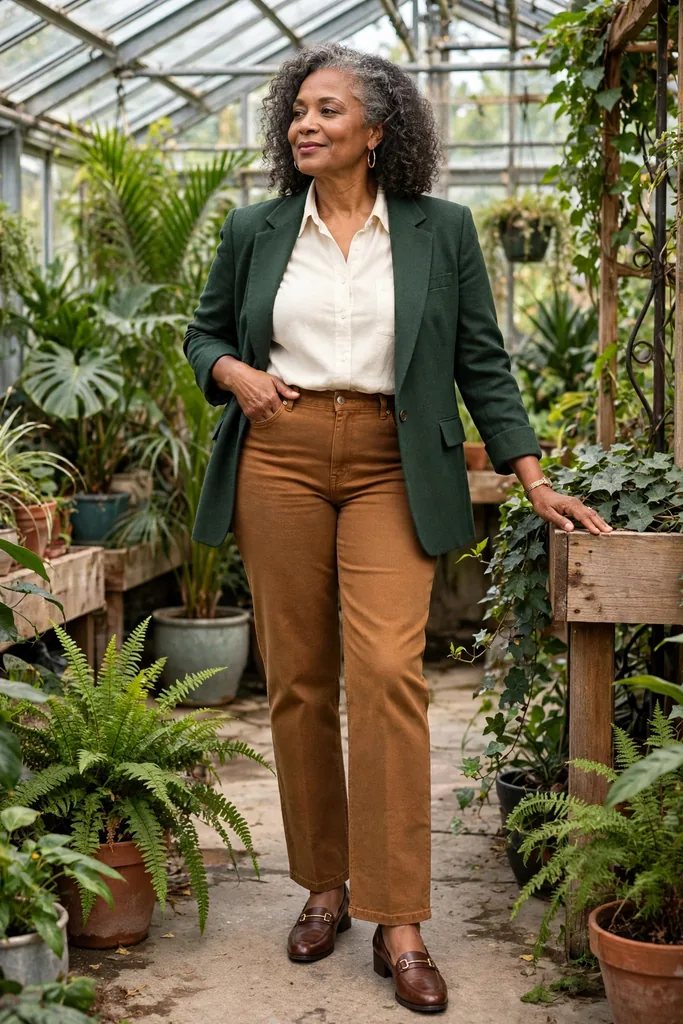
A straight leg stays one of the easiest jeans to style because it sits comfortably between skinny and extra-wide. A gently wide leg can look thoroughly modern too, provided the waistband sits cleanly and the hem talks nicely to your shoes — bronze jeans like the pair above prove colored denim can still act like a neutral.
For smarter days, hunt for trousers with enough backbone to skim the body instead of gripping it. Flat fronts and soft pleats both work; the deciding factor is simply how the fabric falls on you.
Treat the chart below as fitting guidance, not gospel.
| Cut or Fabric | What to Prioritize (and Why) |
|---|---|
| Straight-leg jeans | Room through the knee so the line stays tidy |
| Wide-leg trousers | Fluid fabric plus a defined waistband so the shape looks deliberate |
| Stretch denim | Enough recovery to move with you without sagging by late afternoon |
| Ponte trousers | A midweight fabric that feels like comfort but reads like tailoring |
| Linen-blend trousers | A structured blend if pure linen creases too much for your taste |
Before buying any pair, sit down in them. Take a stroll, bend at the waist, and view the waistband in profile.
Your clothes have to perform during real life — not merely while you stand at attention in a fitting-room mirror.
The Third Piece That Makes Basic Outfits Look Done
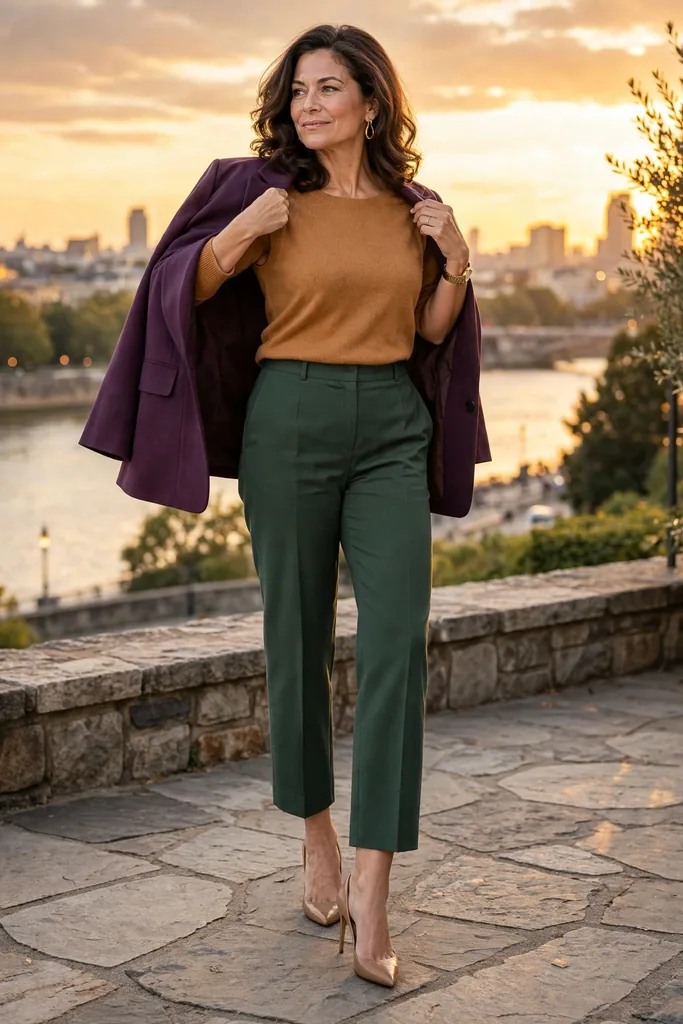
A sensible closet becomes a stylish one at this exact stage.
A finishing layer — a blazer, knit cardigan, denim trucker, utility jacket, or featherweight trench — turns a plain pairing into something with real shape. They also stretch the eye downward in long lines, so the whole look reads calmer and more finished.
Nobody needs the whole jacket department. A couple of styles that suit your real days will beat a crammed rail every time.
Third pieces worth owning first:
- One softly structured blazer to throw over anything, from denim and trousers to dresses and tees.
- A tidy cardigan that brings warmth while skipping the tailored feel.
- Reach for denim or utility styles when dresses and dressy trousers need loosening up.
- A featherweight trench or longer coat that makes basic clothes feel considered when the weather can’t decide.
The hemline of the jacket matters more than most people think. Cropped lengths sit brilliantly over wide trousers and fuller skirts, giving the waist its shape back.
Over straighter silhouettes, reach for the longer blazer or cardigan — one unbroken line from shoulder to hem.
Comfort upgrade: If classic blazers feel like armor, do not give up on jackets entirely. Seek out relaxed tailoring, stretch-woven cloth, or an unlined finish rather than ditching jackets altogether. The plum blazer over a bronze knit in the photo shows how relaxed tailoring can still look sharp.
One Dress and One Skirt That Style Themselves
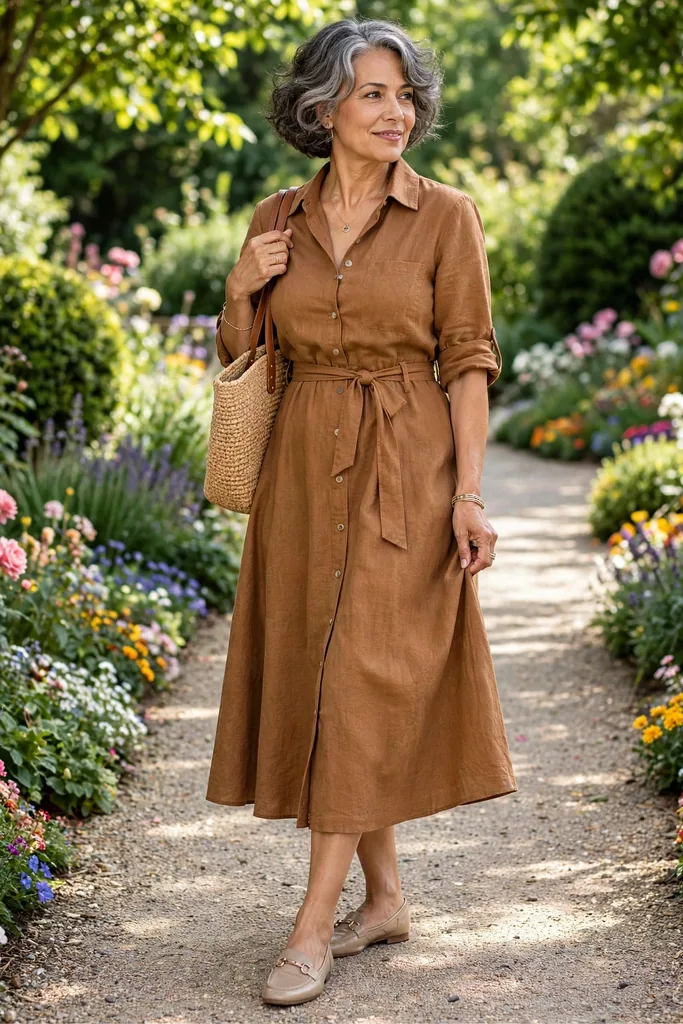
A dress deserves its spot when a single piece settles the entire top-and-bottom dilemma.
Retire the one that’s waiting on an imaginary special occasion. Pick the one that takes you from lunch to dinner, family gatherings to workdays, on nothing but a shoe and layer swap.
Good launch points: shirtdresses, gently shaped midis, knit styles, and easy A-lines. Go for cloth with movement rather than cling, and necklines your regular bra already handles. The bronze shirtdress in the photo is exactly this kind of workhorse — one piece, endless outings.
The identical approach works for skirts. Try a straight midi, a flowing A-line, or soft pleating — each one gives humble tees and sweaters far more mileage.
When skirts always feel tricky, question the shoes before you question the skirt.
Chunky footwear can weigh a midi down. Swap in slim sneakers, pointed flats, loafers, a polished ankle boot, or a low-profile sandal, and watch the proportions transform.
Shoe swap: A dress that feels overdressed comes back to earth with crisp sneakers plus a denim jacket. When the vibe reads too relaxed, lift the whole thing with loafers or a low block heel, plus a structured layer thrown over the top.
Comfortable Shoes That Actually Work With Your Hemlines
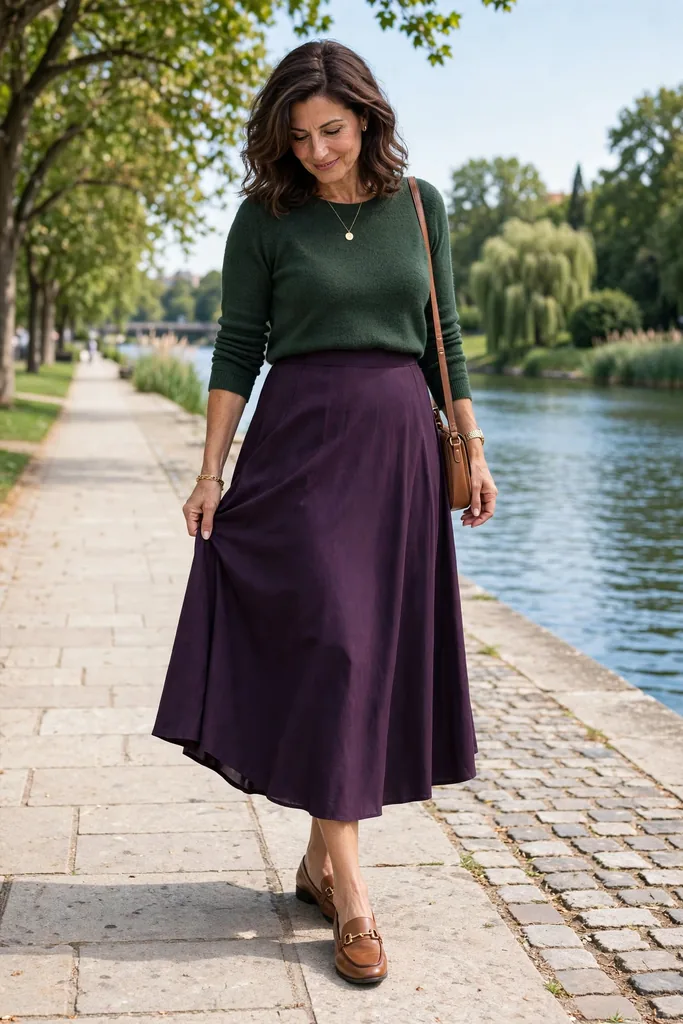
Everyone calls shoes the finishing touch — yet in practice they often determine whether the outfit leaves the house.
Anything that hurts, slips, pinches, or leaves you uneasy on uneven pavement will never deliver decent cost-per-wear, however gorgeous it looked in the box.
What actually works is a small rotation across casual, polished, and seasonal — not dozens of near-identical pairs.
Crisp sneakers take care of travel, errands, relaxed lunches, and easy weekends. Loafers and polished flats step in where outfits need polish but not a heel.
For autumn and winter, a single solid ankle boot pairs with practically everything below the waist. In warm weather, a refined flat sandal or a low wedge picks up more of the slack.
Color deserves a thought too. Black helps, but it isn’t automatically the hardest-working color you own.
Shades like tan, taupe, cream, chocolate, metallics, burgundy, and navy tend to disappear into a real wardrobe far more gracefully.
Chasing one pair per outfit is a losing game. It is enough workable shapes that your favorite clothes never sit unworn for lack of something right at the ankle — even a forest knit and plum skirt, like the pair above, just needs a comfortable shoe in the right shape.
Small Finishing Touches That Stop Basics Looking Boring
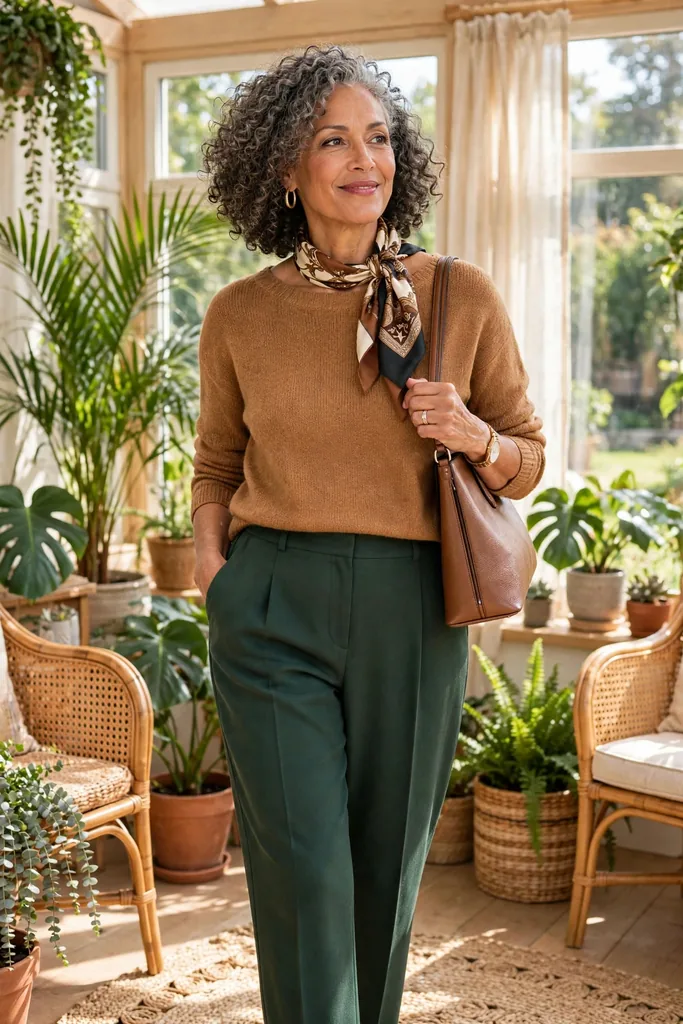
Plain clothes don’t have to read as boring.
One scarf, belt, necklace, watch, pair of earrings, structured bag, or eye-catching shoe can shift a plain outfit’s whole mood — no extra closet space required.
What matters is that those finishing touches feel authentically yours.
If understated clothes are your thing, make sculptural earrings and a gorgeous leather bag your signatures. Color lovers can do the opposite: neutral clothes, with scarves, shoes, and jewelry supplying all the character.
Belts earn their keep as well — though nothing says they’re required. Bring one out to mark a waist or interrupt a long line — never because some rulebook demands it per outfit.
Same story with jewelry. A simple outfit usually gains more from one deliberate statement than from several pieces shouting over each other.
Color note: When your closet feels disconnected, the fix is repetition. Thread one or two accent shades through your accessories — shoes, bags, scarves, jewelry — and separate purchases start feeling like family. It’s the same trick as the bronze knit and forest trousers above tying a whole look together.
Three Outfit Formulas Worth Building Your Closet Around
A strong capsule wardrobe over 50 isn’t about cramming an entire life into ten beige garments.
It’s about owning a few go-to combinations so trustworthy that rushed mornings begin from a plan, not a blank slate.
Audit your current rotation before spending a cent. Chances are your personal uniform is already hiding in your rotation.
Maybe it’s the denim-knit-jacket trio you practically live in. Or wide-leg trousers paired with a fitted tee in constant rotation. Or perhaps dresses are simply your happiest place.
Below, you’ll see how a modest lineup of clothes stretches across wildly different days. The plum blazer, bronze tee, and forest jeans in the photo are one of them — dressed up or down with a shoe change.
| The Day | Your Go-To Formula | Why It Keeps Working |
|---|---|---|
| Errands or a travel day | Straight-leg jeans with a knit tee, utility jacket, and sneakers | Layered comfort you can move in all day |
| Lunch with friends | Fluid trousers with a soft blouse, loafers, and earrings | Easy pieces with just enough structure to look polished |
| A smart-casual event | Midi dress with a blazer and low heels or refined flats | One easy base, and the jacket dials the formality up or down |
| Everyday, but polished | Dark jeans with a fine knit, blazer, and ankle boots | Everyday basics elevated by one stronger outer layer |
Lead with your most-worn formula.
Then spot what’s letting the formula down. It might be jeans that never sit right, a missing jacket, or a shoe collection that keeps dragging everything too casual.
That’s precisely the gap your next purchase should fill.
Shopping this way beats chasing trendy outfits for women over 50 purely because they looked great in someone else’s photos.
And cost-per-wear takes care of itself when every newcomer arrives to find several willing partners already hanging in the closet.
FAQs
How big should a woman’s wardrobe be after 50?
Forget chasing a magic number. What counts is coverage without chaos: enough for your actual life, compact enough that every piece stays visible, mixable, and in regular rotation. A packed professional calendar demands a deeper bench than a slow, casual lifestyle does.
Which pieces make an over-50 wardrobe look instantly more polished?
Fit beats formality almost every time. Neat hemlines, shoulders that land correctly, well-kept shoes, balanced proportions, plus a single structured anchor — a blazer, crisp shirt, defined bag, or tidy jacket — elevate even the plainest outfit.
Do certain trends come with an age limit after 50?
Nothing in fashion carries a mandatory expiry date at fifty. Ask instead if it matches your taste, your comfort zone, and what’s already in your closet. One of-the-moment piece styled with familiar basics is usually all it takes to make a trend feel like you.
What colors genuinely belong in an over-50 closet?
Build on neutrals that flatter the colors you love instead of defaulting to black for everything. Start with a base of navy, cream, camel, and chocolate; add olive, gray, denim blue, and soft white alongside — then bring in whatever shades make your face light up.
How do I decide which clothes deserve a bigger budget?
Spend where frequency meets difference: the pieces you wear constantly, and where fabric or fit genuinely changes the result. Coats, shoes, trousers, jackets, and your daily bag typically repay their cost far better than any one-occasion showpiece. Frequency of wear beats the price tag every time.