
Wedding Guest Style After 50: Elegant Looks That Never Steal the Spotlight
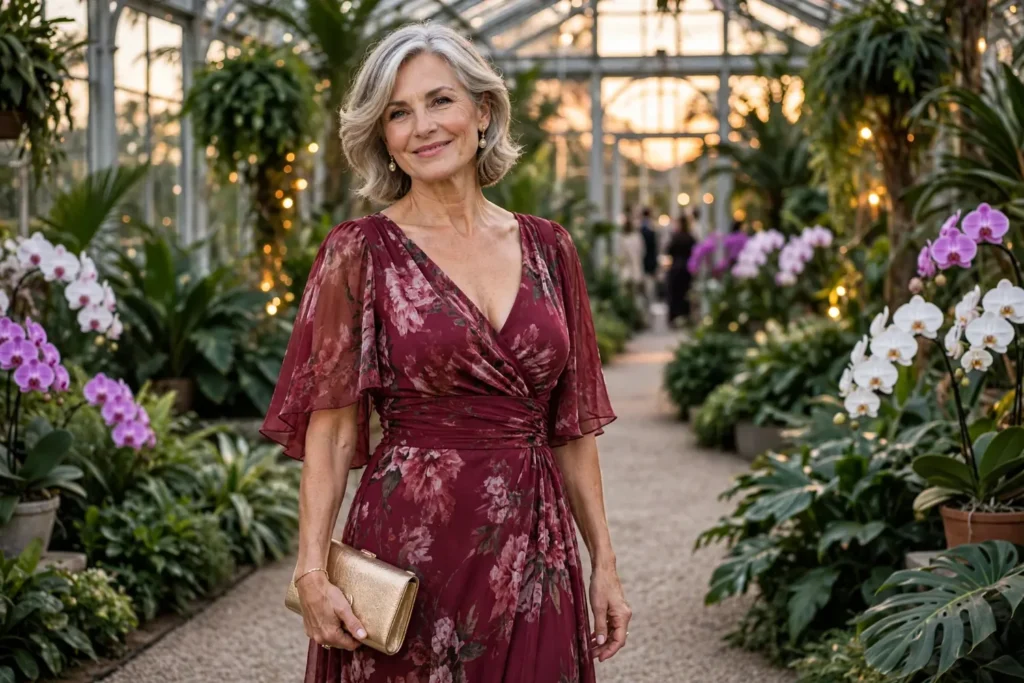
There’s something about a wedding invitation that turns a simple question — what will I wear? — into a genuine puzzle. You want to arrive looking polished and celebratory, yet never overdressed, never uncomfortable, never underdone, and never as if you’re competing with the bride for attention.
Figuring out what to wear to a wedding over 50 has little to do with age itself and everything to do with how clothes fit the woman you’ve become. Plenty of formal dresses feel fussy and overworked, while easier options can fall flat the moment the photographs begin.
The encouraging news is that you don’t need sequins, rigid cloth, or theatrical styling to build elegant outfits for women over 50. When the silhouette, fabric, color, shoes, and accessories are right, the result looks graceful, current, and completely natural.
Think of this guide as a practical companion for the season: how to read the venue, which cuts move with you, which fabrics earn their keep, and how to edit the details so the whole look feels effortless.
wedding-guest-style-after-50-elegant-looks-that-never-steal-the-spotlight.webp
Table of Contents
- 1. Read the Dress Code First, Then Match Your Polish to It
- 2. Pick a Silhouette That Moves With You, Not Against You
- 3. Let Fabric and Color Do the Heavy Lifting
- 4. Anchor the Outfit With One Standout Focal Point
- 5. Choose Reception-Proof Shoes You Can Actually Dance In
- 6. The Small Styling Mistakes That Cheapen a Wedding Look
- 7. A Three-Piece Wedding Formula for When You Feel Stuck
- FAQs
1. Read the Dress Code First, Then Match Your Polish to It
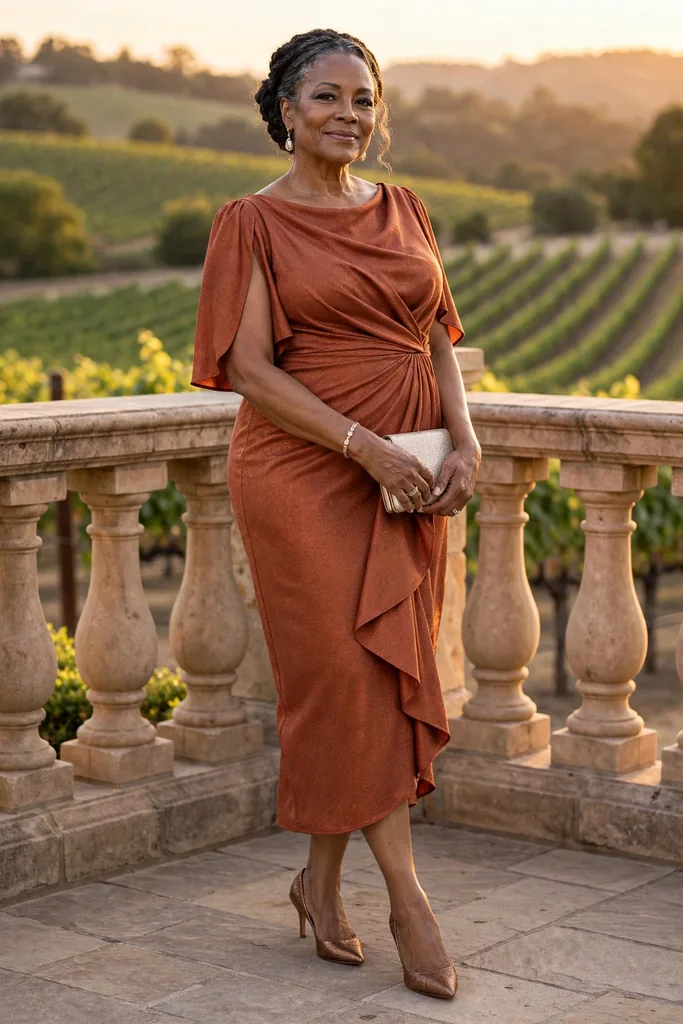
The simplest way to get the formality level right is to begin with the invitation — not with whatever is already hanging in your closet.
A black-tie night out asks far more of your outfit than a sunlit garden ceremony. What works on sand and salt air will not carry you through a chandelier-lit ballroom — let the venue dictate the cloth and the heel..
Treat the dress code as a dimmer switch rather than a costume change. Your own taste doesn’t change — you just raise or lower the formality to match the occasion.
For cocktail attire, a midi dress, a polished jumpsuit, or an elevated skirt-and-blouse pairing all land beautifully. For black tie, lean toward a longer hemline or a more sumptuous fabric in a cleaner line.
Outside venues welcome breezier fabrics, gentle movement, and footwear that survives grass or gravel. After-dark venues open the door to richer color, satin finishes, metallic touches, and bolder jewels.
This quick chart makes the distinctions easy to scan.
| Occasion | What Typically Works | The Reason It Suits |
|---|---|---|
| Daytime garden | Floral-print midi, block heels, gauzy wrap | Sway and softness suit the relaxed mood |
| Cocktail | Solid midi, tailored jumpsuit, slingbacks | Festive without crossing into formal |
| Formal evening | Long gown, satin midi, sleek trouser set | Rich fabrics answer the evening mood |
| Beach or resort | Flowing maxi, flat sandals, featherweight shawl | Cool in the heat, easy on sand |
| City wedding | Tailored dress, modern jumpsuit, crisp blazer | Crisp tailoring suits an urban celebration |
A practical habit is to let the venue set the tone before you add any flair. When the room itself is unpretentious and easygoing, an uncomplicated, well-cut outfit is the right answer.
Start there, and the rest of your decisions — hemline, heel height, jewelry — fall into place almost on their own. If the invitation names a theme, like garden party or black tie optional, take it literally; themes are instructions, not suggestions.
2. Pick a Silhouette That Moves With You, Not Against You
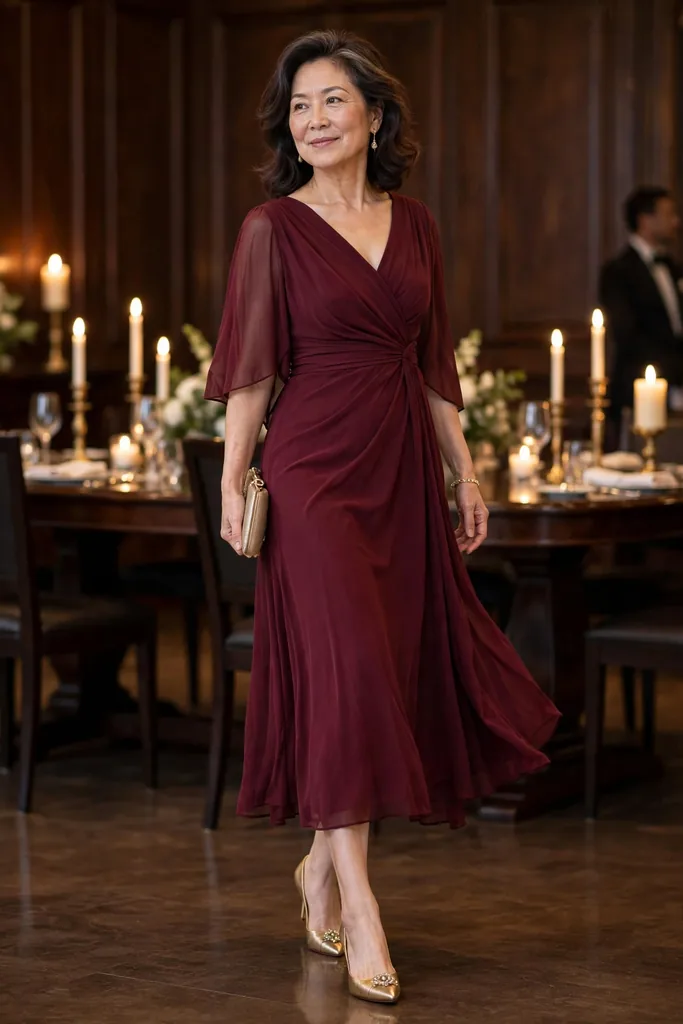
A wedding outfit reads as far more expensive when the fabric hangs cleanly — no tugging, no bunching, no all-day fidgeting with the waistband.
This isn’t about disguising your figure. It’s about choosing a cut that lets the cloth fall properly while still offering shape and structure.
Midi dresses earn their place here because they feel festive without the ceremony of a floor-length gown. Seek out soft A-lines, column cuts, wrap-style fronts, or dresses with a gently defined waist.
A straight-cut dress also looks effortlessly chic when the shoulders sit cleanly and the fabric carries some weight. If dresses aren’t your thing, wide-leg trousers with a flowing blouse or a matching jacket can look every bit as refined.
Shoulder check: Start with the shoulders. When that seam lands in exactly the right place, everything else about the dress or jacket tends to fall into line.
Sleeves also shift the whole mood of an outfit. Coverage comes easily through airy arm shapes — a flutter finish, an elbow cut, a whisper of sheer fabric, or a loose three-quarter line all keep things light..
When you try the dress on, sit down in it and raise your arms — if it stays comfortable through both, it will survive the reception.
If a cinched waist doesn’t feel right, choose a cut that glides over you rather than gripping. A touch of ease almost always looks sharper — and photographs better — than a garment that technically fastens yet strains across the body.
3. Let Fabric and Color Do the Heavy Lifting
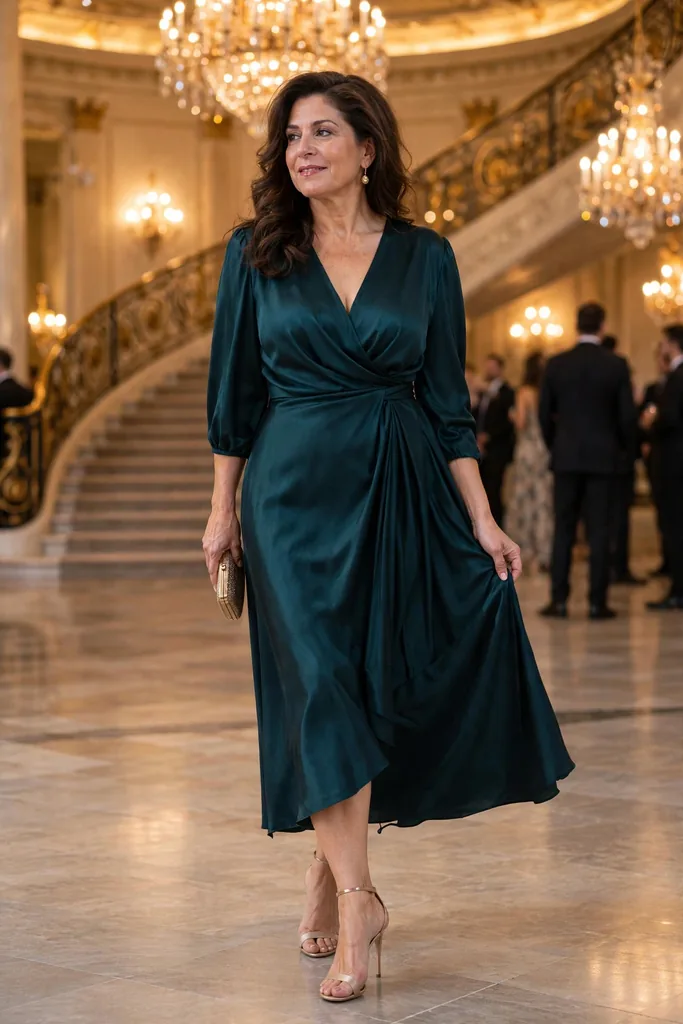
Festive dressing for a wedding doesn’t require heavy embellishment. The texture of the fabric and the richness of the color can carry the entire look.
Crepe, chiffon, georgette, softly finished satin, lace detailing, and fluid woven fabrics all photograph beautifully — they move and catch the light instead of standing stiff.
Paper-thin jersey can show every line underneath, and board-stiff cloth can feel formal in an unflattering way. When either worries you, look for gentle structure with some movement.
Here’s a quick-reference fabric guide for dressing for weddings after 50.
| Fabric | Best Version | Why You’ll Love It |
|---|---|---|
| Crepe | Midweight with a flowing drape | Skims without clinging, keeps its shape |
| Chiffon | Lined, in soft layers | Floats without adding bulk |
| Satin | A soft glow, not a mirror shine | Festive without the flash |
| Lace | As panels, sleeves, or overlays | Texture that replaces bold jewelry |
| Fluid woven fabric | Enough weight to fall straight | Comfortable for hours, still crisp |
When you’re torn between two fabrics, hold each one up to daylight — the one that glows rather than glares will photograph better. Swatches help more than memory, so photograph the fabric in daylight before you commit.
Color does its share of the work, and there’s no need to retreat to black. The palette beyond it is generous — navy, plum, teal, burgundy, chocolate brown, dusty rose, soft blue, deep green.
For daylight weddings, pastels glow — just make sure the fabric has enough depth so the color doesn’t wash you out.
White, ivory, and anything that reads as bridal are best left to the bride, unless the couple has explicitly asked guests to wear them.
That still leaves an enormous spectrum to play with.
4. Anchor the Outfit With One Standout Focal Point
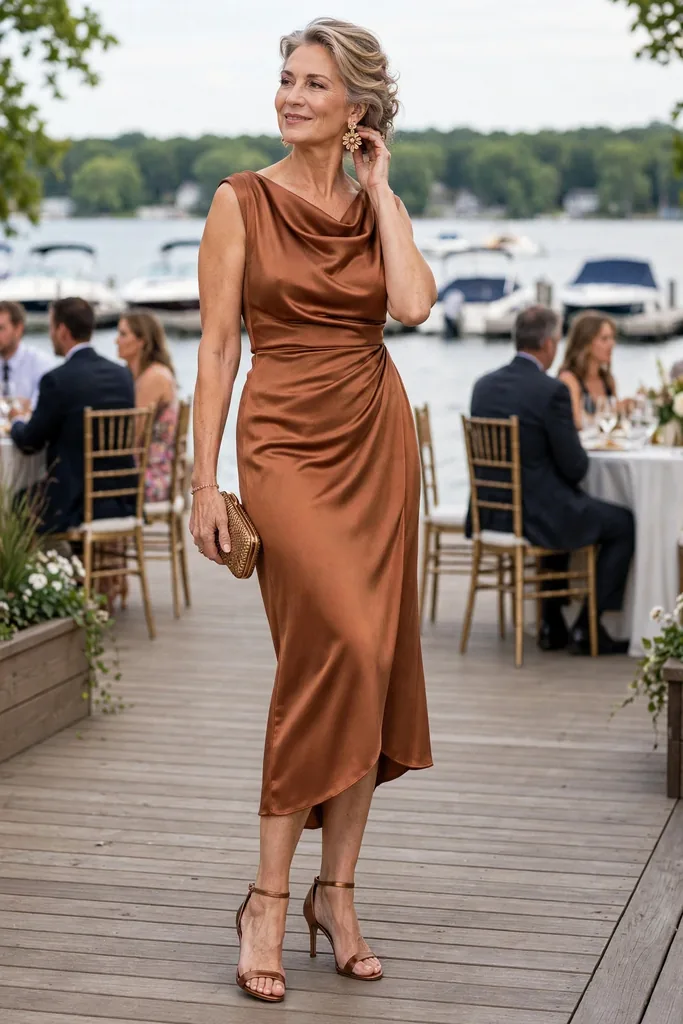
Getting dressed for a wedding becomes far easier once every piece stops competing to be the star of the outfit.
Choose a single focal point and let everything else play a supporting role. It could be the dress’s color, a pair of striking earrings, a beautiful neckline, a printed skirt, or a shoe with a metallic finish.
When the dress already carries a strong floral print, small earrings and a plain clutch are often all it needs. With a plain navy column dress, a sculptural necklace or metallic shoe supplies all the personality it needs.
This single-focal-point habit is a reliable way to build chic outfits for women over 50 — it keeps the result modern rather than over-decorated.
The balancing trick:
- A detailed neckline wants a whisper of a necklace — or none at all.
- Oversized earrings call for an understated bracelet.
- A lustrous dress looks best with softer shoes and a simple bag.
- An ultra-clean outfit wakes up with interesting texture or one striking jewel.
On color: Perfectly matched accessories can make an outfit look dated. Related-but-not-identical colors feel more current.
A plum dress, for instance, sits beautifully with pewter heels and a soft silver clutch; a navy dress pairs naturally with champagne heels and pearl earrings.
Step back from the mirror and squint — if one element pops first, you’ve found your focal point.
5. Choose Reception-Proof Shoes You Can Actually Dance In
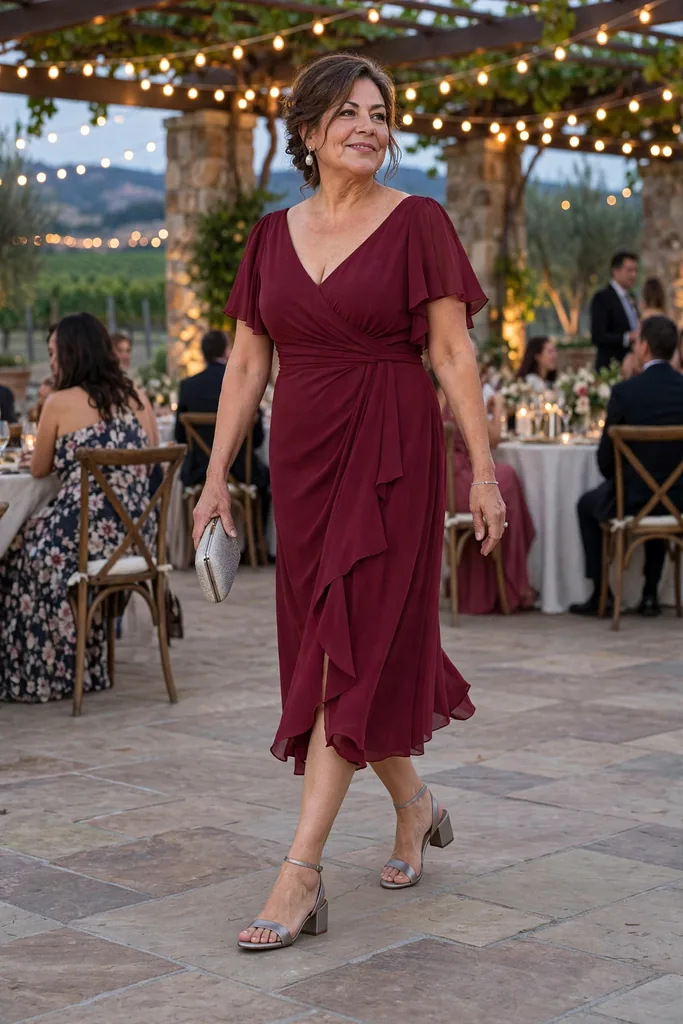
The prettiest shoes in the room are useless if they’re hurting before the first course is served.
A wedding day asks a lot of your feet: standing through cocktails, walking between venues, posing for photographs, dancing late into the evening. Comfort has to be part of the plan from the start, not an afterthought.
A low block heel treats your feet far better than a narrow stiletto and still finishes the look. Depending on the venue, slingbacks, dressy flats, kitten heels, or polished sandals all earn their place.
Height isn’t what makes a shoe elegant. Its shape does far more work than its heel measurement.
Toe shape does quiet work: pointed and almond silhouettes stretch the leg visually, and a slim strap lifts even a low, sensible heel..
Comfort rule: If your feet tend to swell during long events, buy for that reality — don’t gamble on shoes that might feel better later.
Give outdoor weddings their own planning moment. Stilettos disappear into grass, and heavy footwear can fight with a light summer dress.
Break in a new pair on carpet for an evening before the wedding — fresh shoes deserve a rehearsal too.
The right wedding shoe looks deliberate and lets you enjoy every minute of the day.
6. The Small Styling Mistakes That Cheapen a Wedding Look
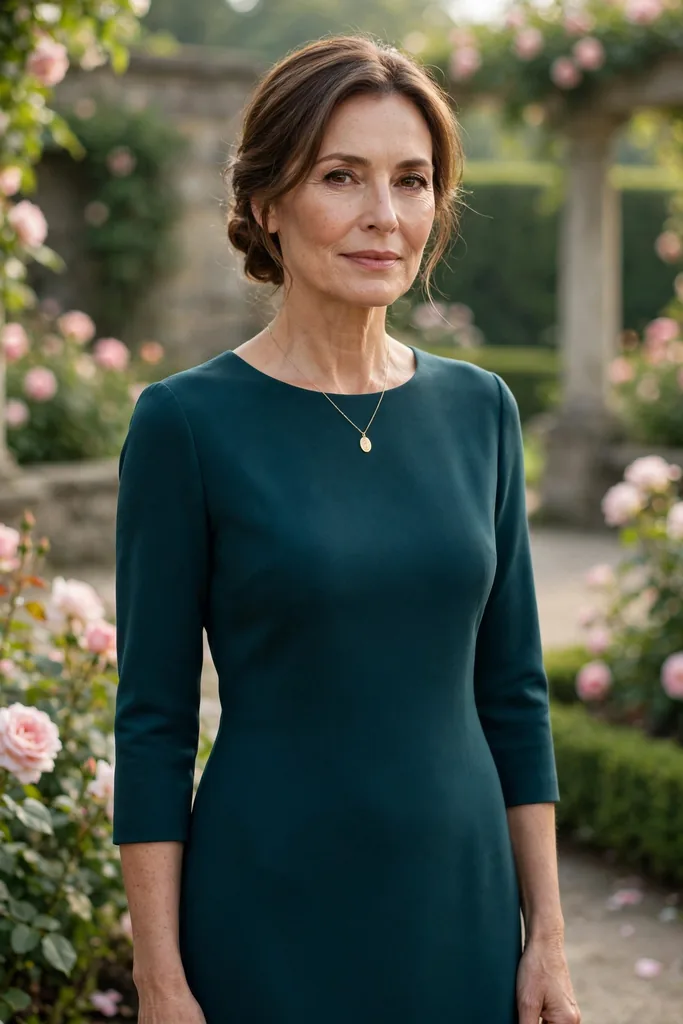
Most wedding-outfit problems come from over-adding rather than from choosing the wrong dress.
A strong base needs far fewer add-ons than most of us expect — and this is where editing pays off the most.
The aim isn’t to fade into the background. It’s to look beautifully dressed while honoring the mood of the celebration.
This side-by-side comparison helps when something in the outfit feels a touch off.
| The Habit to Drop | The Swap to Make |
|---|---|
| Bold necklace with big earrings | Let one standout piece shine |
| Shiny dress with all-metallic accessories | Let matte pieces calm the shine |
| Short jacket ending at the widest point | Pick a longer, cleaner line |
| Heels too high to walk in | A lower heel with a graceful shape |
| Everything matched: shoes, bag, jewels, wrap | Two or three tones that get along |
When in doubt, take one accessory off before you leave the house — the mirror test rarely lies.
If a bold look makes you feel amazing and suits the wedding, don’t shrink yourself to fit in. Ask instead whether the look supports the celebration or competes with it.
That question still leaves plenty of space for personality.
7. A Three-Piece Wedding Formula for When You Feel Stuck
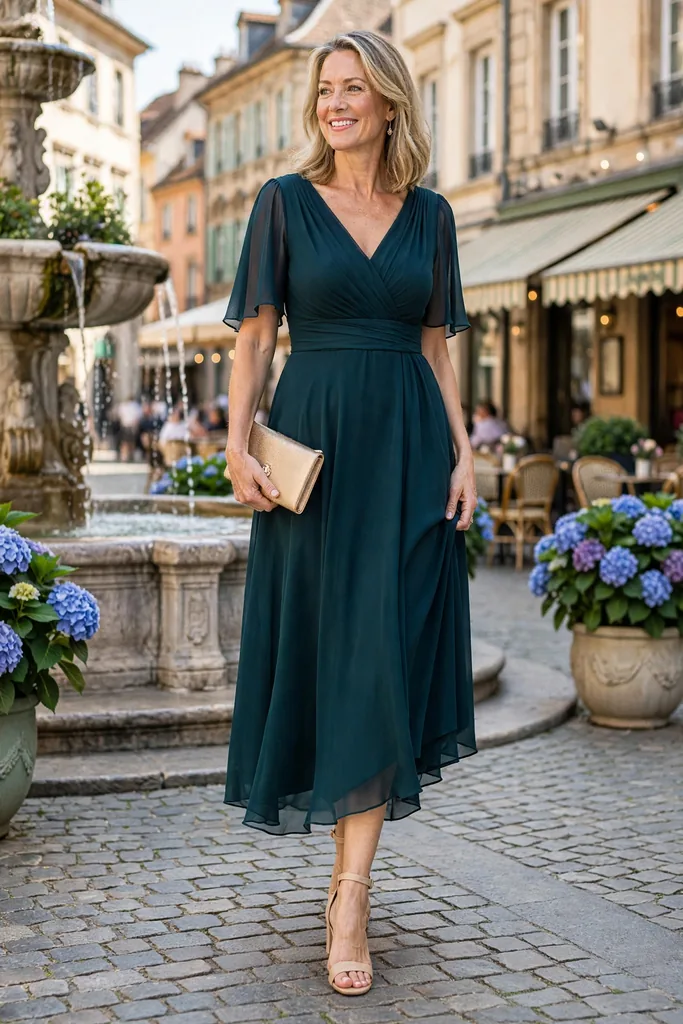
One repeatable formula can take almost all the stress out of wedding shopping.
The formula: a polished midi dress + a dressy shoe you can stand in + one well-chosen accessory.
It works because the dress draws a single clean vertical line, the shoe sets the formality level, and the accessory adds character without cluttering the outfit.
The same thinking applies to trousers or separates.
| Occasion | The Three Pieces | Why It Works |
|---|---|---|
| Daytime affair | Floral midi + block heel + stud earrings | Bright, polished, never stuffy |
| Evening wedding | Solid midi + metallic heel + statement earrings | After-dark interest, no heavy beading |
| Formal wedding | Flowing long dress + sleek heel + structured clutch | One long, clean line |
| Trouser option | Wide-leg pants + fluid blouse + elegant flats | Comfort that still feels festive |
In cooler weather, layer a tailored jacket, a dressy wrap, or a soft longline coat over the formula instead of rebuilding it from scratch.
In warm weather, skip the layer and choose a breathable fabric that keeps you comfortable from the ceremony to the last dance.
Keep a go-to wedding uniform you trust — it beats chasing trendy outfits for women over 50 season after season.
Write your version down once you’ve nailed it — a note on your phone saves the whole debate next invitation.
FAQs
What’s the ideal wedding outfit for a woman over 50?
Let the dress code and venue lead, then pick a refined silhouette you can wear comfortably for hours. A midi dress, elegant jumpsuit, fluid trouser set, or long gown can all be right — formality decides. The strongest pick is usually the one that fits cleanly, moves easily, and feels like your own style dressed up for the occasion.
Are sleeveless dresses fine for a wedding guest over 50?
Yes — a sleeveless dress can look graceful at any age if you love wearing it. For optional coverage, add a featherweight wrap, a sheer jacket, a clean-lined bolero, or a soft tailored layer that complements the dress instead of concealing it. A wrap in the same color as the dress keeps the look intentional rather than improvised.
Does black work for wedding guests over 50?
Most modern weddings welcome black — particularly evening or city celebrations. For a daytime event, lighten it with pale shoes, delicate jewels, a colorful wrap, or a textured bag.
Which dress length flatters a wedding guest most?
No single length wins for everyone, but midi hemlines are remarkably versatile — they suit a wide range of venues and dress codes. Try hemlines at the knee, mid-calf, and lower calf to find the proportion that suits your shoes and the dress’s cut.
Are trousers acceptable for a wedding guest over 50?
Certainly. Trousers are no compromise: a sweeping wide leg, a suit cut from one cloth, or an elegant one-piece jumpsuit holds its own against any gown.. Pick a fabric with beautiful drape, and finish with a refined shoe, a clean neckline, and one thoughtful accessory — that combination reads as celebration wear, not office wear.