
After 50, Loving Your Own Company: The Rare Traits of People Who Prefer Solitude

A retirement dinner lets out on a Friday evening. Walking to the parking lot, one guest already dreads the empty rooms waiting at home; the other feels a wave of quiet delight at the thought of them.
Friendliness has nothing to do with it. Something deeper is at work — a change in the mind that alters what being alone feels like after a few decades.
Psychologists call it a slow mid-life pivot toward autonomy, firm boundaries, and a peace no packed calendar ever gave.
Nothing about this shift means disliking people. Plenty of solitude-lovers keep warm friendships and lively family ties — they have simply stopped confusing a full schedule with a full life. The company they keep has changed less than the pressure they feel to keep it constantly.
What you will find below are the patterns that show up again and again in people who genuinely enjoy their own company after fifty: how the change begins, what it costs them to defend it, and the quiet habits that turn solitude from an empty room into a reliable source of restoration.
Table of Contents
- Why Solitude Outshines Social Performance After Fifty
- The Turning Point Where Social Fatigue Becomes Self-Rule
- Why Small Talk Starts Draining You More Than It Used To
- How Quiet Self-Approval Replaces the Need for Applause
- Learning to Sit With Hard Truths Instead of Escaping Them
- 🌱 How Your Solitude Grows Up
- The Quiet Decision to Stop Running Everyone Else’s Feelings
- The Old Habit of People-Pleasing
- The New Practice of Calm Solitude
- The Quiet Love of Unbroken Daily Rhythms
- FAQs
- The Single Choice That Secures Your Peace
- One Small Step Toward a Quieter, Clearer Life
Why Solitude Outshines Social Performance After Fifty

I once blamed declining weekend plans on simple exhaustion — the natural slowdown after years of packed calendars.
The move toward solitude is rarely accidental: across decades, social duties lose their compulsory feel one by one.
Once you stop curating your image for casual acquaintances, the effort you spent performing stays in your pocket.
That returned attention builds a new bond with silence: the quiet room stops feeling like punishment and becomes a well-lit studio where nothing needs defending.
The mechanism is simple: wherever your attention goes, your energy follows. Quit policing the room and your whole body exhales.
A useful audit is the calendar itself. Look at the next two weeks and mark every commitment you would not miss if it were cancelled — the committee seat you took out of duty, the weekly catch-up that has run out of things to say. Most people find a third of their social life survives on momentum alone, and each one of those costs a little attention that could have stayed home.
There is also a simple test that separates ordinary tiredness from genuine preference. Fatigue says no to everything and then recovers; preference says no with a small spark of relief before the event even ends. If cancelling a plan brings a quiet lift instead of guilt, that lift is information — your mind telling you what it actually wants more of.
The Turning Point Where Social Fatigue Becomes Self-Rule

Picture the driveway: engine ticking, eyes on the dashboard’s amber glow, house dark beyond the windshield.
Ten unbroken minutes pass before you kill the ignition, admitting you cannot face walking straight through that front door.
That unplanned stop in the chilly car draws the line: everyday exhaustion has quietly turned into self-rule.
Researchers call this the moment the job shifts from polishing your image to guarding your inner reserves — energy drawn from inside rather than the crowd.
The conversations you once endured from politeness now cost real money — and the currency is your calm.
A few weeks later, three separate invitations can land in your inbox — all pleasant, none urgent. The old habit would manufacture a full diary; the new reflex is simpler and kinder than any excuse: admit the weekend is staying deliberately blank.
You use a plain, unapologetic line instead: “I appreciate the invite, but I am keeping this weekend entirely unscheduled.”
If anyone presses for more, keep it just as spare: “I need a couple of days with nothing on the books to fully recharge.”
Deliver it once, then stop talking and let the quiet sit until the conversation moves on by itself.
Instead of dismissing that pause in the driveway, treat it as a readout rather than a failure: the mind flagging an empty social tank and requesting a short buffer before you walk back inside. Once you learn to read the signal, you can schedule the buffer on purpose: ten minutes with the radio off before walking inside, a short loop around the block after a draining event.
The scripts get easier with repetition. A family group chat pressing for Sunday lunch gets “not this week, but I would love a walk with you next Thursday.” A friend calling “just to catch up” for the fourth time this month gets the same warmth in a smaller window: twenty minutes on the phone, honestly framed. You are not refusing people — you are refusing the assumption that every invitation deserves a yes.
Why Small Talk Starts Draining You More Than It Used To

The telltale symptom is cost: empty conversation starts registering as an actual expense, drawn out of a finite attention budget you can no longer ignore.
Conversation researchers say solitude-lovers develop a sharp ear for social friction — empty filler tires them faster than ever.
The scene is usually familiar: an old workplace grievance gets retold beside the office kettle, you keep nodding along, and some inner stopwatch is already calculating the politest possible escape.
That restlessness is not impatience, and not bitterness setting in.
Read it as a dispatch from a mind with a finite budget — attention spent here cannot be spent on what matters.
The replacement move is short and kind: a warm nod, a word that your desk is calling, no long apology.
The signs are quiet: small talk loses its charm, home becomes headquarters, reading deepens, mornings slow down.
It helps to see where this shows up most. The neighbor at the mailbox who needs forty minutes for a five-minute update. The grocery line chat that circles the same weather twice. None of these people are villains — but each one is a small withdrawal, and you have started noticing the balance.
You can stay warm without staying available. “I loved seeing you — I have to run, talk soon” said with real eye contact lands better than a fake twenty minutes. Walking while you chat, keeping one hand on your car door, or answering from a little farther back all signal the same kind thing: glad to see you, not settling in. Shorter exchanges often feel kinder to both people than one long, resentful one.
How Quiet Self-Approval Replaces the Need for Applause

Wanting to share good news or enjoy public approval is a normal part of connection — nothing wrong with it.
The difference is texture: a milestone that brings honest happiness, not hunger for the room’s validation.
Passing along good news to mark a happy moment is perfectly healthy — the trouble starts only when your worth depends on the applause it gets.
Beware mistaking rich solitude for defensive withdrawal: solitude restores, isolation walls off. Keeping two or three deep friendships active stops independence hardening into detachment.
The difference shows up in the motive, not the behavior. Sending a friend a photo of your finished garden because you want her to see it is celebration; posting it in three places and refreshing the reactions is hunger. Telling one close friend about a promotion because the news is genuinely good is connection; announcing it widely and watching who responds is outsourcing your worth to the room.
Try the quiet test: if nobody applauded, would you still be glad it happened? When the answer is yes, the applause was decoration. When the answer is no, the event was mostly a bid for approval — worth noticing, worth no shame, and worth doing less often. Independence deepens every time you let a good thing be good without a witness.
Learning to Sit With Hard Truths Instead of Escaping Them
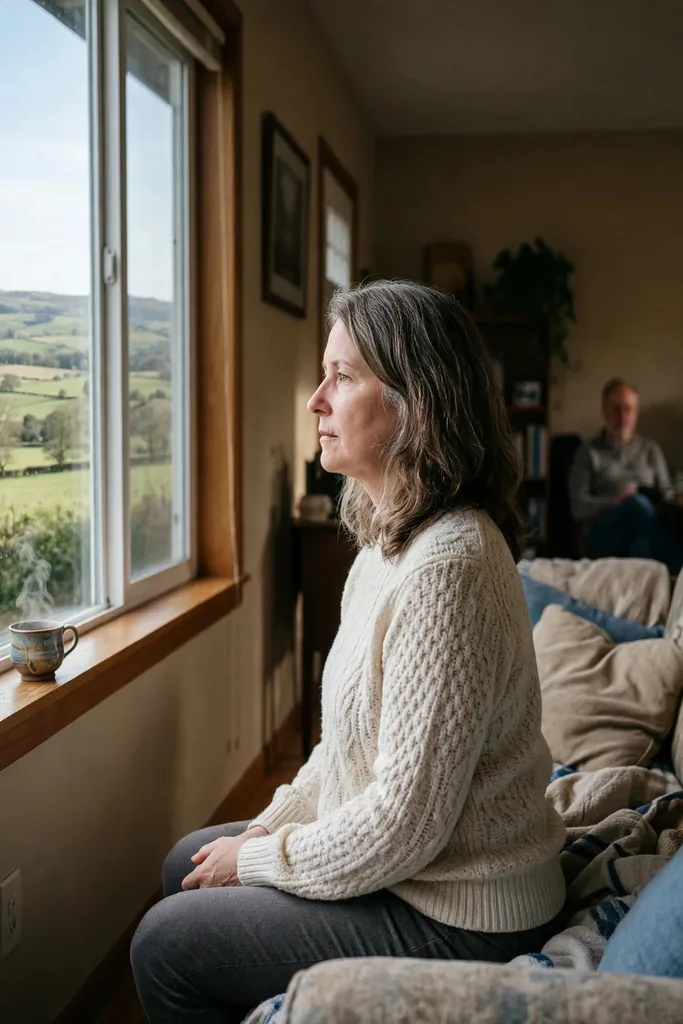
Those first stretches of genuine quiet are the hardest part: an old regret or a half-finished worry drifts in, and the mind amplifies it until the hour feels enormous.
Most advice says swat it away — podcast on, friend called — but that reflex buries the discomfort, where it keeps steering your mood unseen.
Genuine self-command means facing the uncomfortable fact head-on until it dulls, without reaching for rescue. Next time solitude brings a hard thought, leave the phone in your pocket, hold your seat, and give the emotion time to pass through you.
A timer makes this concrete rather than heroic. Ten minutes, phone in another room, one hard thought allowed to be present: the regret about the job not taken, the friendship that drifted. Name it silently — “this is the worry about the money” — and naming alone takes some of its charge away. You are not there to solve the thought — only to let it be seen, felt, and released.
Watch the difference between sitting with a truth and ruminating on it. Rumination replays the same loop and arrives nowhere; sitting lets the feeling crest and dull like a wave. The phone is usually the escape hatch — the automatic podcast in the car, the scrolling during tea. One screen-free hour a day is a gentler place to start than a silent retreat.
🌱 How Your Solitude Grows Up
It unfolds in stages: exhaustion — noticing the daily cost of performing; the pause — small blocks of unscheduled time, unexplained; the preference — choosing the quiet evening openly; and deep peace, when time alone becomes your most dependable way to recover.
The Quiet Decision to Stop Running Everyone Else’s Feelings

Stepping back from smoothing other people’s moods can look cold, and you may fear seeming distant.
You spent years as the household’s mood regulator, catching every tonal shift, deploying humor or compromise to defuse tension early.
The old pattern used to kick in around the dinner table: a sudden quiet, a weighted sigh — and you would rush in to interrogate the mood and repair it.
The turning point is a realization: cushioning others’ emotions teaches them nothing about toughness, while steadily spending fuel your own life requires.
These days you leave the mood alone: hold your chair and let them sit with their own frustration unassisted.
Once frowns no longer trigger a rescue mission, relationships lose their project-manager quality and become roomier places where adults may have their own inner seasons.
The practice gets specific fast. An adult child calls to vent about work — instead of a five-point rescue plan, you try “that sounds like a heavy week” and let the silence do the rest. A partner comes home grey-faced; you offer tea and company rather than interrogation. A sister’s crisis texts no longer pull you into a three-hour emotional shift; a warm, brief reply is enough.
Expect a guilt wave, because the old programming equated helping with loving. The redefinition is this: trusting someone’s resilience is also love, and often the more respectful kind. Over months, something unexpected happens — people start solving their own problems more, and the relationships get calmer, not colder. The rescuer retires; the companion remains.
The Old Habit of People-Pleasing
- Rushing to repair every bad mood in the room
- Apologizing for needing quiet time
- Saying yes to draining invitations out of guilt
- Tracking everyone else’s comfort before your own
The New Practice of Calm Solitude
- Letting other people handle their own feelings
- Naming your need for quiet directly and kindly
- Turning down social plans without a long explanation
- Guarding your emotional baseline first
The Quiet Love of Unbroken Daily Rhythms
the-quiet-love-of-unbroken-daily-rhythms.webp
Popular wisdom says a loose schedule keeps life vibrant — yet it hands your peace to whoever demands it next.
Take a Tuesday: do you wake up inside a day you designed, or inside a current of messages timed to somebody else’s needs?
Here is the honest audit: track where your opening two hours actually go — toward your own clear head, or toward everyone else’s demands?
When the answer turns out to be the second one, the day’s thinking fuel gets burned before breakfast, and by midday you are running on fumes.
A schedule you author doubles as shelter from all of that.
Coffee at six, a book, nobody speaking — that beats any crowded outing, cementing an unshakable baseline of self-command.
With that steadiness, outside chaos cannot cloud your thinking — you pass through complicated settings without collecting their grit.
For any surprise request that would break the pattern, a ready-made reply helps: “My mornings stay off-limits, though I am free Thursday afternoon.”
Say it a single time, stand firm, and over weeks your calendar stops looking like a stack of intrusions and starts reading like a life you actually designed.
The path is gradual: first you notice which gatherings hollow you out; around month three you start guarding brief quiet windows each week; by month six you have stopped explaining your choices; and past a year, solitude becomes your main source of renewal — a full sanctuary, not a stolen break.
Make the protected morning concrete: coffee at six, twenty pages of a book, the phone still in the other room until eight. A short walk before the first email. None of this requires waking at dawn — it requires deciding that the first slice of the day belongs to you and telling the household plainly that it does.
Some pushback from family or old friends is part of the process, and it usually fades once everyone sees the new pattern holding. A partner who wants to chat over breakfast can join you for the last ten minutes of the window. Family members who expect instant replies learn, usually within a fortnight, that you answer at nine instead of seven. Pair every no with a yes — “mornings are mine, but Thursday afternoon is ours” — and the boundary reads as design, not rejection.
FAQs
Is it a warning sign if I genuinely enjoy being alone? ↓
Peace is the giveaway, not the warning sign. A depressed mind feels heavy and drained; one that loves solitude feels like a clear, sunlit room where energy comes back to you. If quiet time leaves you lighter and more energized afterward, that lightness is the marker of healthy solitude. Watch instead for flattened appetite, disrupted sleep, and interest draining out of everything — those belong to depression and deserve professional care, not more quiet.
Constant noise has been my default for years — how do I start finding quiet genuinely enjoyable instead? ↓
Start the day with ten minutes of deliberate quiet before any screen or speaker wakes up. Treat it like training wheels: your system learns to sit with the missing noise one small step at a time. Keep the dose short at first — even five minutes counts. One screen-free cup of coffee, a walk without earbuds. Most people find the restlessness peaks in the first week, then softens as the nervous system recalibrates to the lower input.
Does wanting solitude mean I have to give up my friendships? ↓
No — it means getting choosier about which interactions earn your time: fewer draining exchanges, more deep and meaningful ones. Think of it as curating rather than cutting: protect the two or three friendships that energize you, and let the acquaintance-level obligations fade without guilt. Deep bonds actually grow stronger once you are no longer stretched thin.
How do I set boundaries without making people feel hurt? ↓
Keep the decline short and warm: saying you cannot make it, with no long backstory, is honest, respectful, and leaves nothing to be misread. Warmth and firmness can coexist: “I cannot make it this time — let us plan something soon” works for almost everything. People adjust to your consistency far faster than they forgive your quiet resentment.
The Single Choice That Secures Your Peace
If one change survives this article, let it be this: guard the first hour of every morning against all outside demands, like a sanctuary — then let everything after arrange itself around the calm you started with.
The compound effect is what surprises people. One protected hour a day is seven hours a week — a full working day of clear thinking reclaimed every month. Decisions get made earlier, irritations land softer, and the rest of the day inherits a steadiness that no to-do list can manufacture.
One Small Step Toward a Quieter, Clearer Life
Open your calendar for the week ahead and remove one commitment that exists purely for show.
Pick the one you dread on Sunday night — the recurring lunch, the committee, the obligation that has survived on guilt alone. Cancel it with the same short, warm script you have been practicing. The empty space it leaves will not stay empty; it will fill with whatever you actually wanted, which was the point all along.