
The Art of Letting Go: 9 Habits Those Who Age Gracefully After 60 Abandoned Without a Word

The morning drag gets pinned on another birthday, and that quiet habit silently shortens your years of comfortable, easy living.
Ask the people who carry their seventies with real lightness and spark what made the difference, and almost none will name a pricey supplement or a secret regimen.
The real story is far less dramatic: at some point they listed every habit draining their life force and simply quit playing along. Consider this piece your map of those nine hidden shifts — every one of them yours to adopt from today.
A Quick Overview
The Hidden Machinery Behind a Long, Strong Life
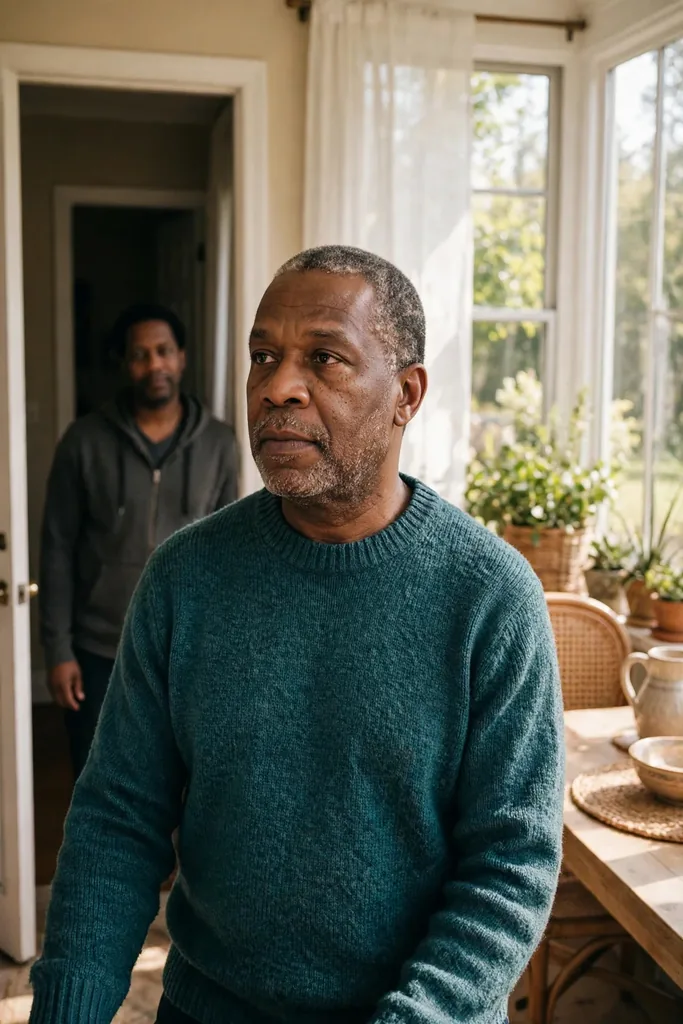
When you keep lugging around social duties you never signed up for, plus the small daily strains you barely notice, the slow grind wears down your reserves — not for a week or a season, but across decades. None of it feels dramatic in the moment, which is exactly why it compounds.
Picture the scene: evening light in the kitchen, a neighbor holding you in the doorway with a forty-minute vent about a trivial slight, while your lower back quietly protests — because nobody ever taught you the graceful art of leaving a conversation.
Every stressor you silently tolerate keeps drawing on the body’s reserves, and the slow burn continues until feeling worn out starts to pass for normal.
Next time an unwanted commitment sends your shoulders climbing toward your ears, catch the signal, decline in a soft but firm voice, and step back inside your own doorway with the evening still yours.
The Graceful-Aging Check-In
Shedding pointless commitments
Refuse with a clear conscience and move on.
Nursing old resentments
Keeps your mind in permanent overdrive.
Welcoming daily movement
Keeps joints and muscles working for decades.
Table of Contents
- The Hidden Machinery Behind a Long, Strong Life
- 1. Lugging Old Resentments Around Like Overpacked Suitcases
- 2. Treating Constant Tiredness as the Price of Getting Older
- 3. Saying Yes Aloud While Your Body Votes Otherwise
- 4. Cementing Your Routine Like It Can Never Change
- 5. Comfort First, Strength Later
- The Power Pivot
- How It Used to Go
- The Stronger Path
- 6. Believing the Culture’s Story That Decline Is Inevitable
- 7. Holding On to Friendships That Leave You Empty
- 8. The Reflex Apology — and How to Drop It
- 9. Postponing Your Own Joy Until Someone Gives the Go-Ahead
- FAQs
- What a Single Week Can Really Shift
- Will You Guard the Energy You Have Left?
1. Lugging Old Resentments Around Like Overpacked Suitcases

They said it to my face with the whole table watching — and the line still loops in my head.
Years later you’re still turning that careless dinner-party remark over at your own kitchen table, because your brain files unsettled social debts the same way it files danger — something worth staying braced against. The person involved has usually forgotten the incident entirely, while you keep paying interest on a debt nobody is collecting.
The person who said it walks free, while you stay stuck on low-level alert, spending genuine physical stamina on people who stopped replaying the moment long ago.
There is really only one move: let the memory fade with no final word, no verdict, and no ceremony. No verdict also means no appeal — the case simply closes.
💡 Tip: Put the insult down on paper, then send that paper straight to the recycling bin.
💡 PRO TIP
Catching Pointless Mental Static
Keep a tally today of every time you re-enter an argument that can never be edited — then walk out of the rerun on the spot.
2. Treating Constant Tiredness as the Price of Getting Older

Once everyday tiredness turns into a fixture you stop questioning, it quietly siphons the fuel meant for everything else you do.
When that mid-afternoon heaviness arrives, watch your reflex: do you file it under ‘just getting older,’ or do you treat it as a clue worth investigating?
The instant your reflex is a sigh and a mumbled ‘well, age,’ you have signed on to a baseline of depletion that quietly cheapens your days.
That little sentence mostly serves as cover for routines actively wearing you down — it lets genuine physical and mental drain dress itself up as something unavoidable.
When the afternoon slump slams in, the usual answer is another cup of coffee or a grim, white-knuckled push straight through it. Neither option truly restores you; both simply postpone the crash.
Pushing through borrows tomorrow’s energy to fund today’s obligations, and the debt keeps compounding over the weeks until even rest stops feeling restorative.
Quit filing depletion under ‘inevitable’ and restructure the afternoon instead: ten minutes of genuine physical reset beats forcing a tired engine every single time.
Guarding Your Energy — A Quick View
⏰ Sharpest Hours
When you’re sharpest
☕ Coffee Cutoff
Noon is the line
🚶 Daily Reset
Fifteen minutes on foot
Core Rule
let nothing outside raid your sharpest morning hours.
3. Saying Yes Aloud While Your Body Votes Otherwise

The common wisdom says a good friend or a dependable relative turns up for everything, whatever the personal price.
That wisdom treats your reserves as bottomless, while every forced yes quietly drains them — all to spare someone else a fleeting moment of disappointment.
Try this reframe: a refusal is not a character flaw; it is an honest ledger of attention that is genuinely limited. Your attention is a budget, and a refusal is simply how you balance it.
Agreeing to an evening you dread purely to dodge the gossip if you skip it is a trade: your genuine well-being exchanged for a few hours of fake social calm.
Ask the hard question: does showing up actually enrich your days, or are you just curating somebody else’s expectations?
When pure obligation is the only reason, deliver a brief, kind refusal and let the elaborate excuses stay unwritten.
Where Limits Pay Off Best
4. Cementing Your Routine Like It Can Never Change

Everyone treats steady consistency as the highest virtue of a good life — but could a locked-in routine actually be fencing you inside your own walls?
The common belief goes like this: once decades have set your habits in concrete, changing them is pointless, draining, or too disruptive to your peace.
Identical heavy dinners week after week, whole evenings melted into the same favourite armchair, and a steady refusal of anything physically new — combined, they turn body and mind brittle.
And here is the part nobody expects: when everything is predictable, your mental and physical suppleness quietly erode.
Repeat the same hours week after week and the brain quits filing new memories while the muscles quit answering new calls — life contracts decades earlier than necessary.
The breakthrough is seeing adaptability itself as a biological muscle: skip its low-stakes workouts and it quietly withers. A different route to the shops, a new radio station, a meal cooked backwards — small doses keep the muscle flexed.
Swap one small piece of this week’s Tuesday on purpose — a walking route you have never tried, a recipe you have never cooked — and crack the autopilot loop wide open.
⚠️ COMMON MISTAKE
The Easy-Routine Snare
Never let sheer convenience schedule your whole life. Plant one intentional surprise somewhere in your week.
5. Comfort First, Strength Later

My old theory was simple: the easiest physical life is the safest one — spare the joints, hoard the energy.
Researchers of physical longevity keep landing on the same finding: dodging every small physical challenge speeds up the very decline we dread, and muscles waste fast once everyday effort is handed off to someone else.
So when effort first knocks, don’t reach for the couch — weave strength back into ordinary days by carrying your own groceries and climbing the stairs. Strength kept is independence kept.
The Power Pivot
How It Used to Go
- Letting others lift everything for you
- Dodging staircases entirely
- Parking yourself in a chair all afternoon
The Stronger Path
- Hauling the groceries yourself
- Climbing stairs to keep legs strong
- A daily stretch to stay limber
6. Believing the Culture’s Story That Decline Is Inevitable

You open the weekend magazine and the headline charts a familiar course: fading energy, slow withdrawal, the long goodbye.
Message after message soaks in: vitality drains away after a certain decade, and daily life becomes a countdown instead of a story still being written. The script was written by advertisers and outdated textbooks, not by your body.
Yet real-world observation tells another story: people who keep their curiosity fired up and their friendships close shatter those stale expectations — proof that cultural scripts are not biological law.
One real exception deserves naming: honoring true physical limits and easing off while a body heals is wisdom, not surrender.
Ask yourself this instead: are you responding to what your body actually needs, or merely obeying the background hum of a culture that wants you fading into the wallpaper?
Walk away from the media diet that paints growing older as tragedy or emergency; reach instead for books, projects, and people that call for your full, vivid presence.
🌱 GROWING TIP
Curiosity Instead of Retreat
Make this the year you master one skill you have never touched — an unfamiliar cuisine, a foreign language, anything brand new.
7. Holding On to Friendships That Leave You Empty

Yet another evening dissolves across the table while someone delivers a two-hour complaint monologue, never once wondering how you are holding up.
You call it loyalty to decades of shared history — as if enduring a one-sided drain proves your steadfastness.
But your nervous system translates the arrangement differently: your energy, your hours, and your inner health rank below a shared calendar history.
Standing by a friend through a rough season is one thing; locking yourself permanently into the role of audience is another. One asks for your heart; the other only rents your ears.
Pumping life back into a bond that faded from neglect years ago charges a daily toll on your energy — much steeper than you imagine.
Real change starts when you stop sprinting to answer every call and allow the heavy, one-sided dynamic to drift toward its natural, peaceful close.
8. The Reflex Apology — and How to Drop It

Watch the pattern: an apology for voicing an opinion, another for pausing to think, another for lingering in a doorway.
What feels like politeness quietly tells both you and everyone around that your presence is a bother. True courtesy makes room for everyone, yourself included.
A stranger knocks into you in the grocery aisle, yet you are the one blurting ‘sorry’ — rehearsing, one collision at a time, the idea that your own body is a logistical glitch.
The distance between making yourself small for harmony and holding your position is where your daily confidence lives — and each automatic apology wears that confidence thinner.
Drop the habit of apologizing in advance for occupying shared space — and trade that reflex for calm phrases that claim your spot in the room.
Practice alternatives instead: a simple ‘excuse me, stepping through,’ a ‘thanks for your patience while I think this through’ — or nothing at all, just the pause.
9. Postponing Your Own Joy Until Someone Gives the Go-Ahead

I wasted years keeping my schedule open before allowing myself anything worthwhile, as if joy needed a formal invitation or a finished checklist.
Vacations, hobbies, tiny delights — all sit on the shelf while you hold out for some ideal milestone or the mythical ‘right’ moment. The calendar will never clear itself — that part is entirely on you.
Start this week, exactly as you are.
Claim the free afternoon, pick up the sketchbook, wander the neighbourhood — no permission slip needed, since your hours belong to you.
FAQs
What a Single Week Can Really Shift
Release the ancient resentments, quit justifying every hour of your diary, stop pinning normal tiredness on the date — and watch your baseline move. A lighter baseline changes everything downstream. Sleep, patience, even posture.
Let one habit on this list go today — then feel the days ahead grow lighter.
Will You Guard the Energy You Have Left?
Pull up your week right now and strike one draining commitment off it — then watch the days breathe easier.