
Dressing the French Way After 50: Secrets That Actually Work
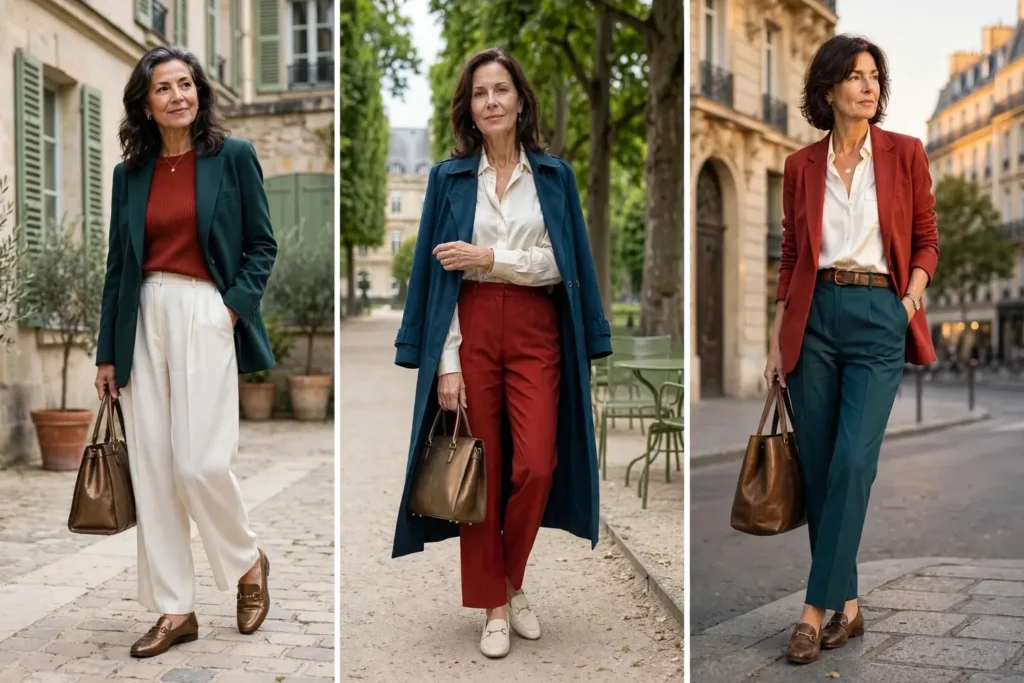
Mornings turn strange when racks hand you three wrong lives: clothes built for somebody younger, dull pieces, outfits designed for a calendar you do not own. Women past fifty want to look current — without sprinting after every trend or assembling outfits that feel stage-managed.
That tension is where the French approach earns its keep. Its pull never came from owning a striped sailor top or collecting Parisian clichés — it comes from holding back, fit, cloth you can trust, and knowing when an outfit is finished.
For dressing over 50, these ideas can take the friction out of mornings without flattening your personality. No new wardrobe required — a few shifts in proportion, color, shoes and finishing touches can make the pieces you already own feel sharper.
Table of Contents
- Fewer Pieces, Sharper Choices: Where French Restraint Begins
- Nail the Silhouette First, Decorate Second
- How Cloth Quality Makes Plain Pieces Look Deliberate
- Calm Colors First, One Bold Note After
- Let Shoes and Bags Complete the Look, Not Compete With It
- Skip the Clichés: Keep the French Spirit, Lose the Costume
- One Repeatable Outfit Equation for Everyday French Dressing
- FAQs
- The French Way Is a Habit, Not a Shopping List
Fewer Pieces, Sharper Choices: Where French Restraint Begins
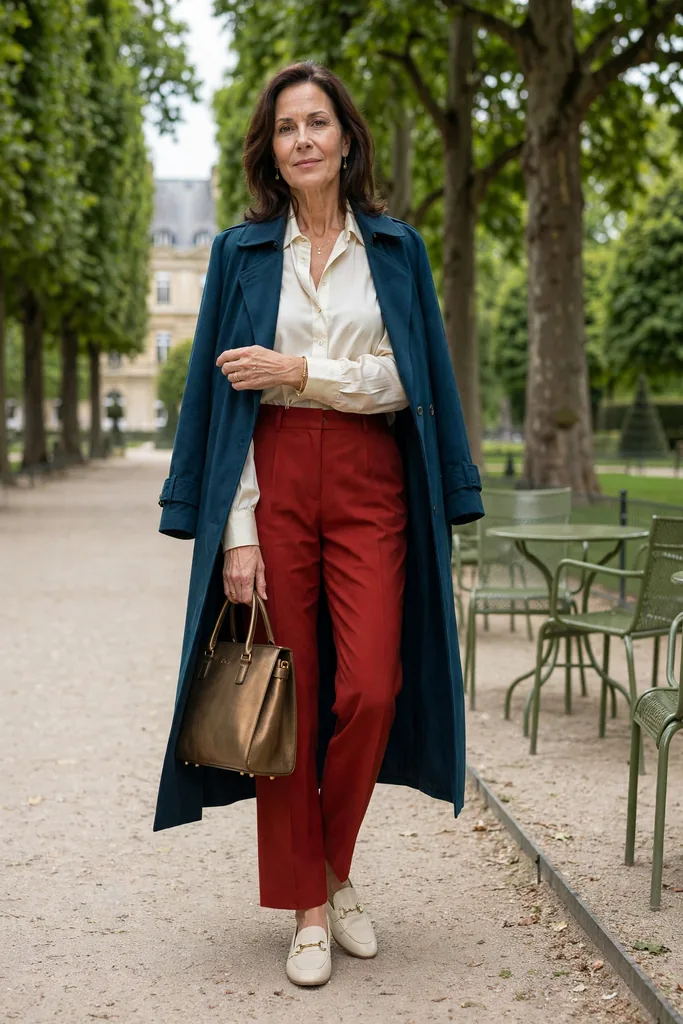
The French look reads as simple because someone edited before leaving the house. Most outfits run on three or four visible pieces — and every one has a job to do.
This has nothing to do with painting your closet beige, dressing minimal, or spending more. It is about giving the eye one calm place instead of making every garment, accessory, color and trend shout over each other.
A deep-petrol coat over an ivory silk shirt and brick-red trousers — the pairing here — can outshine an outfit of statement pieces. The coat’s shoulder sits clean, the trousers skim instead of gripping, and ivory loafers plus an antique-bronze bag give the look a finished edge.
That mindset pays off hardest when you are building stylish outfits for women over 50 that still belong in a real week — errands, client lunches, travel days and Tuesdays.
Repeat-wearing is a French habit, not a fallback — the same beloved jeans can anchor two days a week, and only the framing needs to shift: a different blazer, a swapped bag, a silk scarf knotted at the neck or fresh loafers, which turns one good pair into two separate outfits.
Time to translate a few stale fashion rules into their French-inspired versions.
| Tired Rule | The French-Inspired Take |
|---|---|
| Each look must have a showpiece | Choose one lead detail and let the rest stay quiet |
| Plain pieces are dull | Solid basics are what make room for personality |
| Only trends keep you current | Newer proportions usually update you more |
| Variety needs a packed closet | Repeat a small rotation of trusted combinations |
| Polished equals formal | Fit and clean finishing lift even casual pieces |
Nobody should be able to tell you fussed. The finish line is an outfit that feels thought through but never labored-over.
Nail the Silhouette First, Decorate Second
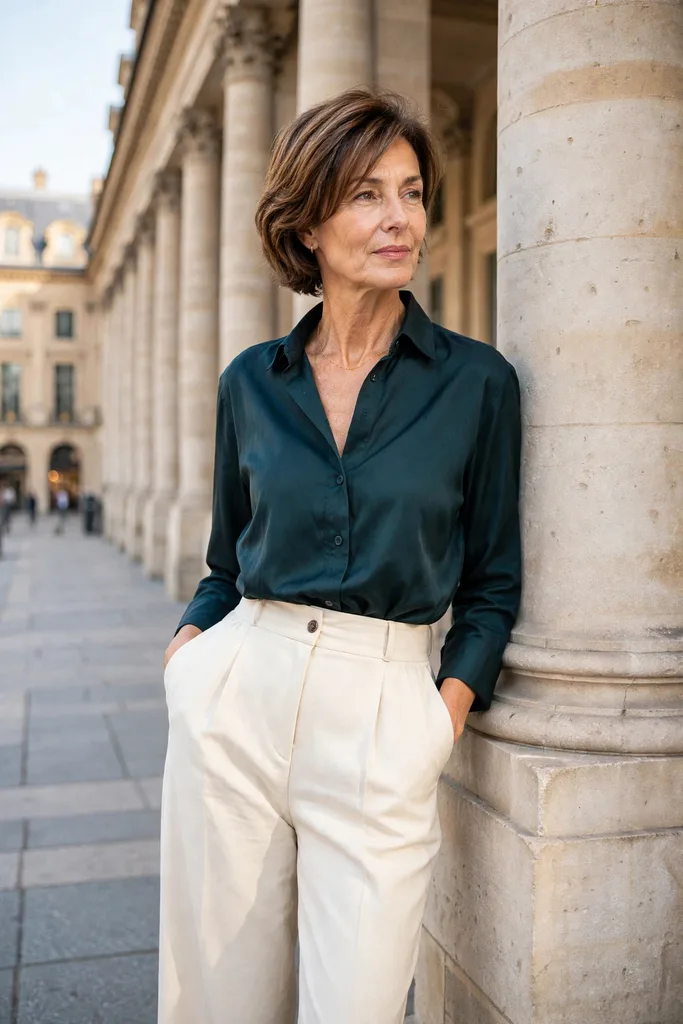
Ask a Parisian woman what carries her look and she will point at shape, not sparkle. Silhouette comes before decoration in the French playbook — get the outline right and the extras become optional.
Fit tip:
Nine times out of ten, the fix is proportion, not your figure — so before you blame the garment, run a four-point check: shoulder seam, sleeve length, hem position and trouser break. Most of the time what looks like a body problem is a proportion problem.
The classic pairing is one easy piece against one tighter one. Picture a deep-petrol silk shirt falling into ivory wide trousers — the top skims while the leg flows — the contrast does the styling for you. A roomy blazer behaves the same way: it lands better over a plain tee than over several slouchy layers.
Where things end changes everything. Think of hemlines as drafting tools: a jacket that stops at the hip sketches a different figure than one that runs to mid-thigh, and tucking the front of a longer shirt keeps the fabric from drowning the shape you built.
No one says you must spotlight your waist. The point is to build a little architecture into the look so cloth does not descend in one uninterrupted column.
Here is a fast test: stand back from a full-length mirror and read the outline before zooming in on details.
How Cloth Quality Makes Plain Pieces Look Deliberate
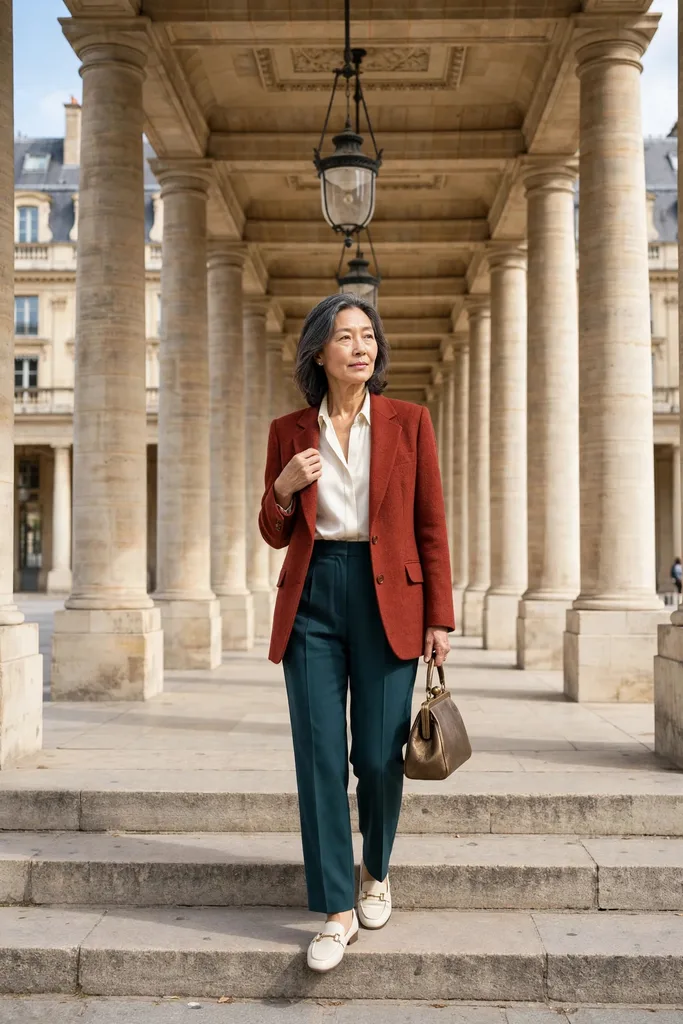
French-leaning closets lean hard on texture, because texture gives plain clothes their depth. Start with fabrics that do the styling for you: a cotton poplin shirt, a wool cardigan, a linen-blend blazer or a jersey top arrives looking finished, whereas flimsy weaves that twist, cling and sag by lunchtime need rescue.
Fabric fix:
When a simple outfit feels lifeless, reach for texture before another accessory.
That cloth-first thinking does the heaviest lifting in everyday outfits for women over 50 — cloth that keeps its line means two or three pieces look completely composed.
Forget the labels. Scrunch the cloth in your hand, feel how it falls — behavior tells you more than any tag or price ticket.
Match the cloth to the garment and the life it will live.
| Piece or Cloth | What to Feel For, and Why |
|---|---|
| Cotton shirt | Body enough to stand the collar up without going stiff |
| Fine-gauge knit | A drape that follows your shape instead of clinging to it |
| Tailored trousers | Cloth with backbone so the leg line stays razor-clean |
| Linen blend | Natural grain that creases gracefully instead of crisply |
| Jersey top | Medium weight that never turns see-through on the stretch |
In warm weather, breathable cloths keep a simple look from feeling heavy; in cold months, brushed cotton, suede, wool blends, soft knits and denim add visual interest so you never need extra ornament. The look here — a brick-red blazer over ivory silk with deep-petrol trousers — works because the cloth holds its architecture.
Calm Colors First, One Bold Note After
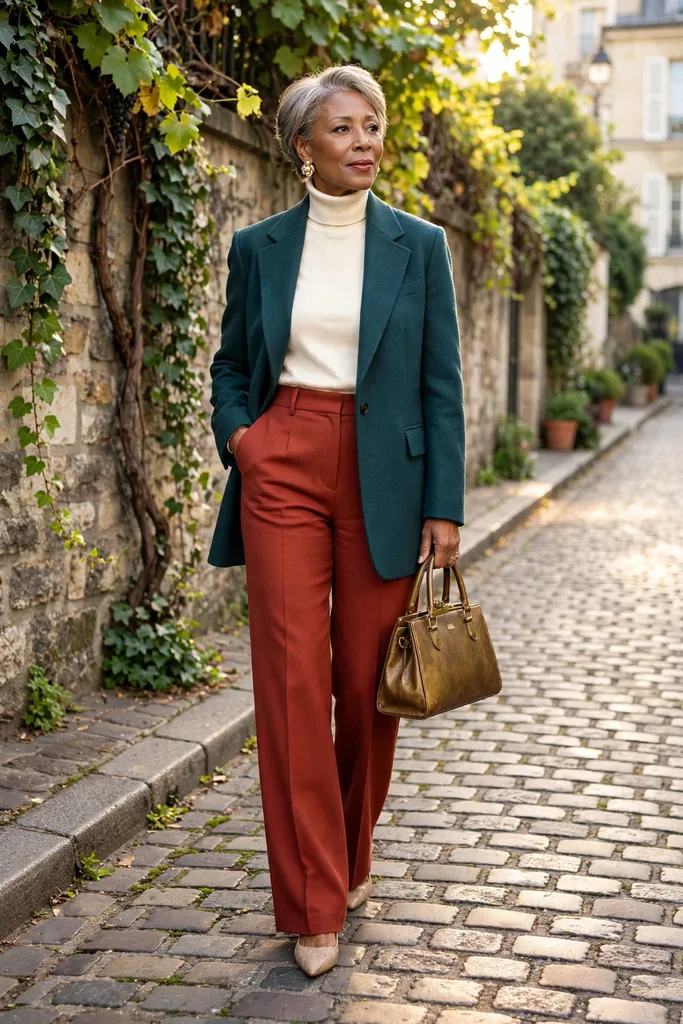
The French association with neutrals is earned, but the lesson is not a head-to-toe black uniform.
A tight palette makes getting dressed automatic. A calm working core pays off all year: black, denim blue, camel, chocolate, cream, white, gray, olive and navy mix freely together, so nearly any pairing you grab reads as intentional.
Then allow yourself one point of interest — tortoiseshell glasses, a silk scarf, a cobalt cardigan, brick-red loafers, a red lip, a patterned bag. One, not three.
Bright colors are welcome — nothing here bans them. The French-inspired move is to decide where the color sits instead of scattering rival shades.
A deep-petrol blazer over an ivory silk knit and brick-red trousers reads instantly: the eye knows which piece carries the look, and the rest steps back gracefully.
Repeating a color multiplies its value. One brick-red knit rotated through a navy skirt, charcoal trousers, cream jeans and denim outperforms four unrelated statement tops.
That repeat-and-rotate habit is why a capsule wardrobe over 50 feels personal instead of penned-in.
Let Shoes and Bags Complete the Look, Not Compete With It
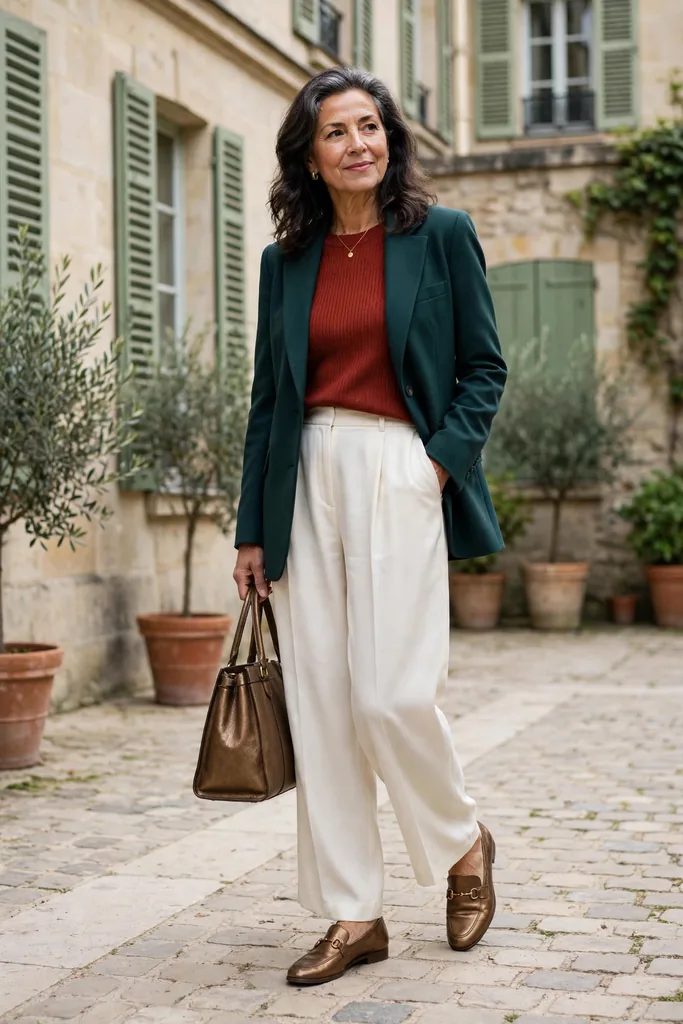
What makes a French-inspired outfit stick is the finishing pieces — quiet, but chosen on purpose.
For footwear, the test is simple — ballet flats, low block heels, slim ankle boots, loafers, sneakers and refined sandals all pass it because they carry the outfit’s line instead of slicing through it, which is why a refined sandal can finish a look while a chunky shoe breaks it.
Comfort still leads the brief. A shoe stops being chic once you spend the day negotiating with your feet.
Check for cushioning, a heel that holds you, room through the toe box and a height that survives your day. All of that exists in a polished shape — you do not have to trade comfort for elegance.
Bags work on the same principle — a structured crossbody, a mid-size shoulder bag, a soft leather tote or clean top-handle lifts the outfit, which is how jeans-and-a-knit goes from casual to considered. The antique-bronze loafers and matching leather tote here do that — they seal the outfit instead of shouting over it.
Four upgrades worth trying:
- Flats that feel too whisper-thin? Swap in a loafer on a sturdier sole.
- Heels that stopped being fun? Trade them for a low block heel or a sharp pointed flat.
- Sport sneakers dragging trousers down? A clean leather sneaker keeps the polish.
- A big tote swallowing the look? Try a smaller shoulder bag or a crossbody.
Nobody asks you to spend more on accessories. The ask is simpler: rather than shopping for statement pieces, shop for pieces that echo what you wear — accessories that grew up alongside your closet will never fight the outfit.
Skip the Clichés: Keep the French Spirit, Lose the Costume
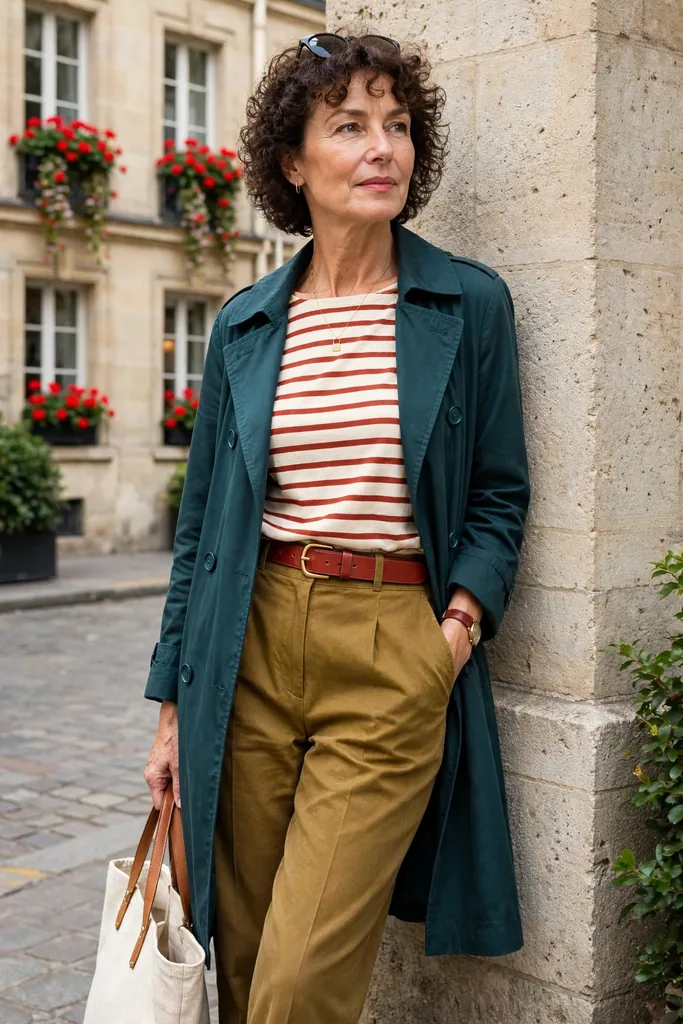
The fastest way to drain French dressing of its charm is wearing every cliché in a single outfit.
A beret has style. A striped knit has style. Each piece on that list — neck scarf, ballet flat, red lip, trench, basket bag — holds its own. Stack them together to read as “French” and the outfit stops being personal style, starts being a costume.
Borrow the thinking instead.
Love stripes? Let a brick-red and ivory marinière live with antique-bronze chinos and loafers instead of the full cliché set. Love scarves? Knot one on your handbag rather than your neck.
If black is what makes you feel powerful, wear it with pride. Prefer cream, olive, navy, chocolate or rust? Let those shades set the direction.
The French-inspired approach to dressing over 50 works when you copy the editing — not the photograph.
And some classics will not suit your actual life. A trench is pointless in a hot climate; ballet flats are wrong feet if you need real support.
Style gets stronger when your wardrobe reflects your mornings instead of someone else’s photoshoot.
One Repeatable Outfit Equation for Everyday French Dressing
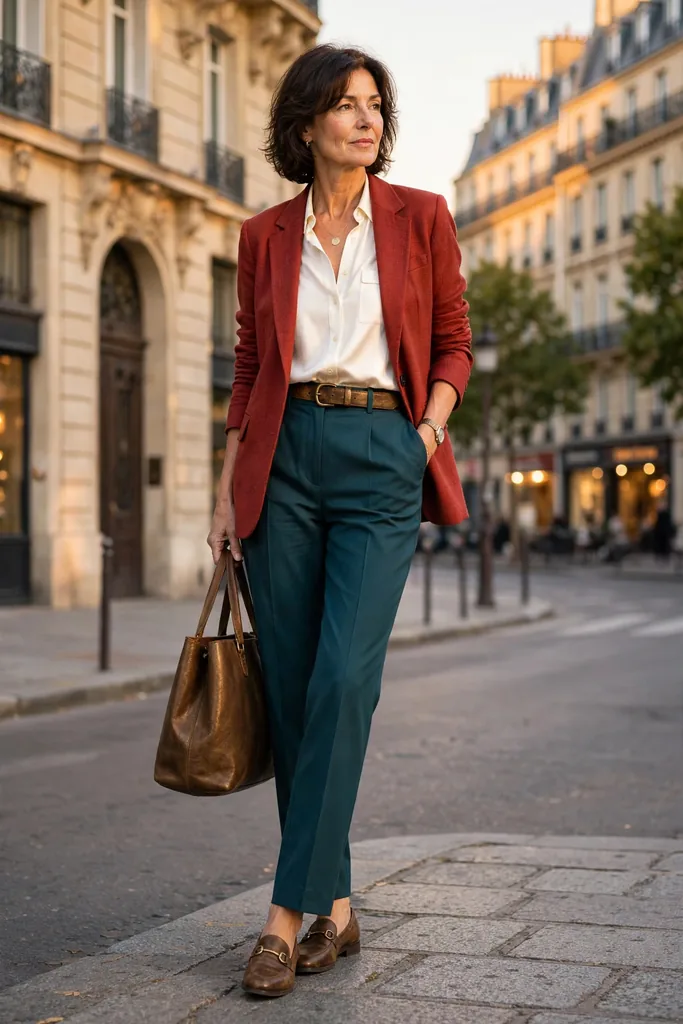
The way to make this usable is a personal uniform — a repeatable shape that takes half the decisions out of the morning.
Formula: pair relaxed trousers with an unfussy knit, then finish with a structured jacket and low-key shoes.
That outer layer can be a blazer, cardigan, cropped jacket, trench or coat — it brings the architecture so the first two pieces stay almost plain.
One equation, five different days.
| Occasion | The Mix | Why It Lands |
|---|---|---|
| Errands | Straight jeans, a knit tee, cropped jacket, sneakers | Comfort underneath, enough structure on top to read finished |
| Lunch out | Tailored trousers, fine knit, blazer, loafers | Clean lines that feel polished without trying hard |
| Travel day | Soft trousers, a cotton shirt, supportive flats, cardigan | Layers that flex through the journey without bulk |
| Evening | Dark trousers, short jacket, silky blouse, low heel | Fabric richness replaces heavy accessorizing |
Land on one or two equations that fit your week and wear them on repeat.
Vary the color, the cloth, the jewelry or the shoes instead of drafting a new outfit each time. That is how a uniform stays useful instead of going stale.
FAQs
Q1How do I dress more French without looking like a costume?
Begin with fit, calm color pairings, fewer clashing details. Pick trousers that sit right, knitwear with substance, shirts and jackets that hold their line, and shoes you can live in — then finish with one personal note, like good jewelry, a scarf or a braver color. The point is not to imitate a stereotype; it is to build outfits that feel edited, easy and wearable.
Q2Can jeans belong in a French-inspired wardrobe after 50?
Absolutely — denim fits the French approach when the cut is considered. Straight, slim-straight, relaxed or softly wide-leg, every classic denim cut can earn its place — choose the pair that flatters your proportions, since the French approach lets the outfit’s balance decide, not the label on the leg. The lift comes from how you layer them: layer them under a knit, shirt, blazer or trench, then ground the look in loafers, ankle boots or clean sneakers — and retire the idea that denim only works for off-duty hours.
Q3Which colors should I build a French-inspired wardrobe on?
Black, camel, chocolate, navy, cream, gray, olive and denim blue are the easy foundations because everything talks to everything. Then bring in the shades you love — red, burgundy, green, cobalt, soft pink. A restrained palette makes morning decisions quicker; it is not a ban on color.
Q4How do I look polished without feeling overdressed?
Keep the pieces simple and invest in fit, cloth and footwear. A straight-leg trouser, an easy knit and loafers reads polished but never overdressed. Quitting while you are ahead — before the look tips into overloaded — is what lends chic outfits for women over 50 their easy air.
Q5Is an expensive wardrobe required for French style?
No — the label is the least important line item. How a fabric behaves, how it fits, what condition it is in, and how it works with the rest of your closet all outrank price. A well-cut cotton shirt you wear weekly beats a pricey statement piece that never leaves the hanger.
The French Way Is a Habit, Not a Shopping List
Strip away the clichés and French dressing after fifty is a set of habits: edit before you leave, respect the silhouette, trust good cloth, keep the palette calm, let one detail speak. None of it asks for a new closet — it asks for a sharper eye on the clothes you own.
Start tomorrow. Pick one formula — the brick-red blazer over ivory silk and petrol trousers, if your wardrobe holds them — and wear it on repeat this week, changing only the finish. That repetition is the secret: it is not more clothes. It is wearing your good ones more often, with more intention.