
How to Stay Warm and Polished Over 50 When the Temperature Plummets
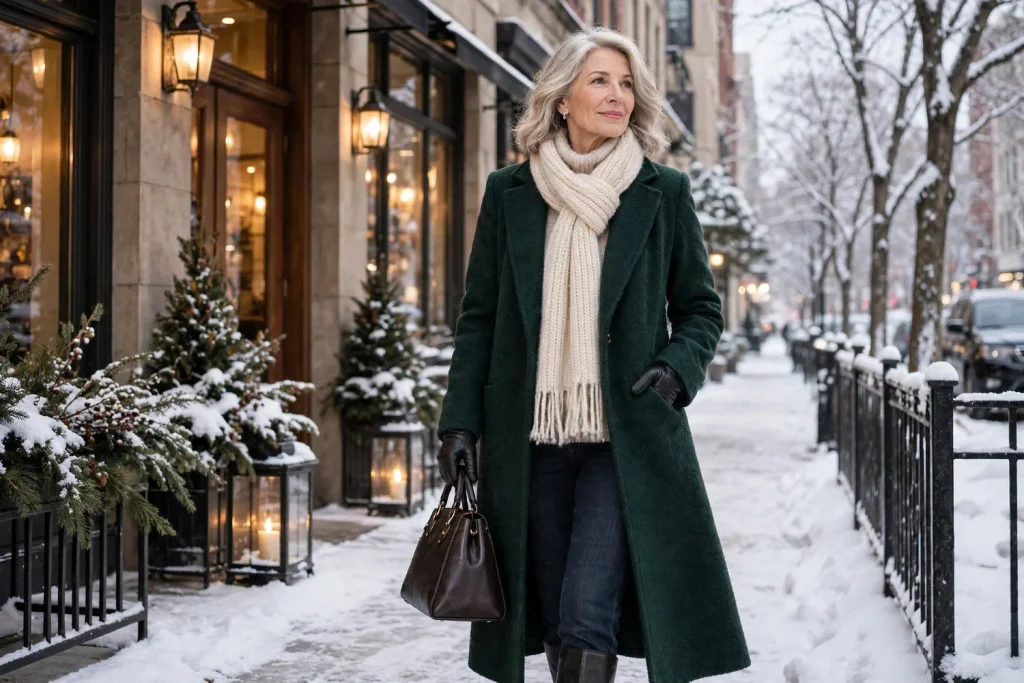
When the temperature drops hard, getting dressed can start to feel like a trade-off: stay warm or look like yourself. Heavy sweaters, thick coats, and rugged boots do their job against the cold, but they can leave an outfit feeling bulky, shapeless, or just not you.
That frustration is especially familiar for women over 50, who want real comfort without sliding into clothes that feel dull, fussy, or chasing trends too hard. Winter layering also changes your proportions quickly — pieces that look great on their own can stop working the moment they are all stacked together.
The good news: stylish outfits for women over 50 do not demand a closet full of brand-new winter clothes. Smarter fabric choices, thoughtful layering, and a few silhouette tricks can keep you genuinely warm while still looking polished.
The goal is simple: build your warmth first, then shape the outfit around it.
Trap the Warmth at Your Skin Before Piling on Bulk
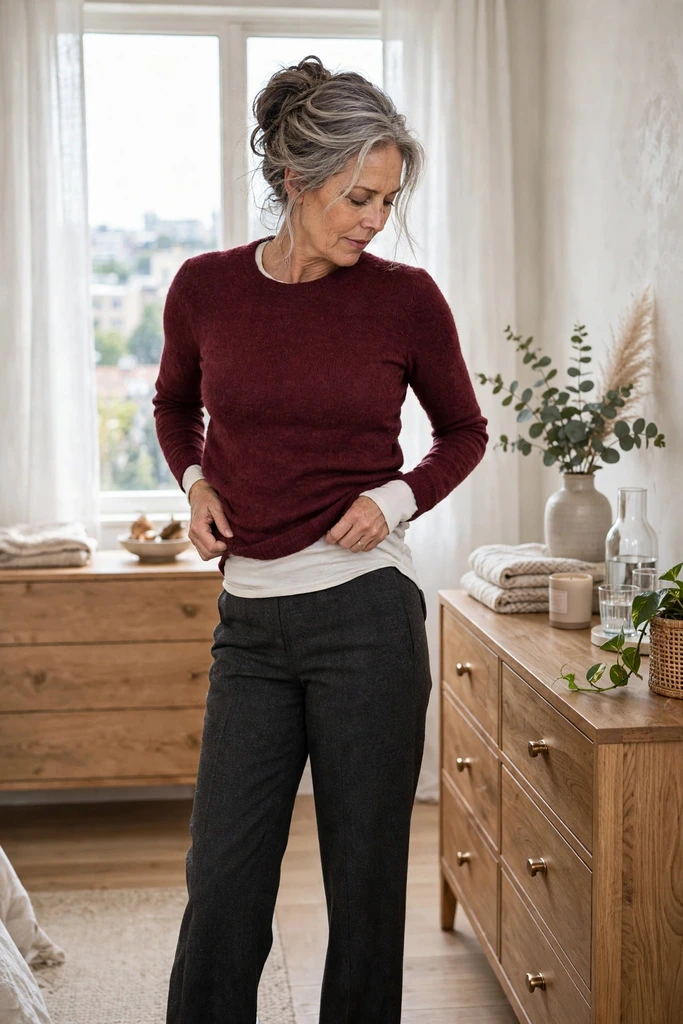
The warmest winter outfit is not always the one with the thickest sweater. Heat is trapped most efficiently when several purposeful layers hold warm air close to you without adding much volume — three thin layers will usually outperform one giant knit.
Start with a slim base layer that sits smoothly under your regular clothes. A fitted long-sleeve top, a lightweight thermal, or a fine merino crew can vanish under a sweater while quietly adding another barrier between you and the cold. Merino earns its reputation here because it regulates temperature — warm when it is cold, breathable when you step indoors.
Fit matters at this layer: your base should skim the body instead of hanging loose. A skimming base keeps the rest of the outfit from turning bulky before the coat even goes on, and it stops fabric from bunching at the waistband.
Fabric tip: wool and merino deliver real warmth without the thickness of chunky knits, while synthetic thermals are a solid pick when you want something featherweight that washes easily and dries fast.
It helps to give every layer a job. Here is a quick guide to the fabrics worth knowing:
| Layer or Fabric | What to Look For and Why It Works |
|---|---|
| Merino base layer | Featherweight, warm, and smooth enough to disappear under sweaters |
| Cotton tee | Cozy indoors, but better as a light layer than your main defense against real cold |
| Fine wool knit | Delivers warmth with far less bulk than a chunky sweater |
| Fleece midlayer | Great for relaxed days when warmth outranks a dressy finish |
| Wind-resistant shell | Blocks cold air from slicing through the layers beneath |
You do not need all five at once. Pick the two or three that cover the jobs your day actually demands — base warmth, middle insulation, wind protection — and leave the rest in the drawer.
Keep Midlayers Soft, Slim and Under Control
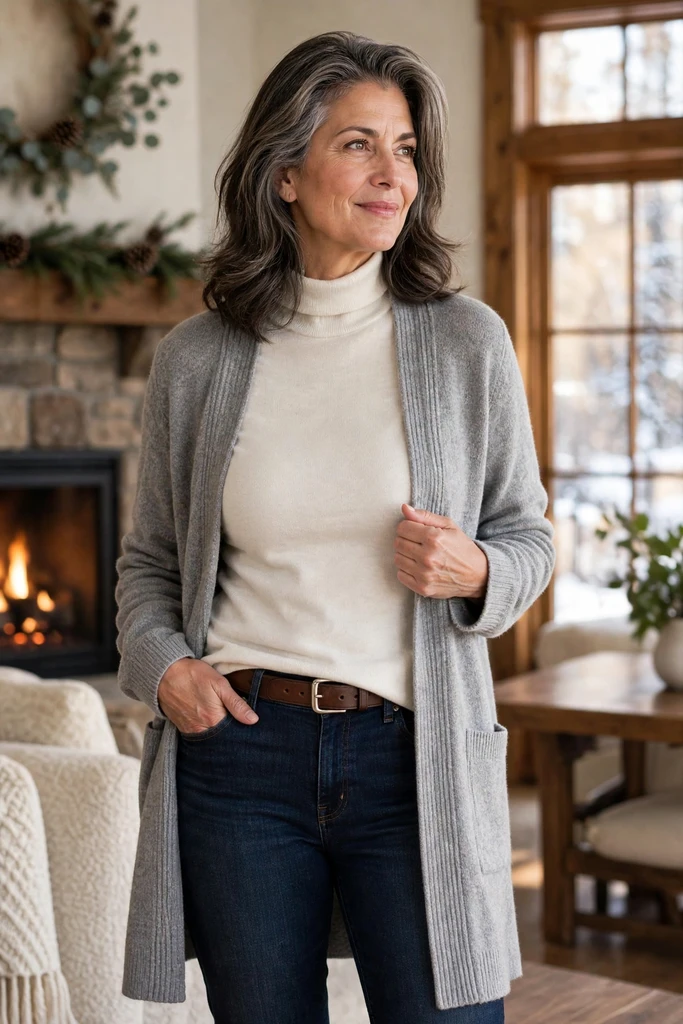
Winter outfits usually start looking frumpy when every layer shares the same oversized shape. A roomy sweater under a roomy cardigan under a roomy coat adds visual width everywhere, and the whole outfit ends up looking wider than it is.
The fix is to mix your proportions instead of matching them.
If the sweater is relaxed, balance it with a straighter trouser or jean underneath. If you love wide-leg pants, choose a neater knit through the shoulders and waist so the outfit keeps some structure. One relaxed piece per outfit is plenty.
A fine crewneck, mock neck, V-neck knit, or simple cardigan earns its place because each one slides under a coat without bunching around the arms or shoulders. Look for knits with a little stretch so they move with you instead of binding.
On days you spend mostly indoors, an open cardigan or sweater jacket is a smart move. It adds warmth while drawing a long vertical line down the center of the outfit — instant length, zero bulk.
For easy everyday outfits for women over 50, combinations like these rarely miss:
- Fine knit sweater + straight-leg jeans + ankle boots
- Thermal top + cardigan + tailored trousers
- Mock neck + dark denim + long wool coat
- Slim knit + wide-leg trousers + structured short jacket
None of these formulas asks you to hide your shape. They simply stop each layer from competing with the next, so the outfit reads as considered rather than piled on.
Let Your Coat Draw the Outfit’s Silhouette
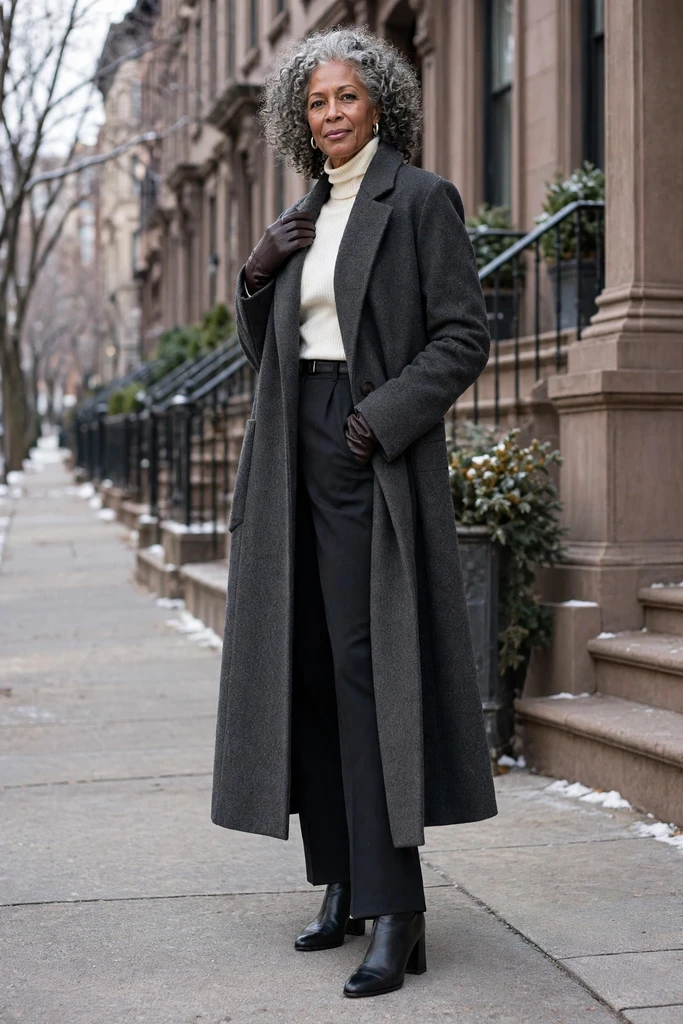
In genuinely cold weather, your coat is not a finishing touch — it is the first thing anyone sees, so its shape carries the whole outfit.
A long coat can make a plain sweater-and-jeans combination look pulled together because it creates one clean outer line from shoulder to hem. A knee-length or longer cut also shields more of you from the wind than a cropped coat ever will.
If you like puffers, judge the quilting placement and overall cut instead of assuming every puffer adds bulk. Some run straighter through the body, while others include gentle shaping, a drawstring waist, or a belt that defines things a little.
A coat does not need a nipped-in waist to look polished. Clean shoulders, a tidy front closure, and enough room to move comfortably usually matter far more than waist definition.
Fit tip: always wear your usual winter sweater when trying on a coat. A coat that looks sleek over a thin shirt can pull across the arms or shoulders once your real winter layers are underneath it.
Your coat can also rotate with the day without forcing a full outfit change.
| Base Outfit | Cold but Dry | Windy Day | Dressier Occasion |
|---|---|---|---|
| Knit sweater + jeans | Wool overcoat | Insulated puffer | Long tailored coat |
| Knit + tailored trousers | Cropped wool jacket | Longer insulated parka | Belted wrap coat |
| Knit dress + opaque tights | Structured knee-length coat | Full-length insulated coat | Clean longline coat |
| Cardigan + dark denim | Relaxed car coat | Hooded insulated coat | Single-breasted topcoat |
Think of the coat as the frame around your outfit — its job is to present the layers, not to hide them.
Boots and Accessories That Make Practical Clothes Look Deliberate
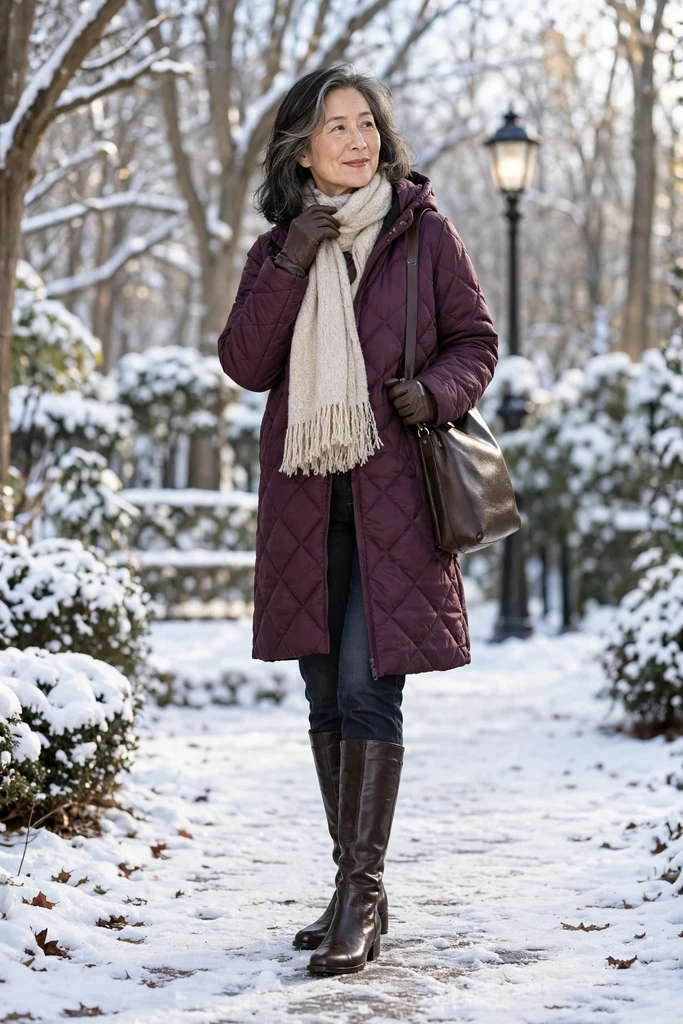
Cold-weather dressing unravels fast when the outfit looks polished but your feet are freezing. Winter footwear has to perform in real life first — style comes from choosing the right practical pair.
A clean leather or weather-resistant ankle boot pairs with straight jeans, trousers, and most midi skirts. A knee-high boot brings extra coverage and works especially well under longer skirts or dresses, where the shaft disappears and only the shape shows.
Flat boots do not automatically read as casual. A simple toe shape, a neat shaft, and minimal hardware can make a low-heeled boot feel every bit as finished as something with height — comfort and polish are not opposites.
Do not overlook socks. Thin dress socks often give up on bitter days, while a warm wool-blend sock can make the same boot dramatically more comfortable without changing how it looks from the outside.
Accessories earn their keep because they warm the spots that lose comfort fastest — neck, hands, head. A scarf, gloves, and a hat can make one basic coat feel like three different outfits without buying anything new.
The easiest way to keep them cohesive is color.
A camel coat with chocolate gloves and a cream scarf feels calm and pulled together. A navy coat with burgundy accessories adds richness without tipping the outfit into busy territory.
If hats usually feel awkward on you, keep it simple. A plain knit beanie in a tone close to your coat, hair, or scarf blends into the outfit far more easily than a high-contrast statement style.
Tiny Fixes That Keep Winter Layers From Feeling Heavy
You do not have to strip off warm pieces to get a cleaner silhouette. Small adjustments usually make the biggest difference.
When something about your winter outfit feels off, try these tweaks before changing the whole thing:
- If the sweater feels bulky under your coat: trade the chunky knit for a fine wool or merino layer that lies flat.
- If the outfit looks shapeless: let a little structure show through the coat — a defined trouser line, a visible neckline, or a clean shoulder — instead of cinching everything with a tight belt.
- If wide pants feel heavy with winter boots: try a slightly shorter hem or a boot with a slimmer, cleaner shaft.
- If everything looks dark: bring cream, soft gray, camel, burgundy, forest green, or another lighter color up near your face.
- If a long coat overwhelms the outfit: keep the layers underneath simple and let the coat be the main shape.
The point is not to look smaller. It is to give the eye a few clear lines so the clothes read as intentional instead of just piled on.
That is especially handy when building chic outfits for women over 50, since winter style leans more on proportion than on decorative details.
Build One Winter Uniform Worth Repeating
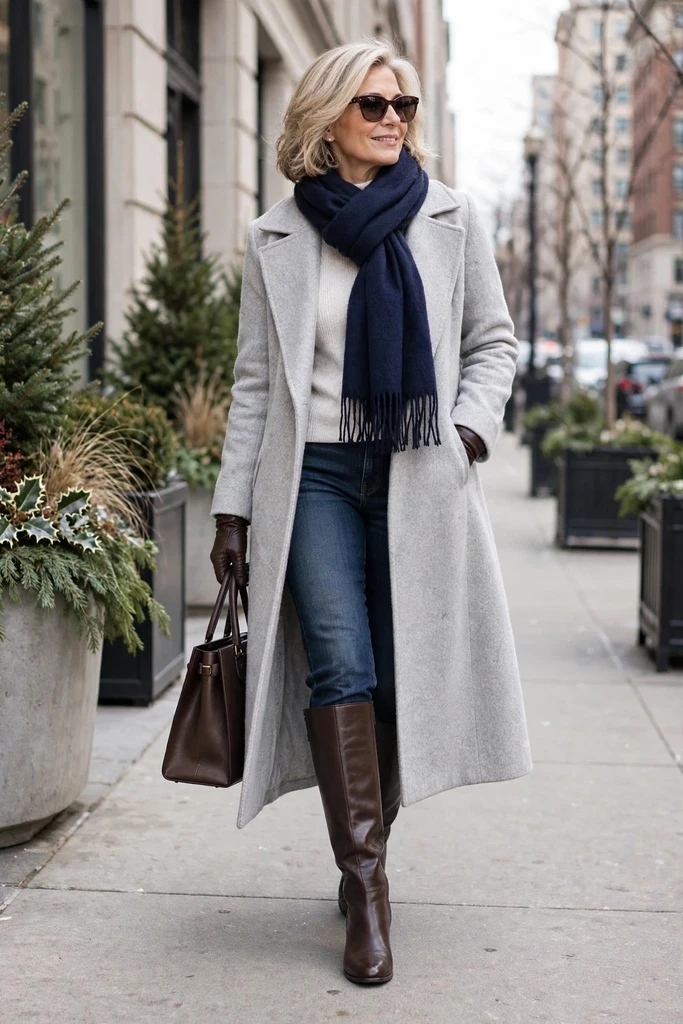
A dependable winter wardrobe gets much easier the moment you stop trying to invent a brand-new outfit every morning.
Start with one formula that fits your actual routine — the school run, the office, the dog walk, whatever your days really look like.
Formula: thin warm base layer + polished knit + straight or softly wide trousers + long coat + practical boots
This works because the layers grow gradually more structured as you move outward. The base supplies the warmth, the knit adds softness, and the coat delivers the final silhouette.
From there you can vary the formula without rebuilding it.
| Occasion | Pieces | Why It Works |
|---|---|---|
| Errands | Merino top + straight jeans + insulated puffer + ankle boots | Warm, practical, and easy to move in |
| Lunch with friends | Fine knit + tailored trousers + wool coat + leather boots | Clean lines lift simple pieces into polished territory |
| Casual workday | Mock neck + dark jeans + open cardigan + long coat | Comfortable indoors without reading as too relaxed |
| Evening out | Knit dress + opaque tights + long coat + tall boots | Builds real warmth without stacking visible layers |
Once your personal winter uniform is set, shopping gets easier too. You can judge any new piece by one question: does it work with the clothes I already wear?
That is one of the simplest routes to stylish outfits for women over 50 — a small set of pieces that earn their place instead of a closet full of one-wear wonders.
FAQs
Build warmth from several thinner layers instead of one very thick sweater. A fitted thermal, a fine knit, and a structured coat usually carve a cleaner shape while keeping you just as warm. And mix your proportions — if one piece runs oversized, keep another part of the outfit more controlled.
Straight-leg trousers, dark jeans, ponte pants, and softly wide-leg styles all work well. Leave enough room for comfort and check that the hem sits right with your winter boots. On the coldest days, a thin thermal underneath adds serious warmth without changing the outer look.
Absolutely. Choose a puffer with tidy quilting, a simple color, and a shape that does not add more volume than you want. Pairing it with streamlined trousers, dark denim, or clean boots keeps the whole outfit balanced.
Neutrals like charcoal, navy, chocolate, camel, cream, and soft gray combine effortlessly. Burgundy, forest green, deep teal, and muted red add interest without making outfits hard to repeat. Two or three shades per outfit usually look more pulled together than a whole rainbow.
Focus on the finish rather than dressing everything up. A defined coat shape, a clean boot, a neat trouser hem, and a deliberately placed scarf can transform very basic clothes. Fit matters more than formality — comfortable clothes can still carry clear lines and good proportion.
Warmth and Style Belong Together After 50
Freezing weather does not mean abandoning the clothes that make you feel like yourself. The strongest winter wardrobes lean on smart fabrics, hardworking layers, comfortable shoes, and proportions that still let the outfit hold its shape.
Style after 50 is not about following stricter rules. It is about learning which combinations leave you feeling warm, confident, and pulled together in real life — even on the coldest mornings.