
How to Look 10 Years Younger in Clothes After 50 — Without Trying Too Hard
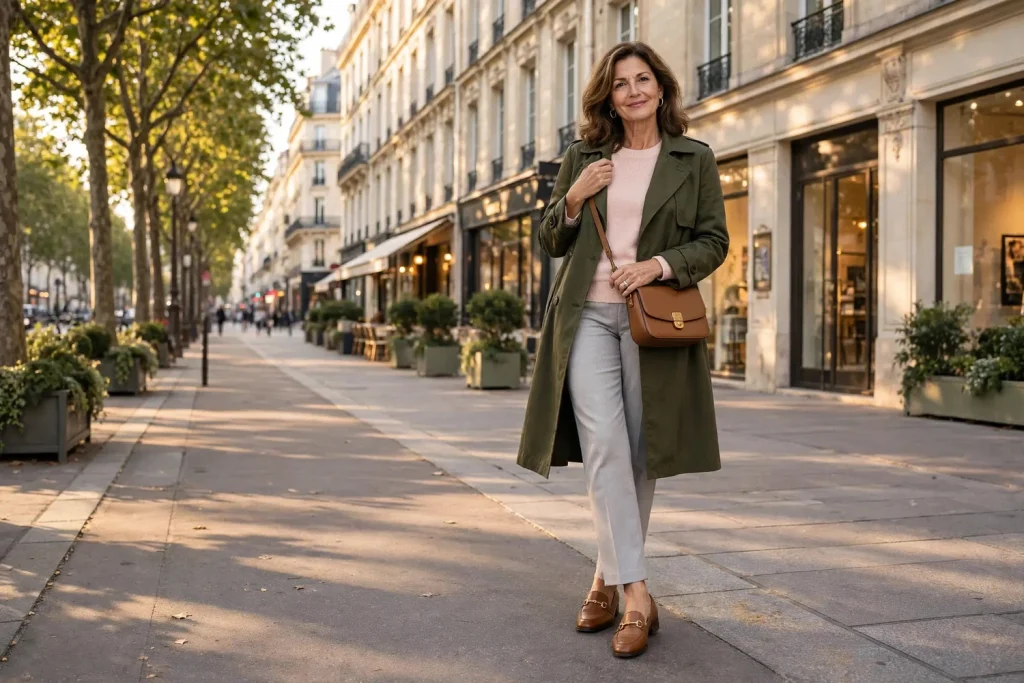
Looking younger in your clothes after 50 rarely means borrowing someone else’s style. More often, the trouble begins quietly: the outfits you have worn for years start to feel a little heavy, a little dated, a little less flattering — and you cannot quite put your finger on why.
That slow drift can turn the simple act of getting dressed into a daily frustration. Your closet may be full of perfectly good pieces, yet somehow the colors, the cuts, the shoes, or the way they are put together seem to add years instead of keeping you looking fresh and current.
Here is the encouraging part: dressing over 50 does not ask you to chase trends or throw everything out and start over. A handful of thoughtful shifts in proportion, fabric, color, and styling can leave your whole look feeling lighter, sharper, and unmistakably more modern.
Looking Current Matters More Than Looking Young
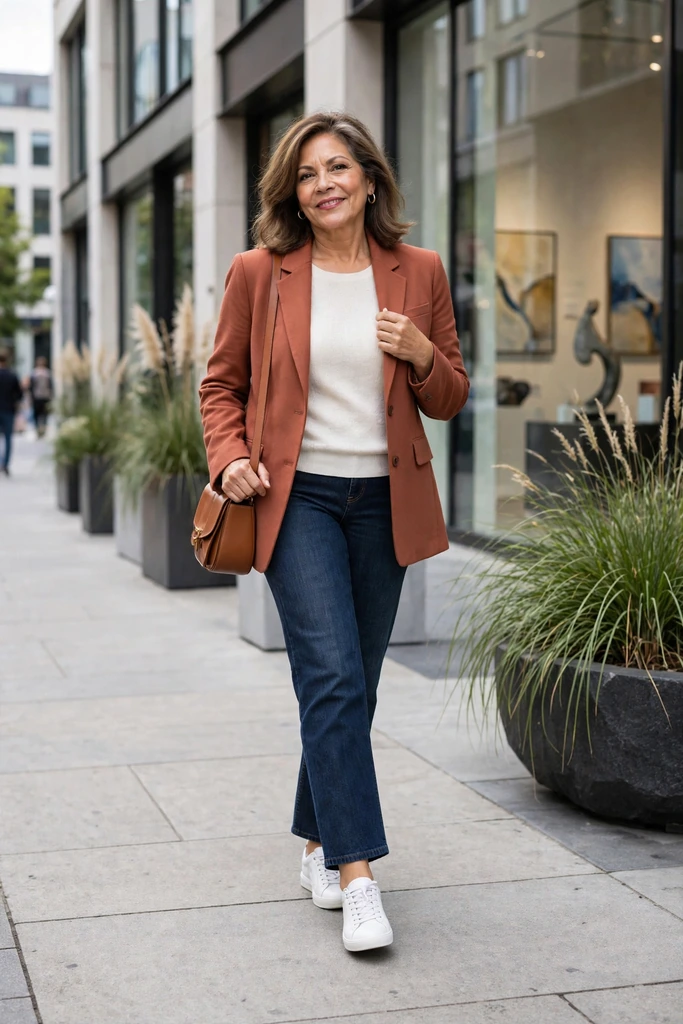
Borrowing the wardrobe of someone half your age usually backfires. An outfit reads as fresh when its cut, proportions, and styling feel of-the-moment — while still feeling completely like you.
In practice, that could mean reaching for straight-leg jeans instead of an ultra-skinny pair, choosing a soft unstructured jacket over a rigid fitted blazer, or trading a clunky shoe for a sleeker silhouette.
None of this is about disguising your age. Each swap simply strips away the little details that can leave an outfit feeling anchored to another decade.
The same principle shapes stylish outfits for women over 50: the best ones tend to pair trusted wardrobe staples with one or two current touches that lift the whole look.
This quick comparison shows just how small those updates can be.
| Dated Styling Habit | Fresher Alternative |
|---|---|
| Long fitted cardigan over skinny jeans | Easy shorter cardigan with straight-leg jeans |
| Stiff blazer with matching trousers | Soft blazer worn with jeans or fluid trousers |
| Heavy dark shoes with every outfit | Sleeker loafers, sneakers, flats, or ankle boots |
| Several bold accessories worn together | One standout accessory with simpler pieces |
| Everything fitted tight to the body | One fitted piece balanced by one relaxed piece |
You do not have to overhaul everything in one go. Very often, adjusting a single proportion is enough to make pieces you already own feel completely new again.
Nail Your Proportions Before Buying Anything New
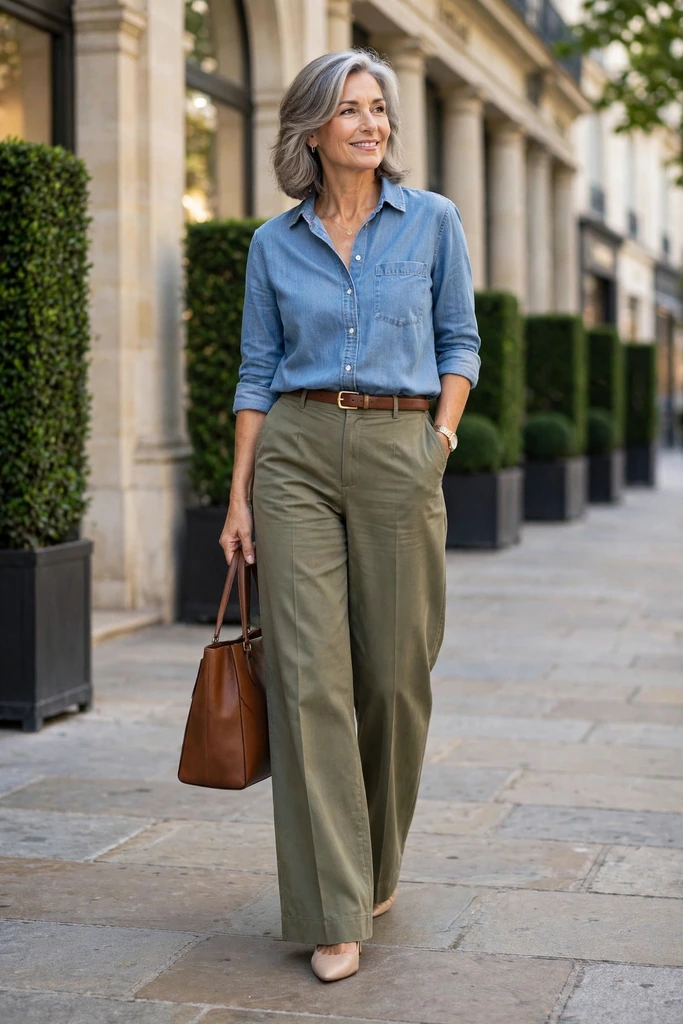
A youthful-looking outfit usually comes down to visual balance. When everything you wear is long, loose, or heavy, your shape can quietly disappear beneath the fabric.
The reverse is just as true. When every single garment is tight and sharply tailored, the result can read as dated rather than fresh.
The simplest fix is contrast. Try an easy relaxed shirt with straighter trousers, or team wider jeans with a more structured knit.
Love longer tops? Keep the trousers beneath them neat and slim. Prefer wide-leg pants? A tucked, cropped, or waist-skimming top will usually give the outfit more definition.
Fit tip: Notice where your jacket, cardigan, or blouse hem falls. A hemline landing right at your widest point can feel heavy, while a touch shorter or longer often draws a much cleaner line.
Before you decide, snap a mirror photo instead of judging the outfit only up close. Proportion issues tend to reveal themselves far more clearly from a few steps back.
Pick Fabrics That Move With You, Not Against You
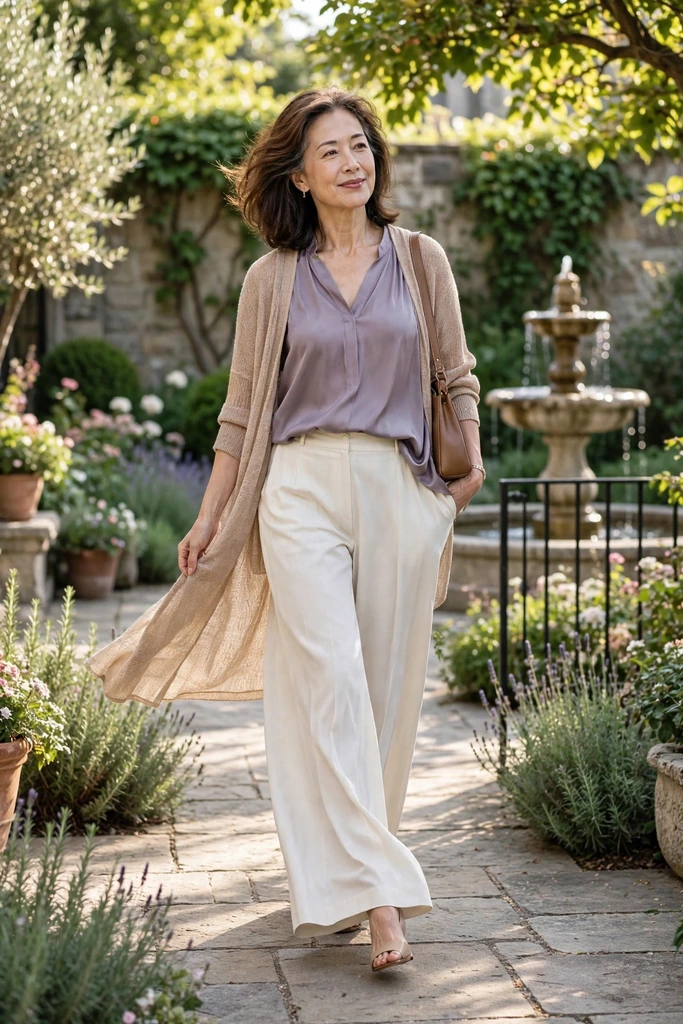
Fabric can date an outfit even faster than the cut itself. Heavy, rigid materials have a way of adding bulk, while ultra-thin clingy ones can trace every line beneath them.
Aim for cloth with enough body to hold its shape yet enough drape to fall naturally. Soft denim, cotton poplin, fine-gauge knits, linen blends, ponte, fluid trouser fabrics, and matte jersey all earn their keep here.
The aim is never to conceal your figure. It is to let garments skim over it instead of gripping it or swamping it.
Keep this little fabric cheat-sheet handy when you are shopping — or when you are editing what is already hanging in your closet.
| Fabric / Piece | What to Choose | Why It Flatters |
|---|---|---|
| Denim | Mid-weight with a touch of stretch | Holds its shape without stiffness |
| Knitwear | Fine or medium gauge | Softness without excess bulk |
| Button shirt | Cotton poplin, linen blend, or soft viscose | Structure that still moves |
| Trousers | Flowing woven cloth or ponte | A smooth line down the leg |
| T-shirts | Weightier cotton or sleek jersey | Lies neater than flimsy fabric |
Comfort lift: If an outfit photographs well but needs constant tugging, smoothing, or adjusting through the day, it probably has not earned its place in your wardrobe.
Garments that sit right let you move with ease — and that quiet confidence does more for you than any so-called anti-aging fashion trick.
Wear Lighter Colors Close to Your Face
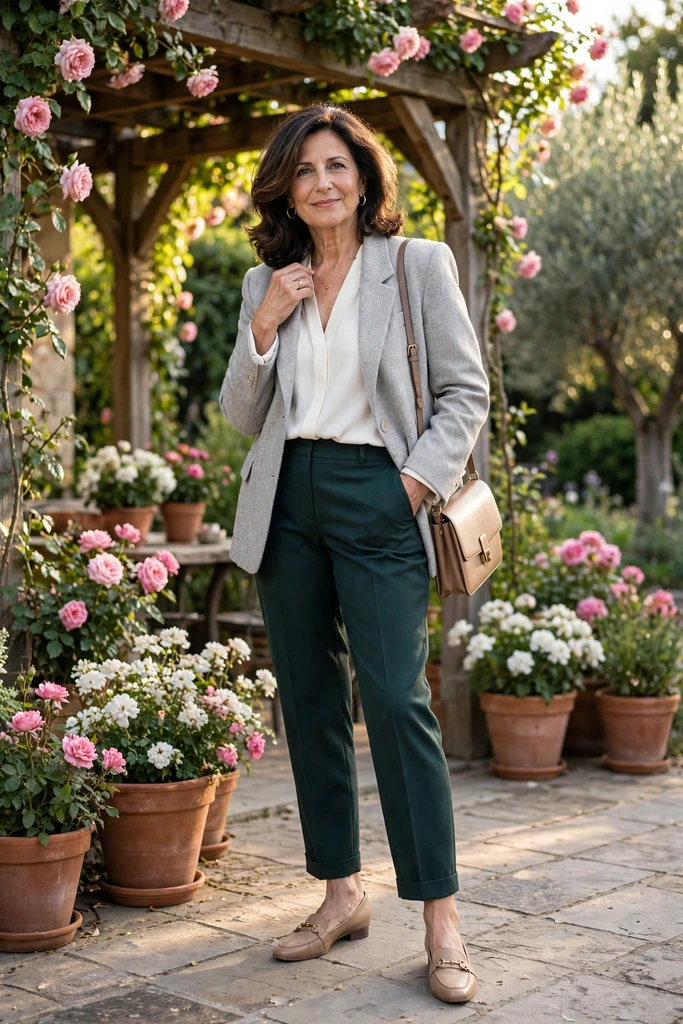
Black, navy, chocolate brown, charcoal, and deep burgundy can all look gorgeous after 50 — there is no need to give up dark shades to look fresh.
Still, wearing very dark tones right beneath your chin can deepen shadows across your face. When you spot that happening, bring a softer or brighter tone up toward your neckline instead.
Cream, soft white, icy blue, warm blush pink, sage, camel, chambray blue, or whatever flatters your own coloring can lift an entire outfit.
Try one of these simple switches:
- Layer a cream blouse beneath a dark blazer.
- Trade a black scarf for something in a softer shade.
- Slip a paler shirt under a navy cardigan.
- Keep the dark trousers, but bring color up near your face.
You can even wear black from head to toe and break it apart with earrings, a paler jacket, or a more open neckline.
The takeaway is not that dark colors age you. It is that color placement changes how light reaches your face.
Refresh Your Shoes Before Replacing Your Clothes
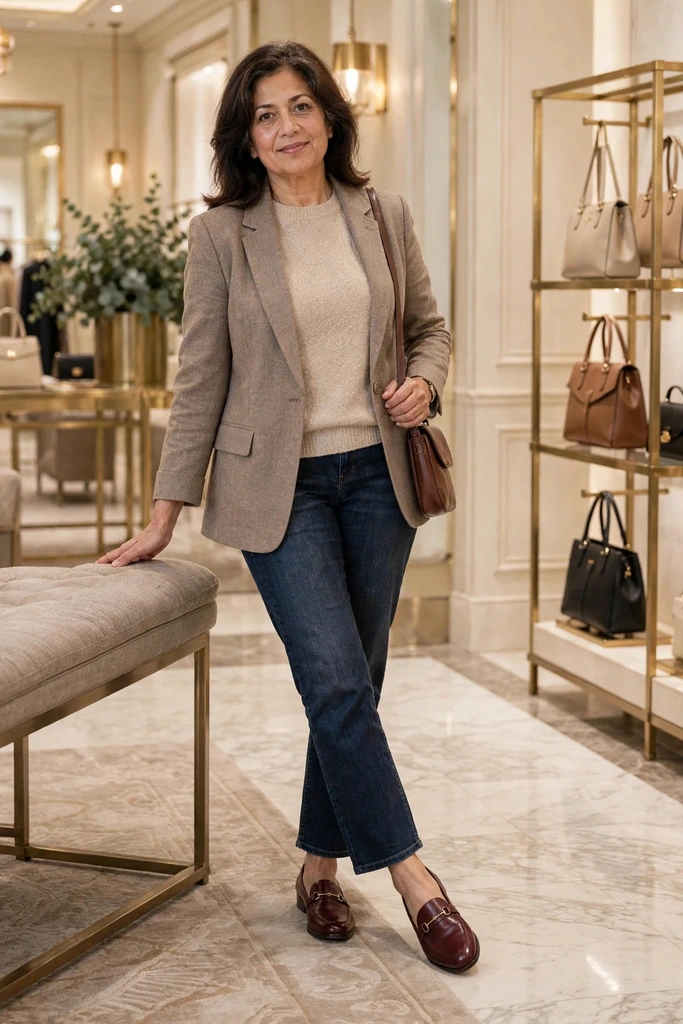
Shoes carry more visual weight than most women realize. A perfectly modern outfit can instantly feel dated when the footwear belongs to a very different style era.
That does not mean buying fashionable shoes that hurt your feet. Instead, look for cleaner-lined shapes that feel current and stay comfortable to walk in.
A sleek sneaker can wake up jeans and a knit. A contemporary loafer sharpens trousers, while a simple ankle boot lends a midi skirt welcome structure.
Love ballet flats? Choose a clean-lined pair over an embellished one. Prefer sneakers? Plain leather or suede styles tend to melt right into everyday outfits for women over 50.
Start with these easy shoe swaps.
| Your Outfit | Easy Shoe Pick | Why It Feels Fresher |
|---|---|---|
| Straight jeans with a knit | Minimalist sneaker | Keeps the look easy and modern |
| Cropped trousers with a blouse | Classic loafer | Polish without the formality |
| Midi skirt with a sweater | Streamlined ankle boot | Anchors the skirt minus the heaviness |
| Simple casual dress | Flat slingback or clean sneaker | Makes the dress feel less traditional |
Shoe switch: Before you write an outfit off as outdated, try it on with a different pair of shoes. That one small change can completely transform its mood.
Drop the Details That Make Outfits Feel Overdone
Trying visibly hard can age an outfit just as quickly as dated clothing. Piling on too many matchy details can tip a look into formality when what you really wanted was relaxed polish.
If bold jewelry is your thing, wear it with confidence. The secret is giving it room to breathe instead of letting every accessory shout at once.
A handful of small tweaks usually beats a set of rigid fashion rules:
- Wearing a statement necklace? Keep the earrings simple.
- Busy print on the blouse? Let the bag and shoes go quiet.
- Structured jacket on top? Soften things with denim or an easy knit.
- Everything feeling too matchy? Swap one piece for something more relaxed.
There is usually a little contrast in modern dressing. A sharp blazer feels fresher over jeans, and tailored trousers relax beautifully with a soft sweater.
That sense of balance is exactly why chic outfits for women over 50 can read as sophisticated without ever looking overdressed.
Rely on One Go-To Outfit Formula for Busy Mornings
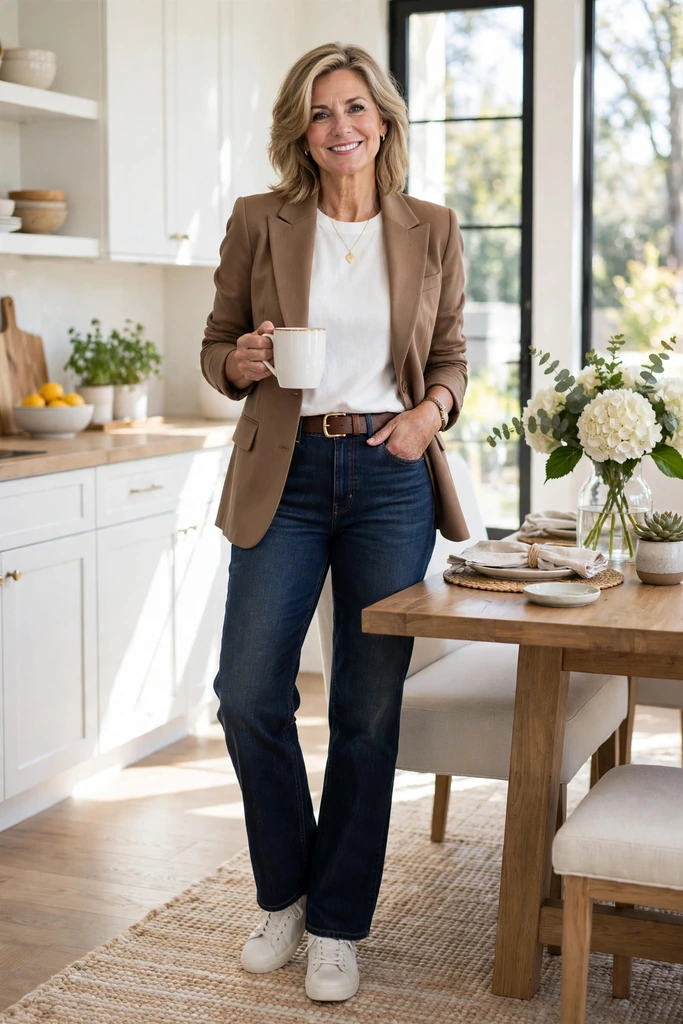
Nobody needs a brand-new concept every single morning. A personal uniform actually makes getting dressed easier — and it tends to build a stronger, more recognizable sense of style.
Formula: straight-leg jeans or easy trousers + simple knit or shirt + modern third layer + clean shoes
Your third layer might be a blazer, a cardigan, a denim jacket, a featherweight trench, or an overshirt. It brings structure without demanding a complicated outfit.
Heading out to lunch? Add loafers and earrings. Running errands? Grab sneakers and a crossbody bag. Traveling? Choose soft trousers with a light cardigan.
One formula carries you through completely different parts of your week because the proportions stay balanced even as the individual pieces change.
It also powers a capsule wardrobe over 50, since every garment pulls double or triple duty. That keeps shopping focused — and your cost-per-wear beautifully low.