
Quiet Luxury on a Budget: How to Look Expensive Over 50
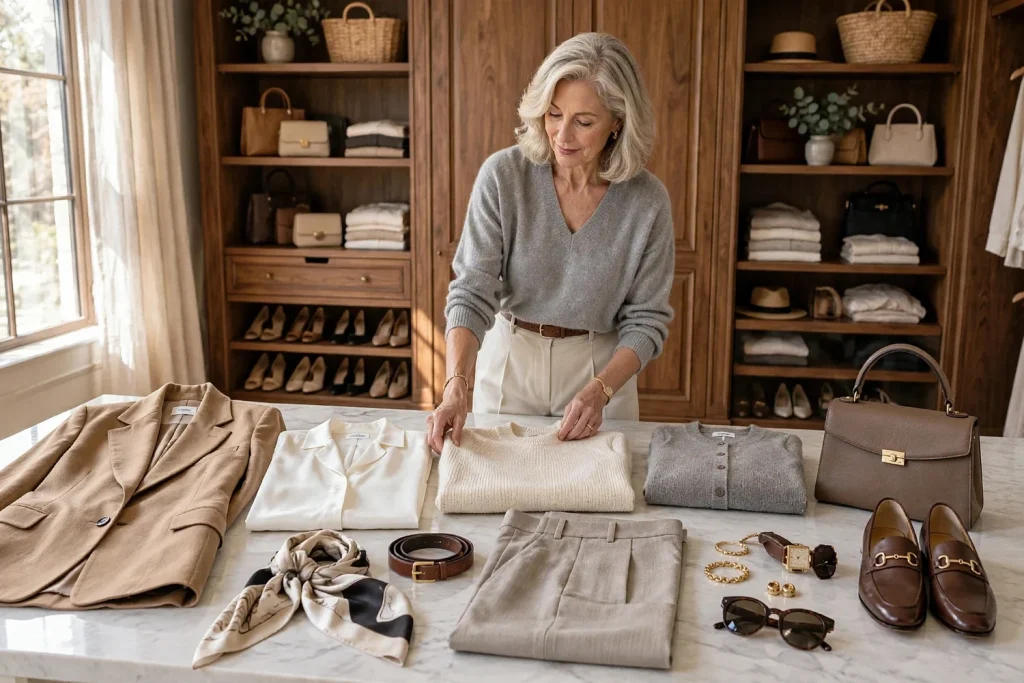
Quiet luxury can look expensive in photos, which makes it easy to assume the style requires cashmere coats, designer handbags, and a wardrobe full of luxury labels. It does not. The look you are seeing in those images is built on calm proportions, tidy details, and restraint — qualities that have nothing to do with the price tag on the hanger.
For women over 50, the bigger challenge is finding clothes that feel polished without becoming stiff, boring, or too formal. You may also be working with pieces that fit differently than they once did, or wondering which newer trends are worth paying attention to and which ones will date your outfit the moment you walk out the door.
The good news is that stylish outfits for women over 50 can capture the same quiet-luxury mood using good proportions, thoughtful fabrics, simple colors, and clothes you may already own. Most of the work is in editing — removing the noisy details and letting the well-cut pieces breathe. The goal is refinement, not a shopping spree.
Why Quiet Luxury Reads Expensive: It’s All in the Calm Details
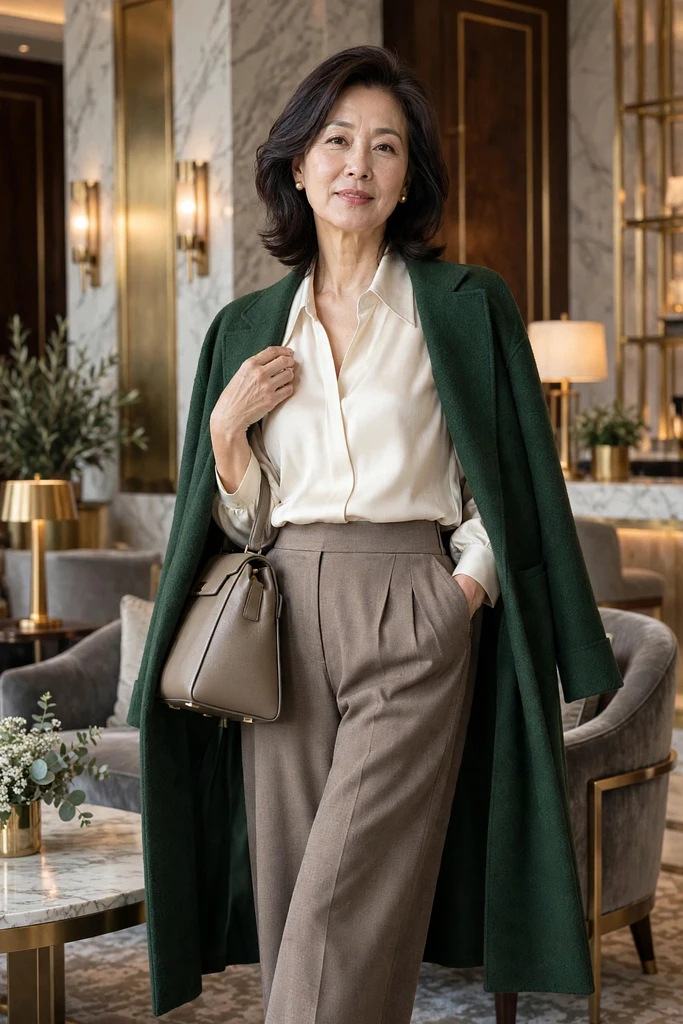
Quiet luxury is less about owning expensive things and more about removing visual noise. The eye reads an outfit as costly when everything in it looks considered — clean lines, a controlled palette, and nothing competing for attention.
Instead of large logos, busy prints, obvious trend pieces, and complicated layering, the look relies on clean shapes, controlled color, good fabric movement, and pieces that sit properly on the body. A simple sweater in a rich navy reads far more luxurious than a printed top straining to make a statement.
That distinction matters when you are shopping on a budget. A $40 pair of trousers that hangs beautifully can look far more refined than a much more expensive pair that pulls across the hips or collapses around the ankles. Tailoring and drape do the heavy lifting that price alone cannot.
The same applies to jackets, knitwear, shirts, and dresses. How the garment sits often matters more than the label sewn inside it. Ask yourself how the piece behaves when you move — does it skim and settle, or does it cling, gap, and wrinkle?
Quiet luxury also tends to leave breathing room around an outfit. You might wear cream trousers, a navy knit, simple loafers, and small gold earrings rather than adding a printed scarf, statement necklace, embellished bag, and decorative belt all at once. Each piece gets to be seen.
That restraint creates much of the expensive-looking effect. It signals confidence — the quiet confidence of someone who does not need every accessory on the rack to prove she dressed with intention.
Start With Fit and Fabric, Not Your Shopping Cart
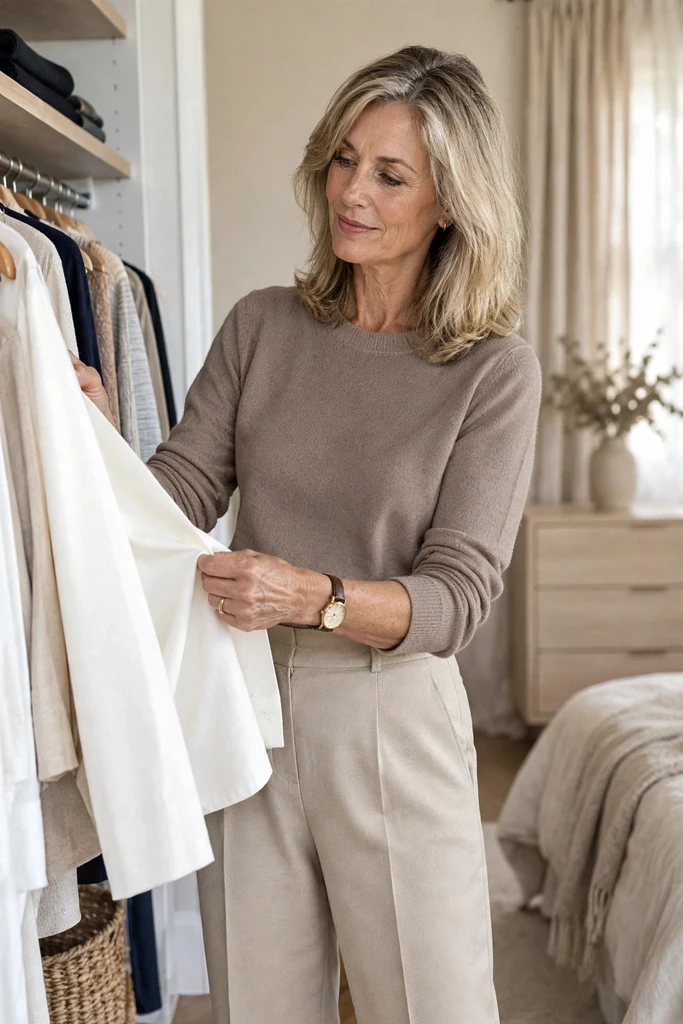
Before adding quiet-luxury pieces to your wardrobe, look closely at what you already have. Most wardrobes contain at least a few quiet-luxury candidates hiding in plain sight.
A plain white shirt, dark straight-leg trousers, soft crewneck knit, simple blazer, or clean leather loafer may already fit the look. The question is not whether the piece is fashionable enough. The question is how it fits, hangs, and works with everything around it. Hold each candidate up against your current outfits and notice which ones make the whole thing look calmer.
Clothes tend to look more polished when fabric has enough substance to hold its shape without becoming rigid. Flimsy fabric wrinkles fast, clings where it should not, and makes even a good cut look tired by midday.
A blazer that collapses through the shoulders can make an outfit feel tired. One with a lightly structured shoulder and clean lapel creates definition even over a basic T-shirt — that small bit of architecture at the shoulder changes the entire posture of the outfit.
The same principle works with trousers. Fabric that skims instead of gripping creates a longer, calmer line, and a waistband that lies flat keeps the eye moving smoothly down the silhouette instead of stopping at every crease.
Here is a useful fabric and fit guide when you are assessing pieces you already own or shopping for replacements.
| Piece | What to Look For | Why It Works |
|---|---|---|
| Trousers | Smooth, flat waistband with a clean front and fabric that has some weight to it | Creates a longer, uninterrupted line without clinging |
| Knitwear | Fine or medium knit with soft structure, tidy cuffs, and a neckline that holds its shape | Looks refined and deliberate without needing any decoration |
| Shirt | Crisp cotton or a fluid fabric with a clean, well-pressed collar | Adds quiet structure around the face and neckline |
| Blazer | Light shoulder definition, simple lapels, and sleeves that end at the right place | Gives shape and polish even over casual layers |
Fit note: Do not let the size on the label decide whether a piece belongs in your wardrobe. The correct size is simply the one that gives the garment the shape it was designed to have — smooth at the shoulder, easy through the waist, and falling cleanly where it should.
If a jacket looks much better one size up with the waist lightly altered, that is the better choice. The number inside the collar is a private detail; the shape everyone sees is what counts.
Build Around Soft Neutrals Instead of Matching Head to Toe
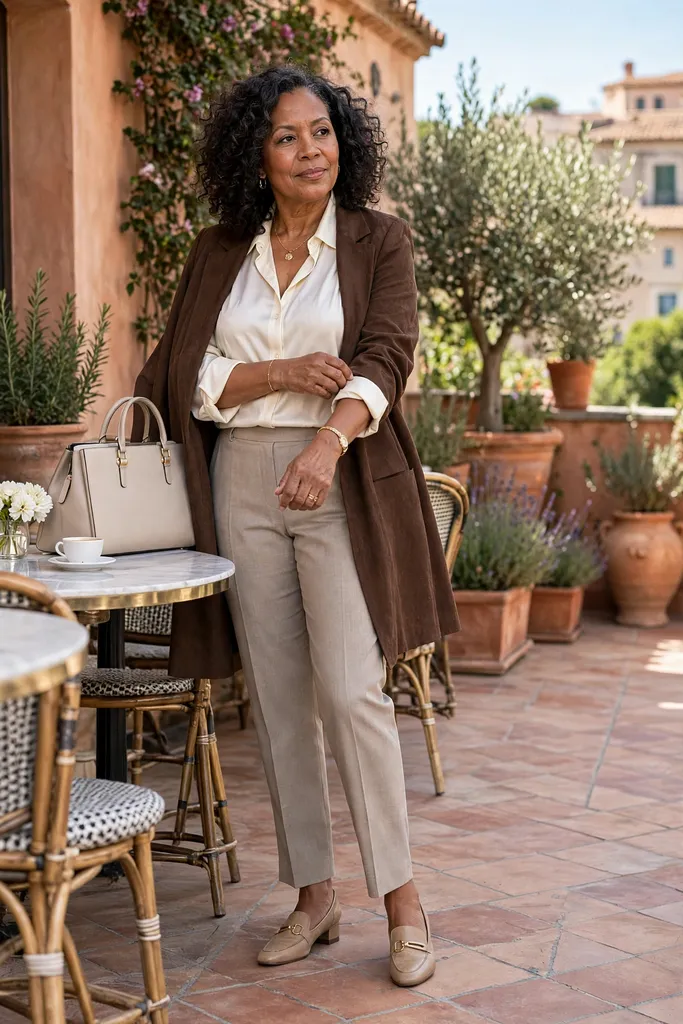
Beige is often treated as the unofficial uniform of quiet luxury, but you do not need to dress head to toe in oatmeal. A single shade from neck to ankle can look flat and wash you out, especially on mature skin.
Navy, ivory, charcoal, chocolate brown, camel, olive, cream, soft gray, and black all work beautifully. Deep burgundy or muted blue can also sit comfortably within the same aesthetic, adding a whisper of personality without breaking the calm.
What matters more is controlling the number of competing colors. Limit yourself to a small palette and every piece suddenly works harder, because nothing in the outfit is fighting anything else.
Try using two main shades with perhaps one small accent. Chocolate trousers with a cream knit and dark brown loafers will usually look more polished than the same trousers paired with several unrelated colors. The simplicity is what makes the combination look intentional rather than accidental.
Tonal dressing is another useful shortcut.
You might combine an ivory blouse with stone trousers and a warm beige jacket. The colors do not need to match exactly. Slight differences actually make the outfit more interesting, adding depth without adding noise.
This approach is especially useful when building a capsule wardrobe over 50 because neutral pieces can move between workdays, lunches, travel, errands, and evenings without requiring a separate outfit for every situation. Fewer, better pieces also mean less decision fatigue in the morning.
You can also use your strongest colors close to your face. Quiet luxury does not mean washing yourself out for the sake of a trend — if a rich teal or warm terracotta lights you up, let that shade live near your neckline where it flatters most.
Make Everyday Basics Look Quietly Refined
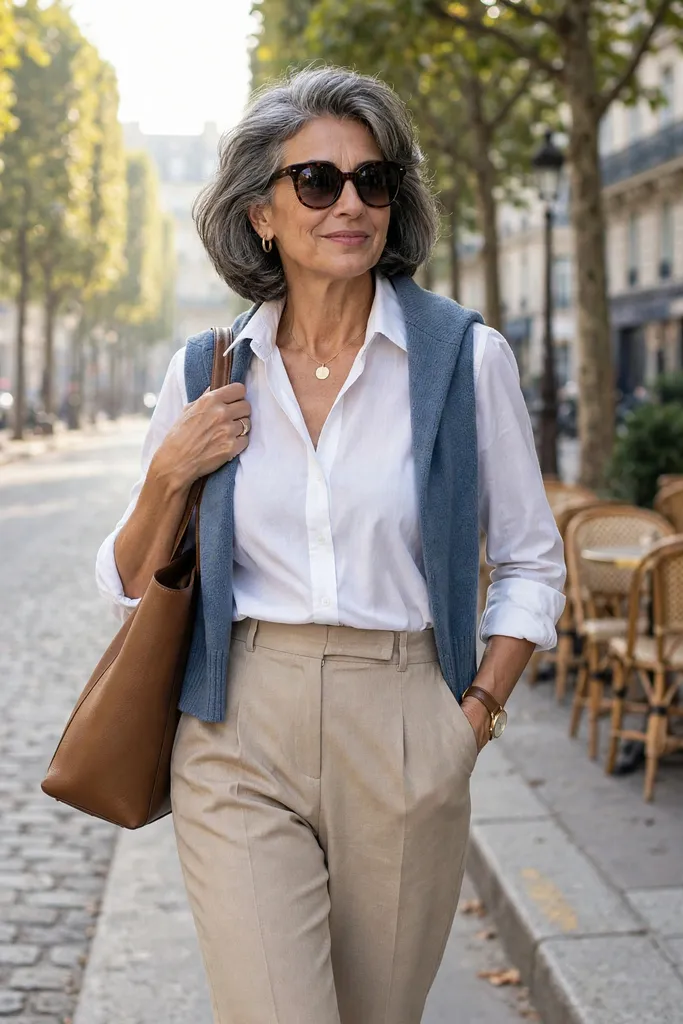
You do not need specialty pieces to create quiet-luxury outfits. Most of the effect comes from how familiar clothes are combined — the same pieces you already reach for, arranged with a calmer hand.
A T-shirt looks more polished when it has a substantial neckline, a smooth finish, and enough room through the torso. Jeans look more refined when the wash is clean and the hem works with the shoes — no stacking, no dragging, no fraying that was not planned.
Try building around pieces such as:
- Straight or softly wide trousers with a clean waistband
- Dark straight-leg jeans without heavy distressing
- A crisp or fluid button-front shirt
- A fine-knit crewneck, polo knit, or V-neck sweater
- A simple midi skirt or column-style dress
- A softly structured blazer or longline cardigan
- Loafers, ballet flats, sleek sneakers, or low ankle boots
You do not need all of them. A capsule of four or five that suit your actual life will take you much further than a checklist of twelve you never reach for.
Choose the shapes you already enjoy wearing and repeat them. That is much more useful than building a so-called luxury wardrobe filled with pieces that do not suit your daily life — repetition of the right shapes is exactly what creates a recognizable personal style.
For example, a woman who rarely wears blazers may get far more use from a well-cut cardigan jacket or structured knit. Fit your formula to your habits, not to someone else’s mood board.
Comfort upgrade: Look for trousers with a little stretch, softer elastic-free waistbands, lightweight jacket linings that do not trap heat, and shoes with cushioned insoles. Comfort does not make an outfit less sophisticated — it makes you look relaxed, which reads as expensive on its own.
Let Shoes, Bags, and Jewelry Deliver the Polished Finish
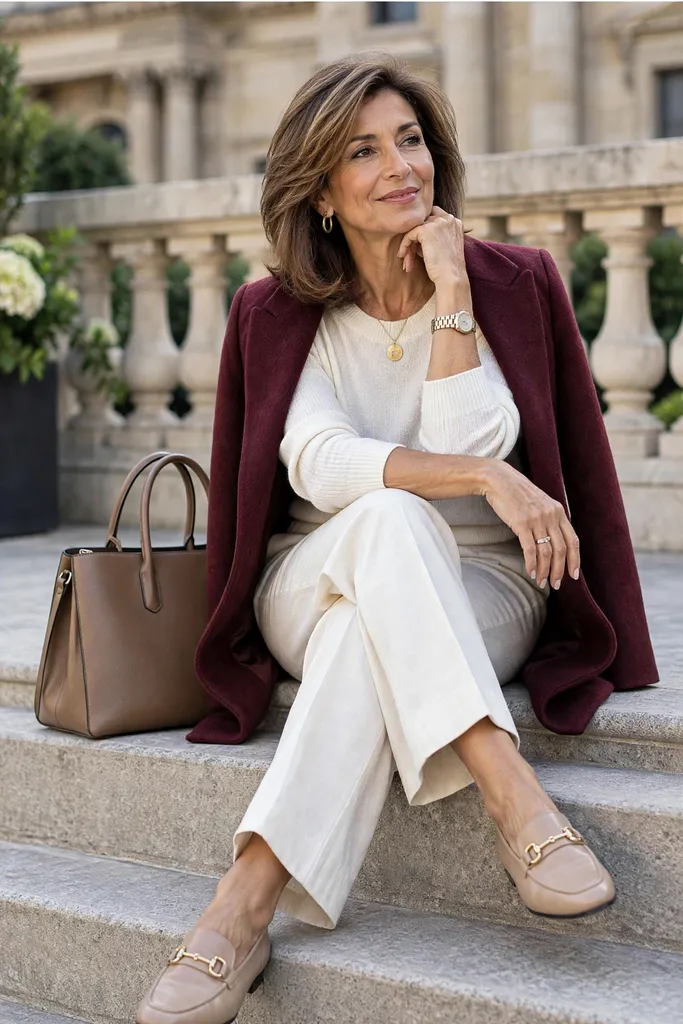
Accessories have a surprising amount of influence over quiet-luxury dressing. When the clothing is simple, every finishing detail shows — which is good news, because small upgrades here cost far less than new clothes.
You do not need a designer handbag. A simple bag with a clean shape, minimal hardware, and a tidy surface often works better than something covered in obvious branding. Look for structured or softly structured silhouettes in smooth leather or quality vegan leather that keeps its lines.
Shoes benefit from the same restraint.
A sleek loafer, pointed or almond-toe flat, clean leather sneaker, simple slingback, or low boot can finish stylish outfits for women over 50 without competing with the clothes. Well-kept shoes — cleaned, polished, heels intact — lift an entire outfit on their own.
Jewelry can stay small but visible. Think hoops, simple studs, a watch, slim bangles, a short chain, or one sculptural pendant rather than several statement pieces fighting for attention. One considered piece reads far more expensive than a handful of loud ones.
The useful shift is from decoration to intention.
This comparison makes the difference easier to spot.
| Instead of This | Try This Instead |
|---|---|
| Large, visible logos on bags and clothing | Clean shapes with subtle, quiet hardware |
| Several statement accessories at once | One noticeable piece with quieter extras around it |
| Very distressed or worn-looking footwear | Simple shoes with a neat, cared-for finish |
| Bags covered in buckles, charms, and decoration | Structured or softly structured bags that keep their lines |
| Constantly rotating trend accessories | A few well-chosen pieces you repeat often and know by heart |
None of these are strict rules.
If you love a bold bag or oversized necklace, wear it. The quiet-luxury approach simply works best when you allow that item to be the focus instead of surrounding it with several other focal points — one hero, a quiet supporting cast.
Fix the Tiny Details That Make Simple Outfits Look Cheap
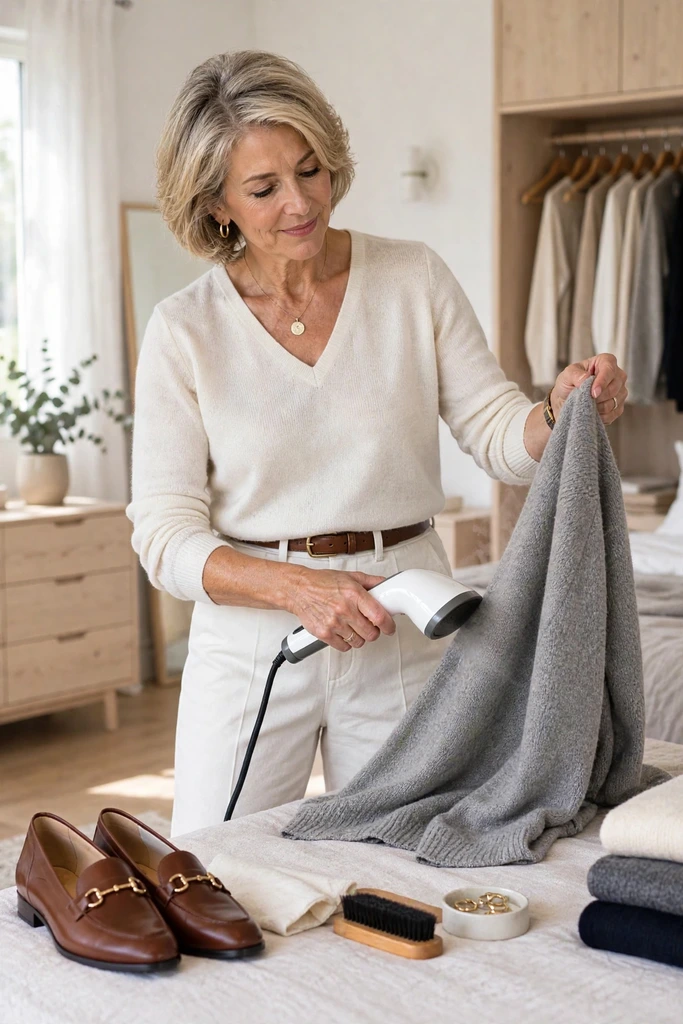
Budget clothes do not automatically look inexpensive. Small finishing details usually have more influence — a $30 sweater with a clean collar and a tidy hem routinely outshines a pricier one with pills and loose threads.
Pilling on knitwear, dragging trouser hems, twisted seams, wrinkled collars, scratched shoes, and loose buttons can distract from an otherwise lovely outfit. These are the little things the eye catches before it registers anything else.
That is useful news because many of these problems cost very little to fix.
A fabric shaver can refresh knitwear in minutes. Replacing flimsy buttons can change the feel of a coat or cardigan — shell or tortoise-shell-effect buttons are a quiet luxury trick all on their own. Shortening trousers can improve the entire silhouette.
If a simple outfit still feels slightly wrong, check these areas before buying something new:
- If trousers bunch heavily at the shoe: try a shorter hem or a shoe with a different height.
- If a sweater looks shapeless: use a small front tuck or choose a slightly shorter length.
- If a blazer feels boxy: push or alter the sleeves before replacing the whole jacket.
- If an outfit feels too plain: add texture through leather, suede, a soft knit, or simple jewelry rather than adding more color.
Tailoring deserves particular attention here.
You do not need to tailor everything you own. Save alterations for hardworking pieces such as trousers, jackets, skirts, and dresses that you plan to wear regularly — the pieces that anchor your outfits week after week.
The better the cost-per-wear, the easier that expense is to justify. A $25 hem on trousers you wear twice a week costs pennies per wear and quietly upgrades every outfit they touch.
One Go-To Quiet-Luxury Formula for Days You Don’t Know What to Wear
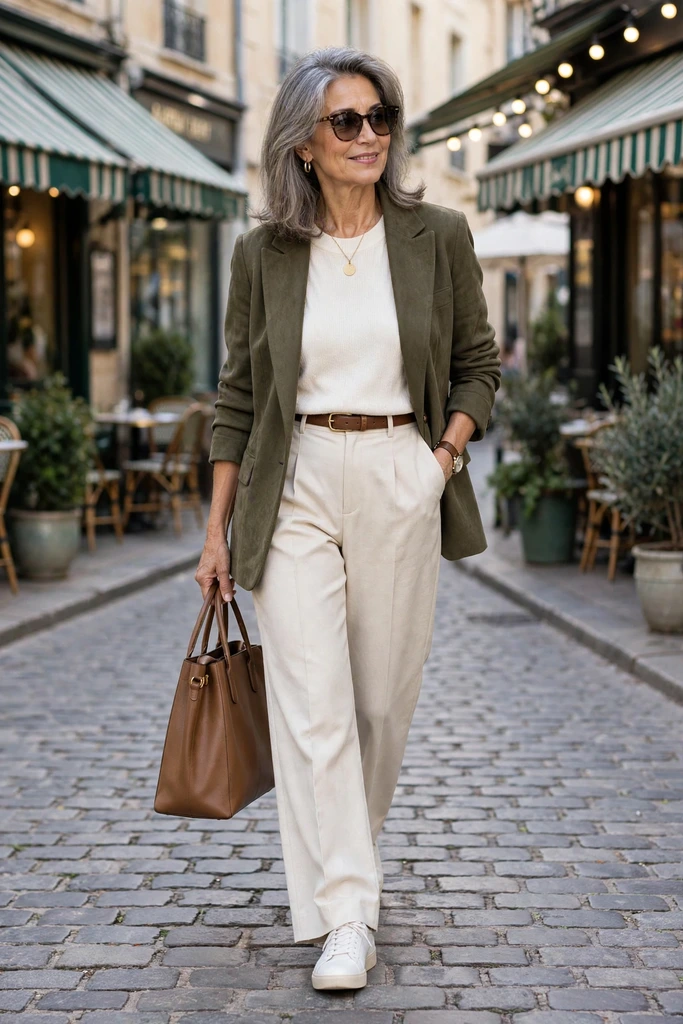
One reason this style works so well for everyday outfits for women over 50 is that it can become a personal uniform rather than another set of fashion rules. A uniform removes the morning guesswork while still looking effortlessly put together.
Start with three parts.
Formula: clean base + polished layer + simple finishing shoe.
That might mean straight trousers + fine-knit sweater + loafers.
It could just as easily mean dark jeans + white shirt + ballet flats, or a column dress + long cardigan + low boots. The formula bends to whatever your lifestyle actually looks like.
Here are a few versions you can keep in rotation.
| Occasion | Outfit Formula | Why It Works |
|---|---|---|
| Errands or coffee | Dark jeans + cream knit + leather loafers | Comfortable, simple, and pulled together without trying |
| Lunch with friends | Fluid trousers + tucked shirt + ballet flats | Soft proportions keep it relaxed but polished |
| Smart casual event | Column dress + blazer + low slingbacks | The long line looks clean while the jacket adds structure |
| Travel day | Straight trousers + T-shirt + clean sneakers | Neat, comfortable, and easy to move in all day |
Once you know your preferred version, change only one piece at a time.
Swap the cream sweater for navy. Trade loafers for boots. Add a scarf in cooler weather or roll the shirt sleeves when it is warm. Small variations keep the uniform from feeling stale while preserving its calm backbone.
That consistency is what turns a collection of wardrobe basics into a personal style — the kind of style people recognize as yours before they can explain why.
FAQs
Yes. Quiet luxury depends far more on fit, fabric quality, calm color coordination, and restraint than on price alone. Start with the simple pieces you already own, wear them in a considered way, and only replace the weakest link when something genuinely needs upgrading — one good piece at a time beats a whole bag of impulse buys.
Cream, navy, camel, chocolate brown, charcoal, olive, black, and soft gray are easy to combine because they create calm, harmonious palettes that the eye reads as costly. But you do not have to avoid color entirely — deep red, muted green, dusty blue, or another favorite shade can look beautiful when everything else in the outfit stays simple and quiet.
Cotton poplin, linen blends, wool blends, fine knits, smooth denim, soft twill, viscose blends, and any fabric with enough weight to drape cleanly can all work beautifully. Fiber content matters less than behavior: how the fabric feels against the skin, how it hangs, how it wrinkles, and how well it holds its shape through a long day.
Very well. Dark jeans, a good T-shirt, a cardigan jacket, and clean loafers can capture the look completely without feeling dressed up. The key is keeping the shapes intentional and avoiding too many competing details — let the clean lines do the talking.
Start with fit. Adjust hems, remove pilling, press collars, clean and polish shoes, and keep bags in good condition. Then simplify the outfit so your best pieces have room to stand out — an edited, well-cared-for look always reads more expensive than a busy one.
The Quiet Part Is the Point
Quiet luxury on a budget is not about chasing labels or buying your way into refinement. It is about fitting well, choosing calm colors, caring for what you own, and editing out everything noisy — small, deliberate choices that cost little and compound beautifully over time.
Start where you are: assess the pieces you already love, fix the few details that drag them down, and let one simple formula carry you through the days when getting dressed feels like work. The expensive look follows naturally.