
Scarf Styling After 50: Move Past the Tied Neck Knot
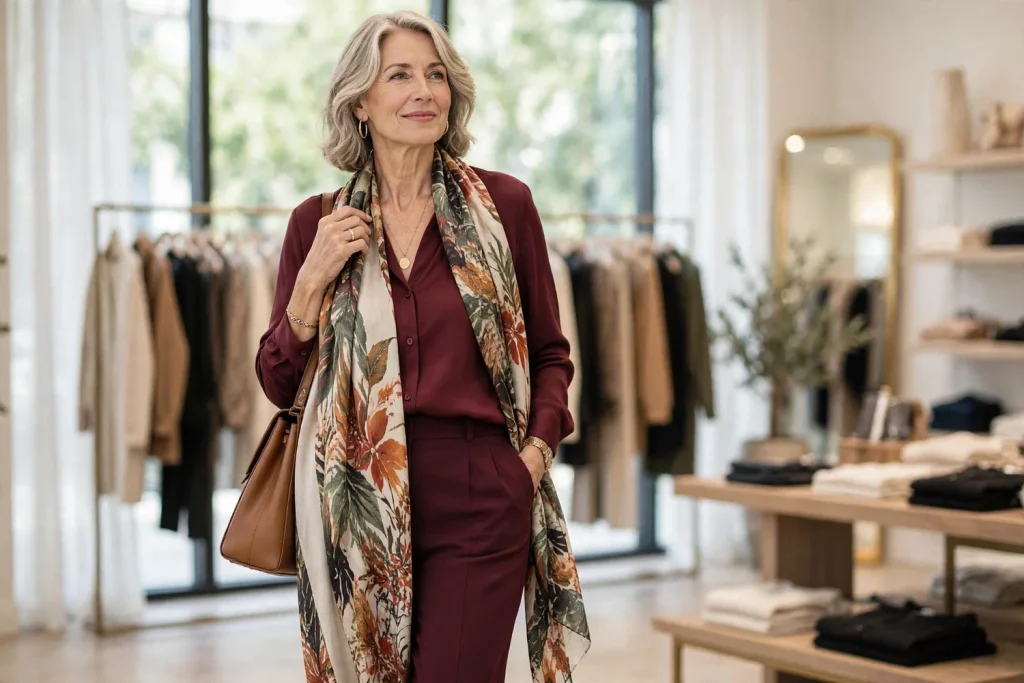
A scarf can pull an entire outfit together in seconds — one sweep of fabric and suddenly the whole look feels finished. But that tight little knot tucked right under the chin can quietly work against you, making an otherwise lovely outfit feel stiff, fussy, or a touch behind the times.
For most women past fifty, the problem is rarely the scarf itself. It is figuring out how to wear one with the pieces that anchor a modern wardrobe — relaxed jackets, easy knits, wider-leg trousers, simple dresses — the very clothes that build stylish outfits for women over 50.
The good news is that you do not need a single complicated tying trick. Once you understand scale, fabric, drape, and placement, the same scarf can add color, soften a neckline, balance your proportions, and make a simple outfit feel genuinely considered.
Why That Tied Neck Knot Can Read Too Formal These Days
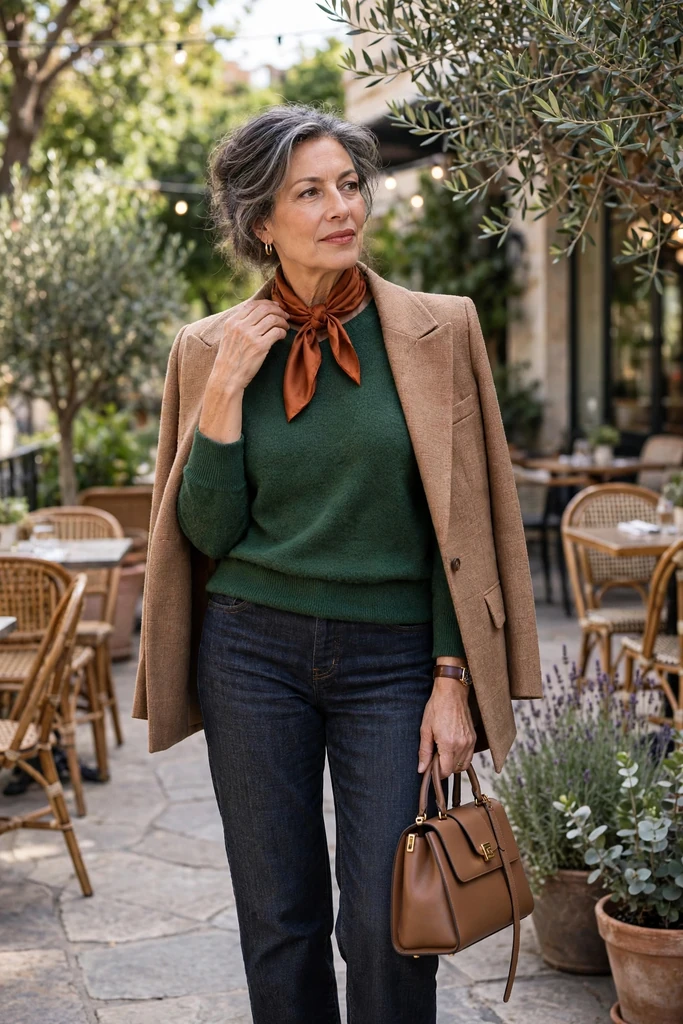
A small scarf tied neatly at the throat can still look beautiful — with a crisp shirt or a plain crewneck, it has real charm. The trouble starts when the knot becomes the main event instead of a quiet part of the whole outfit.
Modern clothing leans toward relaxed proportions these days. Wider trousers, straight jeans, easy oversized shirts, soft jackets, and longer cardigans all look their best when the accessories have some movement too. A heavy, fussy accessory sitting on top of easy clothes can look like it wandered in from a completely different outfit.
A scarf that hangs, folds, or drapes gives the eye a vertical or diagonal line to follow. That gentle movement can make the entire outfit feel calmer and more current than a small knot sitting directly under the chin.
This is not a call to abandon classic scarf ties. It simply means treating the neck knot as one option among many — not the automatic answer every single morning.
Begin With Scarf Size and Fabric Before You Style a Thing
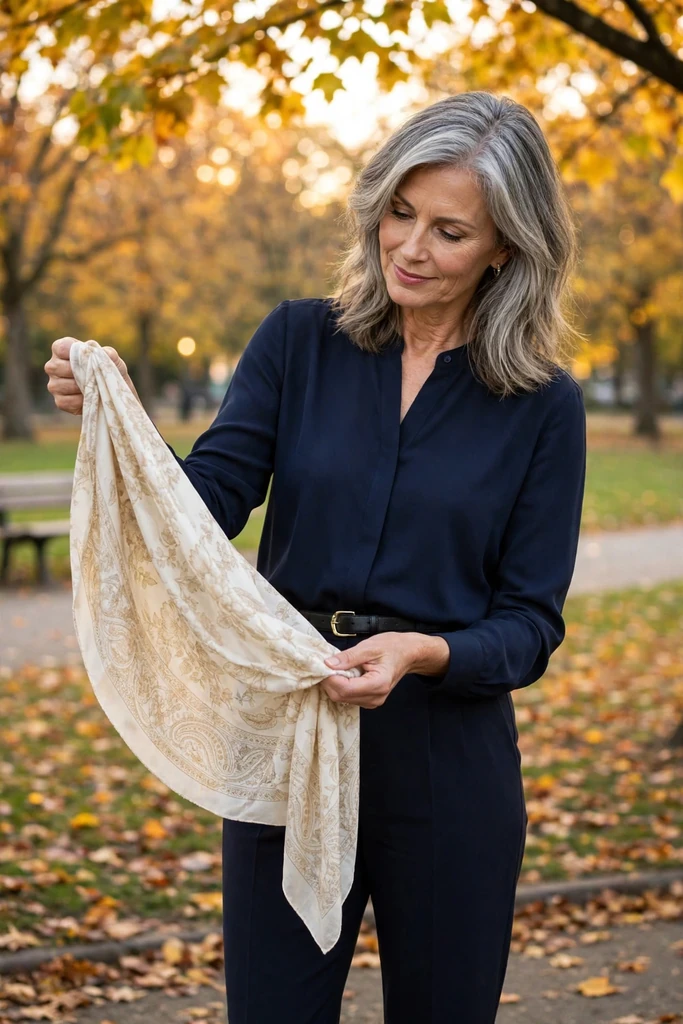
How a scarf behaves in your hands matters far more than which knot you choose. A stiff square of heavy silk and a soft modal rectangle will form completely different shapes against the same jacket, even when tied the same way.
Smaller scarves shine when you want a neat, controlled accent — a pop of print at the collar and nothing more. Larger rectangular scarves bring drape, which works beautifully with casual outfits, long coats, cardigans, and simple dresses that need a little softness.
Before you style anything, scrunch the fabric in your hands and watch how it falls. If it feels stiff and bulky folded up, it will feel bulky around your neck too — the mirror rarely disagrees with your hands. Even better, hold the scarf up against the actual jacket or sweater you plan to wear, since drape is far easier to judge in context than in your palm.
A quick reference makes choosing easier. Keep this guide handy when you are standing in front of the drawer:
| Scarf Style | The Detail That Matters | What It Gives You |
|---|---|---|
| Soft silk square | Featherweight fabric with real fluidity | Polish without extra bulk |
| Long silk rectangle | Enough length to fall below the bust | One clean vertical line |
| Modal or viscose wrap | Gentle drape in a light-to-medium weight | All-day comfort for casual looks |
| Fine wool scarf | A thin weave rather than chunky thickness | Warmth that never crowds the neckline |
| Cotton scarf | A soft, washed finish | Natural beside denim, linen, and relaxed pieces |
Fabric insight: If a scarf keeps you tugging and rearranging all day, the fabric may be working against the outfit. Softer materials settle into place on their own and ask for far less fussing.
Let Your Scarf Hang Long for Length and Easy Movement
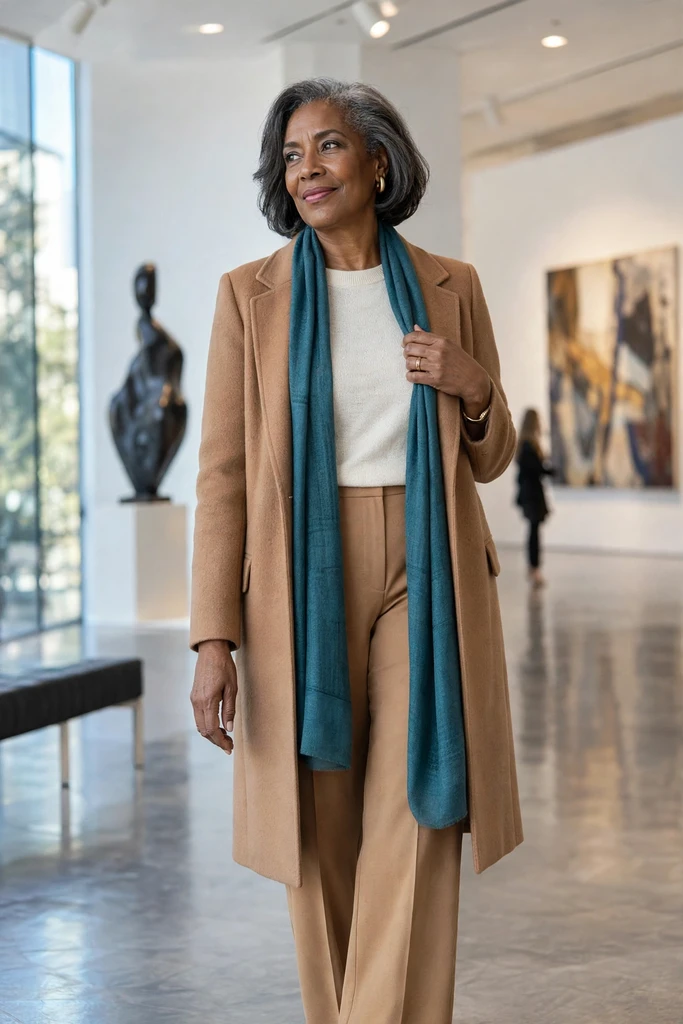
One of the simplest scarf tricks is also the least complicated: stop tying it. Loop a long scarf around the back of your neck and let both ends fall forward toward the front.
Instantly you get two soft vertical lines that break up a sweater, button-down, knit dress, or plain jacket in the best way. It works especially well when the rest of the outfit reads wide — a relaxed sweater with straight trousers, for example, gains shape and direction from that long falling line.
For a little more flair, toss one end casually over a shoulder. The diagonal sweep brings movement across the upper body without parking a tight focal point at the neckline. It is the kind of easy asymmetry that reads intentional rather than accidental.
With a blazer or coat, try tucking the scarf underneath the lapels rather than piling it over everything. A glimpse of print or color inside the jacket looks far more refined than a thick bundle jammed around the collar.
Try this move: Get fully dressed first, then lay the scarf on untied and study the overall silhouette before deciding it needs another fold or knot.
Take the Scarf Off Your Neck: Shoulders, Belts, and Bags
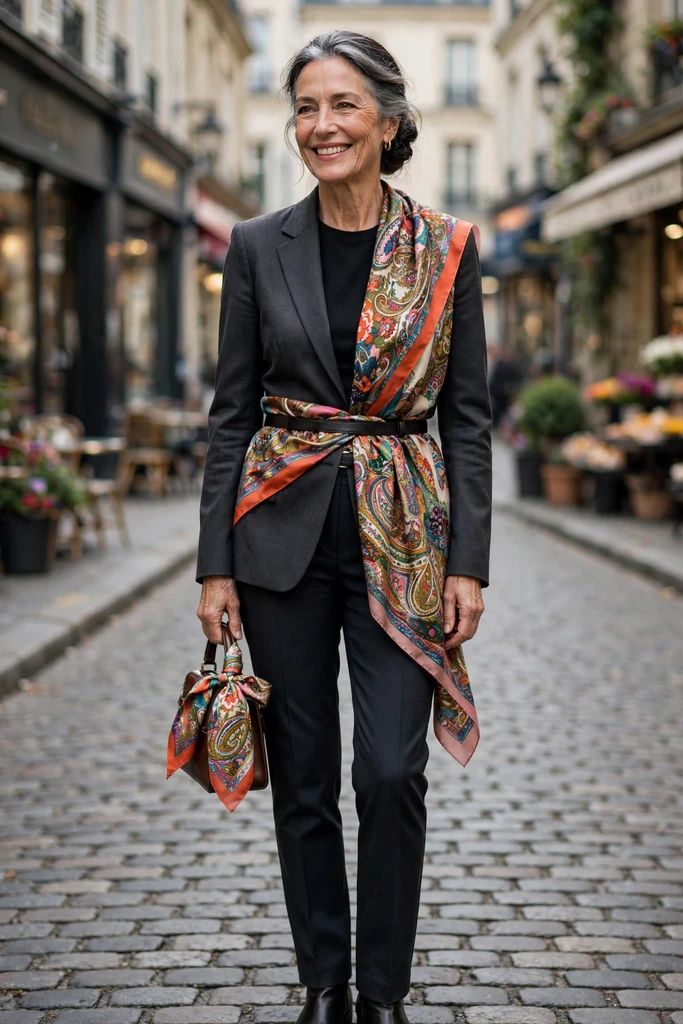
Here is a freeing thought: the scarf never has to touch your neck at all. Moving it somewhere unexpected can make an outfit feel brand new while still delivering the color or print you were craving.
- Over one shoulder: Drape a medium or large scarf over one shoulder with a sweater, simple dress, or long coat, and let it hang instead of arranging it too neatly.
- Under a belt: Lay a long scarf across both shoulders and anchor it lightly with a slim or medium-width belt. It works best when the fabric is thin enough to lie flat.
- Around a bag handle: Knot a smaller silk square onto a plain leather or canvas bag whenever your outfit already carries enough detail near the face.
- Across the shoulders: Open a generous square or rectangle and wear it like a soft wrap over a sleeveless dress or fine knit.
The belt method is especially useful with a plain column of color — navy trousers with a navy knit, for instance. The scarf introduces pattern while the belt keeps the fabric from overwhelming your shape.
The bag scarf earns its place for the opposite reason: it keeps color away from the face and neckline, which helps when you are wearing statement earrings, a patterned blouse, or a stronger necklace.
Pair Your Scarf With Necklines, Jackets, and Knits
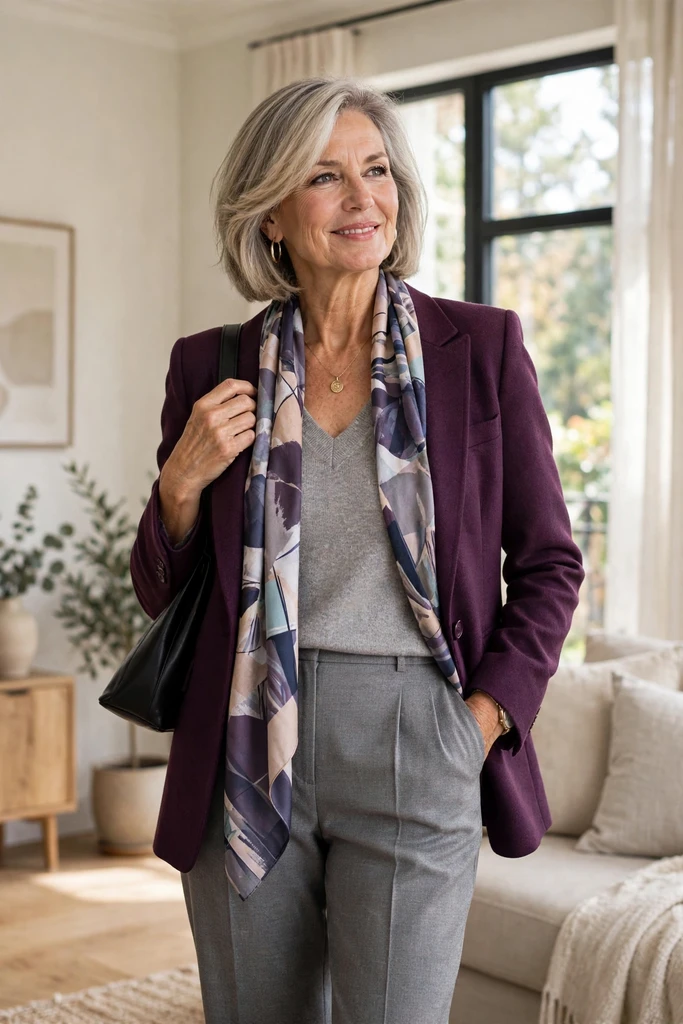
Scarf styling gets much easier once you treat the neckline as part of the decision. The scarf and the neckline should work together rather than compete for the same small patch of space.
A V-neck sweater already creates an open, vertical shape, so let a long, loosely draped scarf follow that direction instead of filling the neckline back in.
Crewnecks give you more room to play. You might rest a small silk scarf just outside the collar, or reach for a long rectangle when you want a stronger vertical line. With a button-down shirt, leave one or two buttons open and settle the scarf inside the collar — softer than wrapping fabric tightly over the collar.
Jackets need slightly different thinking. A blazer looks cleanest when the scarf sits beneath the lapels, while a trench or simple wool coat can carry a longer scarf hanging outside without looking bundled up. With an open cardigan, either approach works — just let the scarf echo whichever side of the outfit feels less busy.
Comfort upgrade: If chunky scarves make your coat feel tight across the shoulders, switch to fine wool, silk, or modal. Warmth does not always require thickness.
Let Color and Print Pull a Simple Outfit Together
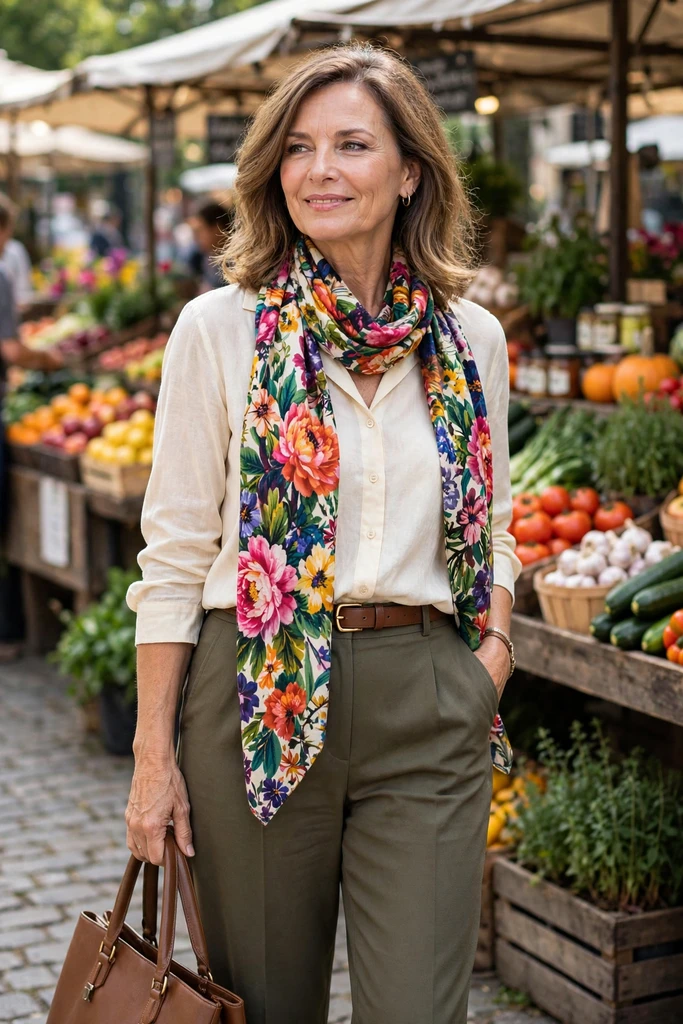
A scarf earns its keep when it solves a color problem rather than creating one.
If an outfit feels flat, choose a scarf that echoes one color already present in the look — your shoes, your bag, even your trousers. That one small connection makes a pattern feel deliberate instead of random.
There is no need for an exact match. A scarf with soft blue in it sits beautifully against navy trousers, while rust, cream, or olive tones connect warmly with brown shoes. Close counts — it is the relationship between the colors that matters. Jewelry counts too: a warm gold edge on a scarf can quietly tie in gold hoops or a tan leather watch strap.
This is one of the fastest ways to build stylish outfits for women over 50 out of plain wardrobe basics. A single scarf can shift the whole mood of the same shirt, trousers, and jacket without you buying a single new top. And the same base outfit can travel across occasions with just a scarf change:
| Your Base Outfit | Swap In This Scarf | Where It Lands |
|---|---|---|
| White shirt + dark jeans | Printed silk square | Lunch dates or relaxed dinners |
| Fine knit + tailored trousers | Long tonal scarf | Workdays, appointments, travel |
| Simple midi dress | Soft patterned wrap | Dinner out or evening occasions |
| Blazer + tee + jeans | Slim silk rectangle | Smart-casual plans |
| Coat + knit + trousers | Fine wool scarf | Cold-weather errands |
Color tip: When bold prints feel like too much, choose a scarf built from two or three related colors. You still get visual interest without letting the accessory run the whole show.
Rethink the Habits That Make Scarves Look Dated
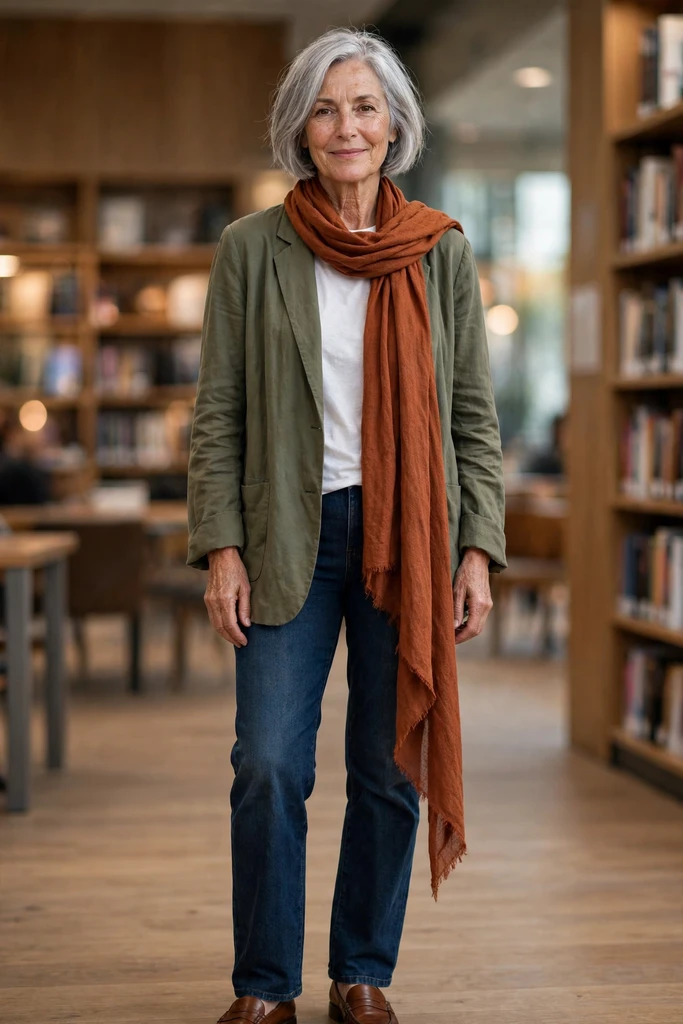
Scarves rarely look dated on their own. It is the combination — scale, knot, print, and the clothes around them — that tips a look backward in time.
Small tweaks usually fix it, so there is no need to donate the scarves you still love. When something looks slightly off in the mirror, run through this quick comparison:
| What’s Bothering You | The Fix to Try |
|---|---|
| Tight knot cinched right under the chin | Loosen the wrap or let one end fall lower |
| An oversized scarf drowning a small neckline | Reach for a slimmer rectangle or a softer weave |
| A loud scarf fighting a printed blouse | Give it a solid-colored top to play against |
| Scarf and chunky necklace competing | Let one statement piece own the face area |
| Perfectly matched ends looking too arranged | Allow one side to hang a touch longer |
Another quiet culprit is stacking too many traditionally polished pieces at once. A silk scarf, pearls, a structured handbag, a tailored jacket, and dressy shoes are each lovely alone, but together they can read more formal than intended.
When that happens, keep the scarf and relax something else. Try straight jeans instead of dress trousers, loafers instead of pumps, or a soft knit instead of a crisp blouse. That polished-meets-relaxed mix is exactly what makes modern dressing over 50 feel effortless instead of overdone.
One Scarf Formula to Repeat All Week Long
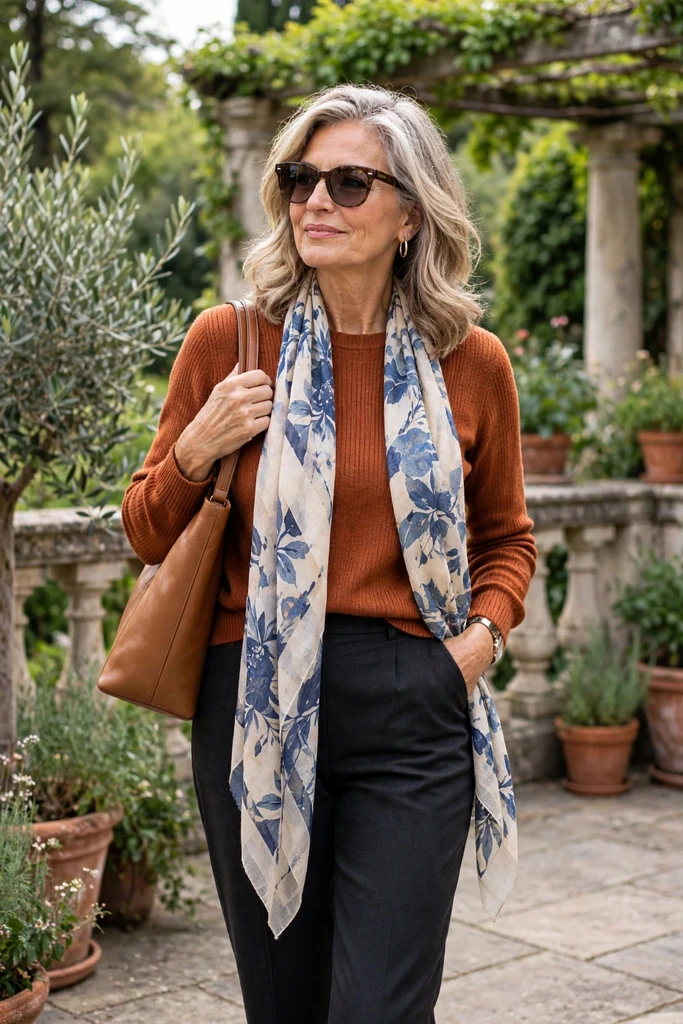
You do not need a fresh scarf technique for every outfit. One dependable personal formula is far more useful than a dozen half-remembered knots.
Formula: simple base + one easy layer + softly draped scarf
Start with straight jeans, a fine knit, a blazer, and a long silk scarf left open. Then remix the pieces — trousers instead of jeans, a cardigan instead of the blazer, a button-down instead of the knit — while the same structure holds everything together. Keep the shoes simple and the bag unfussy, and the formula practically styles itself.
Warmer weather gets the same treatment: a linen shirt, ankle trousers, and a featherweight scarf knotted loosely on your bag. In colder weather, keep the formula and switch to a fine wool scarf tucked under your coat.
The aim was never to make the scarf the loudest thing you are wearing. It should simply help the clothes look connected, balanced, and easy — which, honestly, is the whole game.
FAQs
Start by loosening the styling instead of retiring the scarf. Long open drapes, soft folds, uneven ends, and scarves tucked beneath jacket lapels all feel more relaxed than tight, heavily structured knots. Pair the scarf with clean, modern basics so the accessory reads intentional rather than overly formal.
A long scarf worn open creates a flattering vertical line just below a round neckline. If you prefer less fabric, a smaller silk square resting just outside the collar works beautifully. In the end, the scale of the top and the scarf matters more than any strict neckline rule.
Yes, as long as each piece gets enough visual breathing room. A slim chain sits comfortably beside a softly draped scarf, while a bold statement necklace usually looks cleaner without extra fabric competing in the same area. When the pairing feels busy, shift the scarf to your bag or shoulders instead.
Slide a long scarf underneath the blazer lapels and let the ends fall straight down. A small silk scarf also works tucked inside an open shirt collar beneath the blazer. Both approaches keep the jacket’s shape visible instead of burying it under fabric.
Absolutely, especially in soft fabrics with simple styling. Oversized scarves make wonderful wraps, layer easily over coats, and can be belted lightly over a dress or knit. If a large scarf feels overwhelming, choose a finer weave or let more of the outfit underneath show through.