
Finding Your Most Flattering Colors After 50: A Simple Undertone Guide
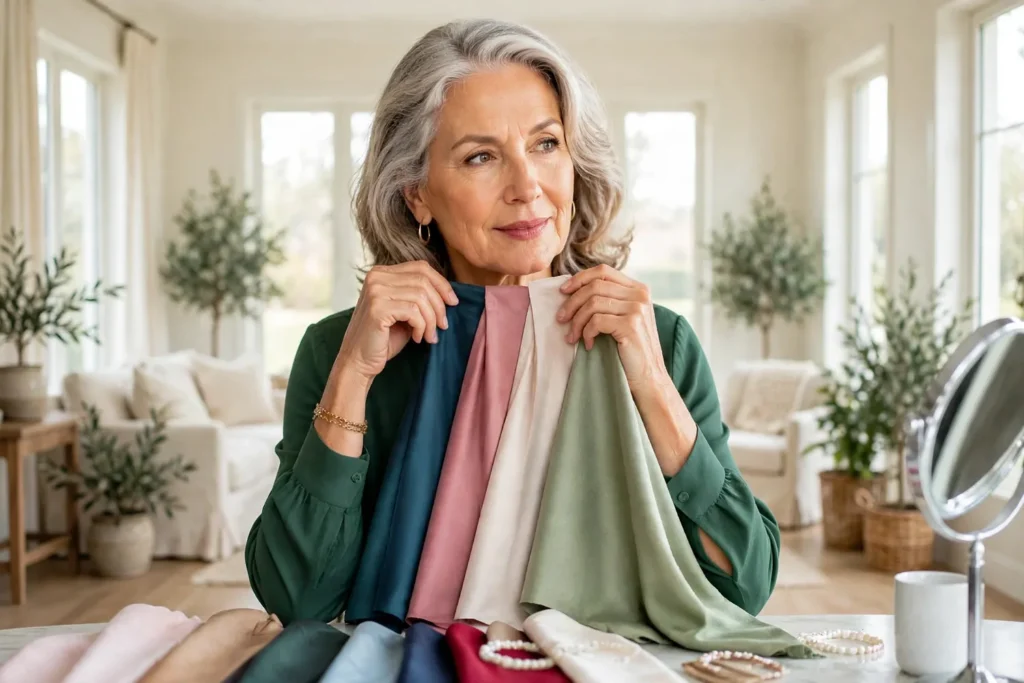
There comes a point when the colors you always reached for stop doing you any favors — a shade that once lit up your face can start looking harsh, flat, or oddly disconnected from who you see in the mirror.
That shift says nothing bad about your style. As hair color softens, skin tone settles, and natural contrast changes, the shades that flatter you most are simply due for a fresh look.
Once you understand your undertone, putting together stylish outfits for women over 50 gets noticeably easier — a handful of simple checks is all it takes to build a palette that feels current, flattering, and entirely your own.
Table of Contents
- Why the Colors That Suited You Can Shift With Time
- What Undertone Means and Why It Guides Better Choices
- Quick At-Home Checks That Reveal Your Undertone
- Building a Closet Around Shades That Back You Up
- Why Fabric and Finish Change How Color Reads After 50
- Simple Color Recipes for Getting Dressed Fast
- Color Slip-Ups Worth Fixing (and Easy Tweaks)
- Landing on Your Own Color Style Without Overthinking
- FAQs
Why the Colors That Suited You Can Shift With Time
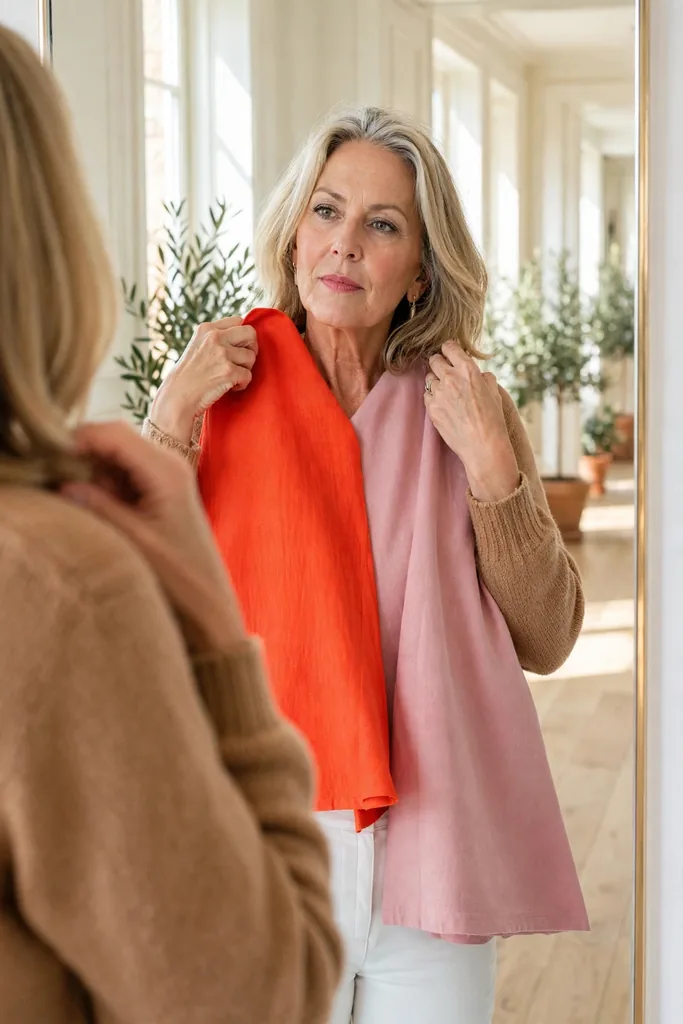
Plenty of women treat color like a rulebook — pick your season, memorize the list, never stray. The truth is far more personal than that.
You will not need any special equipment, and nothing here requires an artist’s eye — just daylight, your closet, and a willingness to look closely.
Age gradually reshapes your hair, skin, and natural contrast — and that reshuffling changes how every shade behaves against your face. A vivid color that once added spark can start competing with your features, while a gentler tone suddenly brings everything into balance.
The grey transition is the clearest example. As hair lightens, the contrast between hair and skin drops, and high-contrast pairings like stark black with bright white can start to look severe — which is why softer, lower-contrast combinations often feel more flattering in this season of life.
None of this means starting your closet from scratch. Tweaking tone, softening contrast, or switching a fabric finish is often enough to make pieces you already own feel current again.
There is a confidence thread running through all of this, too. When your wardrobe lines up with your coloring, mornings stop being a negotiation — fewer almost-right pieces, more outfits that just click.
What Undertone Means and Why It Guides Better Choices
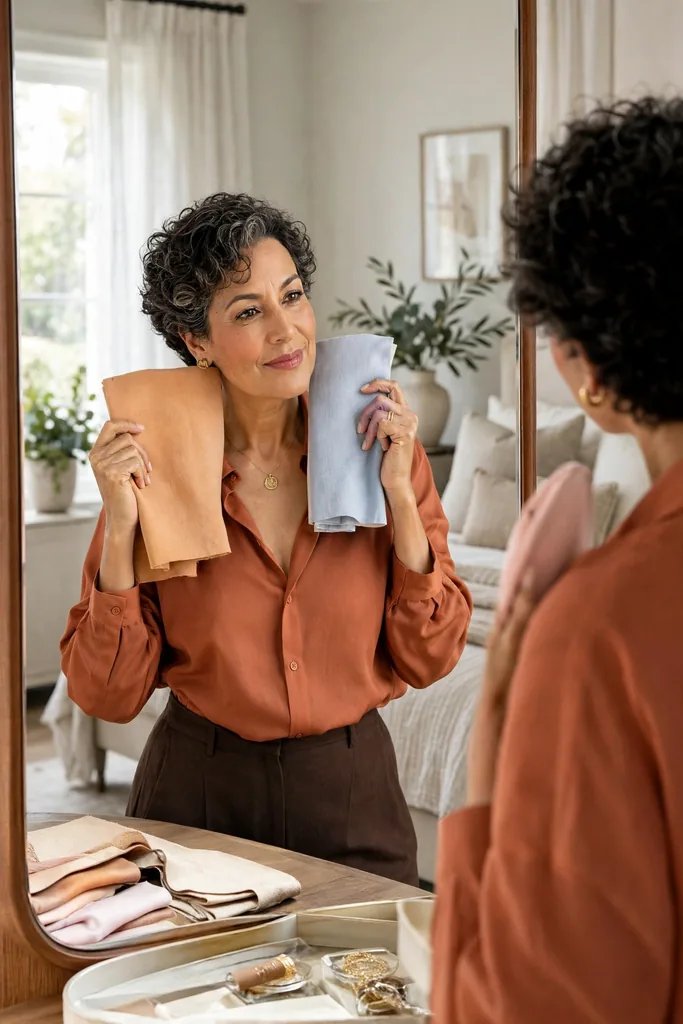
Undertone is the quiet color living beneath your skin’s surface, and it usually falls into one of three camps: warm, cool, or neutral.
Do not confuse it with skin shade. Fair skin can carry a warm undertone, and deep skin can carry a cool one — the two run on separate tracks.
This is not about fencing yourself into a short list of approved colors. It is about learning which shades settle your face into its most balanced version.
Start here:
- Warm undertones: your happiest shades are the earthy ones — camel, olive, cream, a warm-leaning navy, and peach are the ones to pull first.
- Cool undertones: your power players are jewel tones — pull them first, then build around crisp white, berry shades, blue-based reds, and cooler grays for everyday wear.
- Neutral undertones: the most flexible of the three, borrowing from both sides depending on the precise shade.
One quick experiment tells you plenty: hold different fabrics up to your face in daylight and watch which ones leave your skin looking brighter and more rested.
Do the comparison in natural daylight, ideally near a window around midday. Store lighting is designed to flatter the merchandise, not your skin — shades that look perfect under boutique spotlights can tell a very different story at home.
Keep a running note on your phone of every shade that passes the test — after a week of paying attention, your personal palette will have written itself, and shopping gets dramatically easier.
The comparison below gives you a simple way to read what you are seeing.
| Undertone | What to Look For | Shades Worth Trying |
|---|---|---|
| Warm | golden, peachy, or olive hints in the skin | cream, camel, rust, olive |
| Cool | pink, rosy, or blue hints in the skin | navy, berry, charcoal, sapphire |
| Neutral | an even mix of warm and cool qualities | soft white, teal, blush, balanced neutrals |
Quick At-Home Checks That Reveal Your Undertone
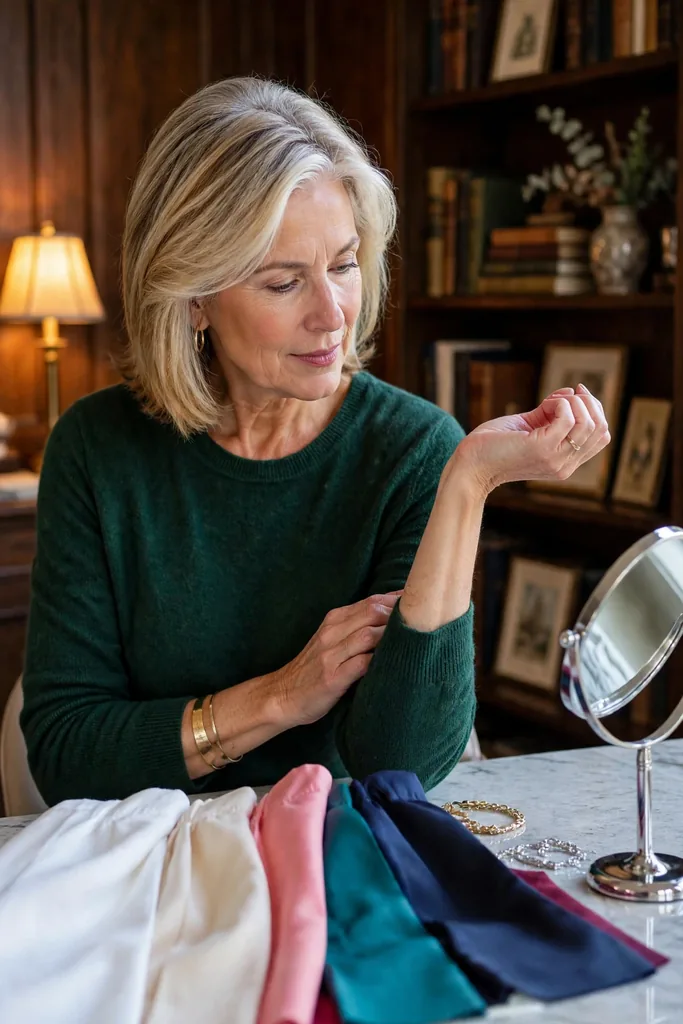
Skip the pricey color consultation for now — your own closet already holds the clues you need.
Run through these easy checks:
- Study the veins on the inside of your wrist in daylight: a blue or purple cast leans cool, while a greener cast leans warm.
- Hold silver and gold jewelry up to your face in turn, and notice which metal leaves your skin looking brighter and more awake.
- Hold a stark-white top and a cream one side by side against your face and note which feels kinder to your complexion.
- Dig out old photos of outfits you loved — the colors you kept reaching for usually reveal a pattern.
The fit connection: Color behaves a lot like fit: the right call never changes who you are — it just brings everything into better balance.
Snap a photo of yourself in each test shade — the camera often reveals differences your eyes miss in the mirror.
If your tests point in different directions — gold wins but cream loses, say — you are probably neutral, and that is genuinely good news: it means you can borrow from both sides and should simply audition each shade on its own merits.
The chart below turns those checks into everyday situations, so undertone stops feeling like a complicated fashion rule.
| Check | How to Try It | What It Tells You |
|---|---|---|
| Jewelry check | hold silver and gold near your face, one at a time | the metal that brightens your face wins |
| White check | compare a bright-white top with a cream one | the shade that softens your complexion wins |
| Fabric check | hold scarves or shirts up to your face | less shadowing and a more natural glow wins |
| Lipstick check | try a warmer tone against a cooler one | the more balanced-looking one wins |
Building a Closet Around Shades That Back You Up
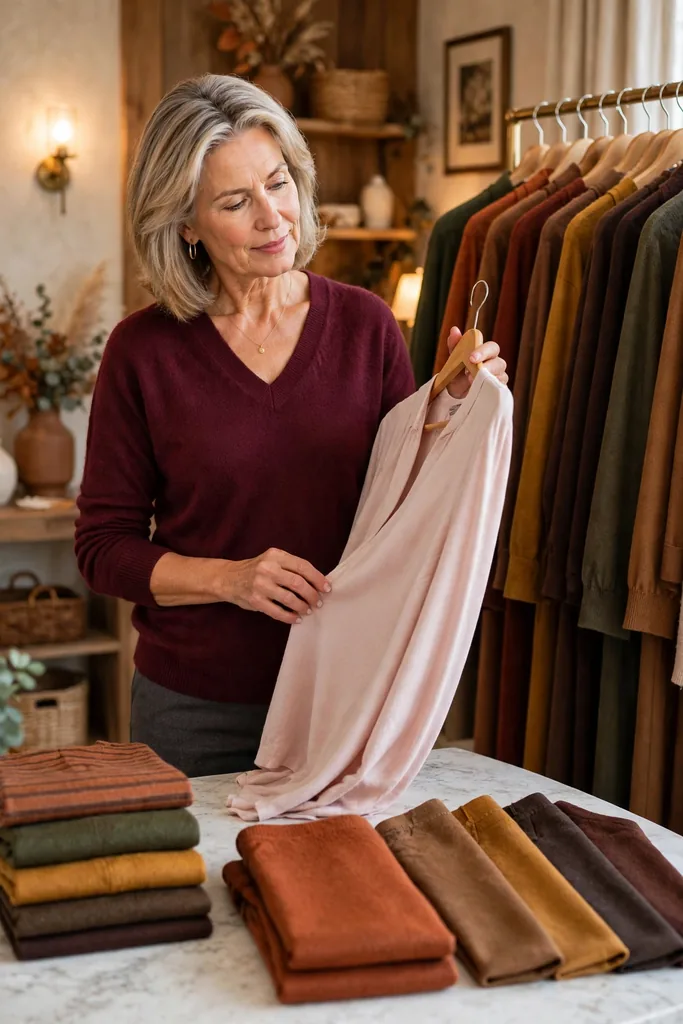
With your undertone roughly mapped, the next move is putting it to work in your closet.
You do not need a rainbow to build a strong wardrobe. Most women find that a tight edit of dependable shades makes getting dressed far simpler.
A dozen well-chosen pieces in harmonious shades will out-dress a closet three times its size.
This is exactly where a capsule wardrobe over 50 earns its keep. Rather than buying random one-offs, you start choosing colors that naturally mix with each other.
Build it from:
- A couple of neutral workhorses for trousers, jackets, and skirts.
- Several tops in your standout shades — neckline pieces do the heaviest lifting.
- An accent shade or two for character.
- Accessories picked up in your standout shades.
What sits nearest your face carries the most weight. The pieces framing it — a blouse, sweater, scarf, or jacket — set the tone for everything else.
When you shop, start with the face-framing pieces. A new blouse or scarf in your best tone will do more for your wardrobe than another pair of trousers, because it upgrades every bottom half you already own.
Budget-friendly swap: Before you replace a single thing, try relocating the unflattering colors away from your face — a jacket, cardigan, or scarf puts welcome distance between the shade and your complexion.
Why Fabric and Finish Change How Color Reads After 50
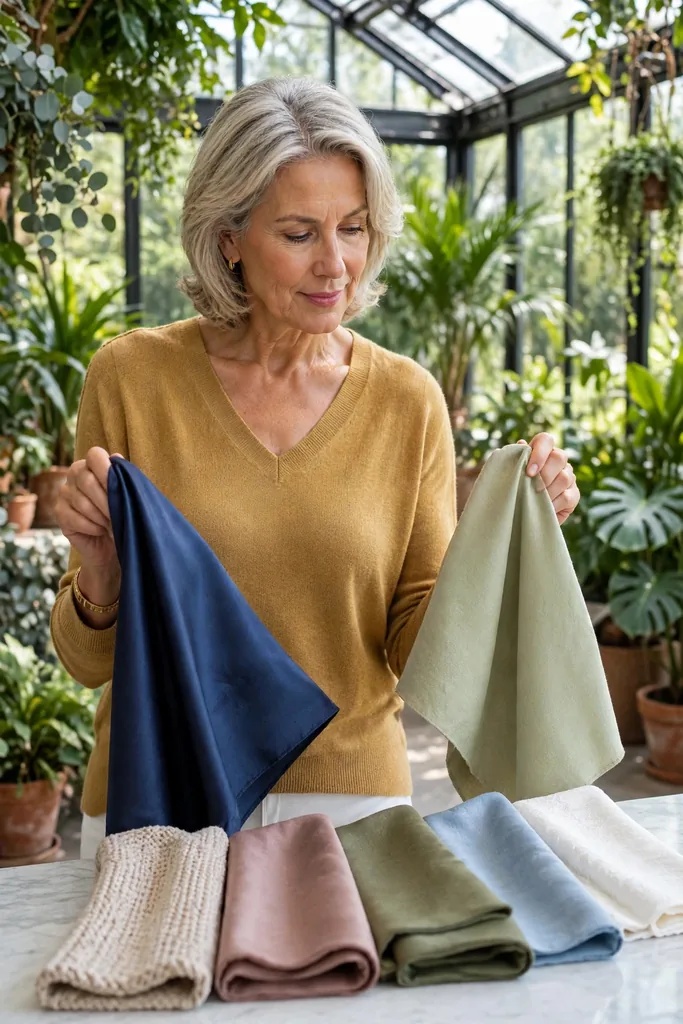
The shade itself is only half the story — how a fabric catches the light decides the rest. The way light plays across a fabric changes how its color behaves near your face.
Matte weaves like cotton or linen read softer, while anything with sheen can make a color hit harder right next to your face.
That balance matters more with a mature wardrobe. A saturated shade in a soft weave can read refined and calm, while the identical color in something glossy can overpower your features.
The same thinking applies to accessories. A matte leather bag or brushed-metal jewelry keeps color quiet near your face, while high-shine finishes — patent leather, mirror-gloss buckles — bounce extra light and attention upward, which is worth remembering when an outfit feels louder than expected.
| Fabric | How Color Behaves | Where It Shines |
|---|---|---|
| Soft cotton | color reads relaxed and easy | everyday tops |
| Linen blends | color takes on a natural, lived-in feel | casual layers |
| Silk or satin | adds glow and punch to color | handle strong shades with care |
| Knit fabrics | takes the edge off bold color | sweaters and cardigans |
Beautiful color was never about volume. Nine times out of ten, a polished outfit is just shades that let your features lead.
Simple Color Recipes for Getting Dressed Fast
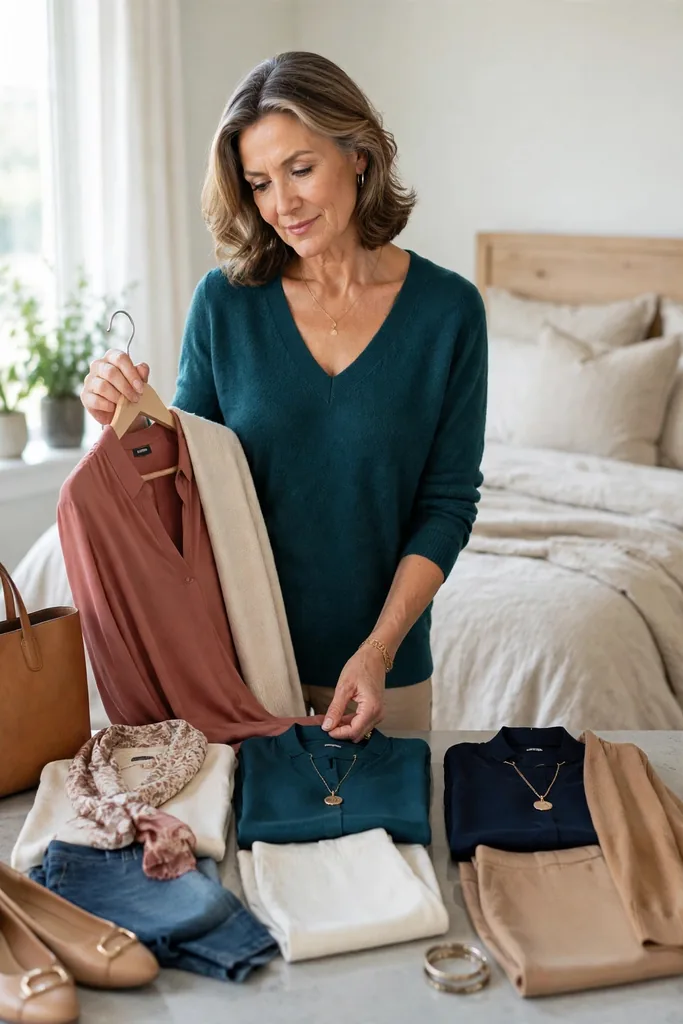
Undertone knowledge pays off most when it speeds up your mornings.
Rather than starting every morning from zero, save two or three go-to color recipes you can reach for without thinking.
For example:
Formula: your most flattering neutral + one easy layer + a color that feels like you
Warmth comes easy with a cream sweater, olive trousers, and gold accessories; cooler contrast arrives with a charcoal cardigan over a berry blouse and dark denim.
That is the beauty of a good formula — easy to execute, still unmistakably you.
For evenings, the same skeleton works dressed up: a flattering neutral in a richer fabric, one comfortable layer with a little structure, and your personal color showing in a blouse or a piece of jewelry. The recipe does not change — only the ingredients get fancier.
| Moment | The Combination | Why It Lands |
|---|---|---|
| Coffee with friends | soft sweater + straight-leg jeans + a scarf that matches | relaxed, with color that looks intentional |
| Work or meetings | blazer + neutral trousers + a colored blouse | professional, never flat |
| Travel days | knit layer + easy trousers + comfortable shoes | moves well, still looks pulled together |
| Weekend errands | casual top + denim + one accent accessory | simple, but finished |
Color Slip-Ups Worth Fixing (and Easy Tweaks)
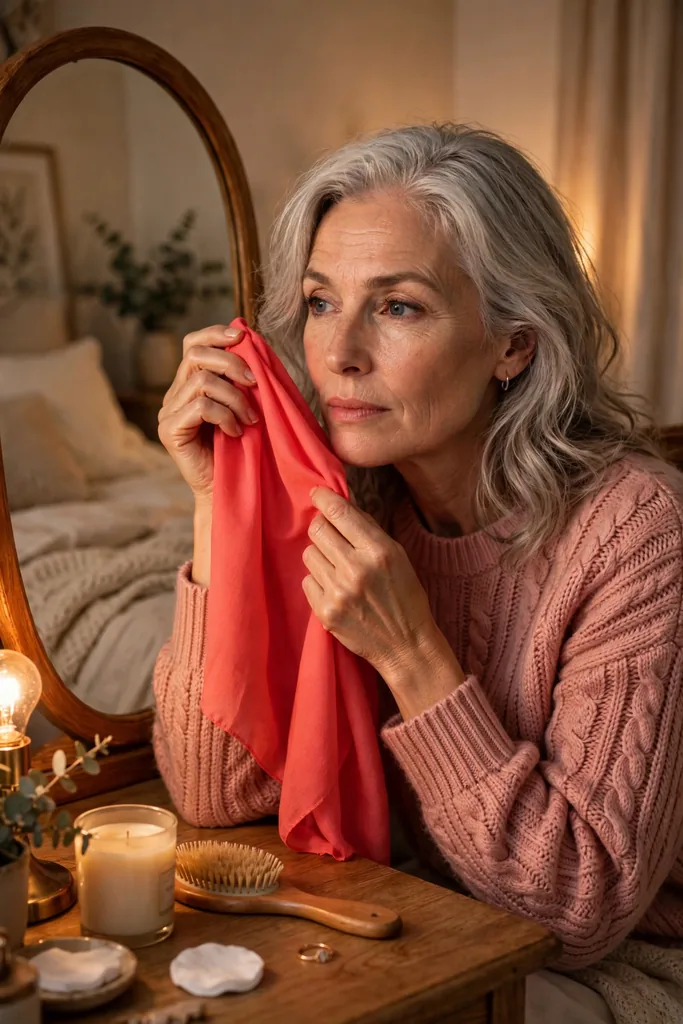
Finding your colors rewards experimenting, not rule-following — and small corrections go a long way.
| The Habit | The Smarter Move |
|---|---|
| wearing only black because it feels safe | bring in softer neutrals or some color near your face |
| grabbing trendy shades without testing them first | audition the color in a scarf or top before committing |
| clinging only to the colors of your younger years | revisit those favorites in updated, softer tones |
| buying a whole outfit in a single color | mix your best shades with dependable basics |
Some colors still have a place — the version just needs updating. A loud pink can mellow into a soft rose; stark black can ease into charcoal; bright white can warm into cream.
Black deserves a special mention, since so many of us treat it as a uniform. You do not have to give it up — just move it south. Black trousers or a black skirt keep the slimming, grounding effect while a softer shade near your face does the flattering work.
The point was never to drain the personality from your closet. It is about a closet that fits the woman you have become.
Landing on Your Own Color Style Without Overthinking
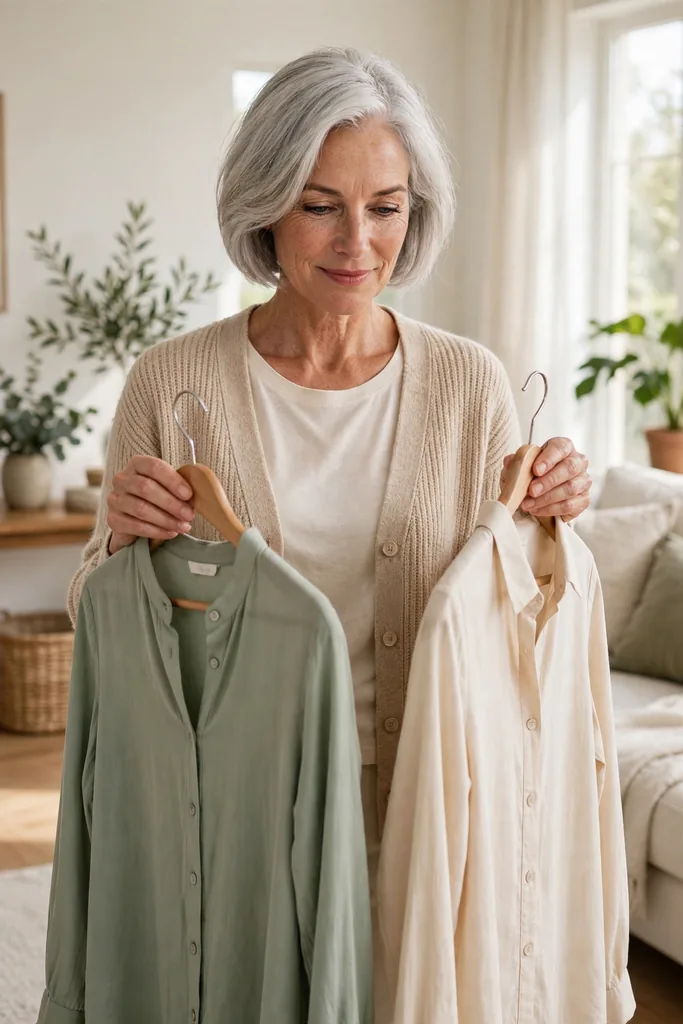
Your best colors should simplify getting dressed, not hand you another rulebook.
Start with what your hand already reaches for — the pieces you wear on repeat are telling you something.
Ask yourself:
- Which necklines make you stop and smile?
- Which shades make people ask what you are wearing?
- Which shades pull their weight across more than one season?
- Which garments never leave the hanger because something about them feels wrong?
Give it a few weeks and those answers will have quietly written your personal color story for you.
One trick that helps: photograph your outfits in daylight. The camera is brutally honest about which colors sit well on you and which ones fight your complexion — it sees what the bathroom mirror politely hides.
That story pays off when building everyday outfits for women over 50, because your wardrobe starts working as one instead of a pile of separate purchases.
FAQs
What is the simplest way to spot my undertone after 50?
In daylight, pay attention to what colors, metals, and neutrals do next to your face. When one of them leaves your complexion looking even and rested, it is usually pointing straight at your undertone.
Does undertone actually shift with age?
The underlying undertone tends to hold steady, though shifts in hair color, skin, and contrast can change which exact shades suit you best — expect your favorites to need the occasional small refresh. If an old favorite suddenly feels harsh, try the same color family two shades softer before abandoning it entirely.
Are there colors women over 50 should steer clear of?
Nothing is fully off the table. If a shade overwhelms you, dial it back to a softer version, keep it below the neckline, or let a flattering neutral do the grounding work.
Does learning my undertone mean I have to replace everything I own?
Not even close. Begin with what is already hanging in your closet and layer new colors in gradually — a few thoughtful additions can wake the whole wardrobe up.
After 50, are neutrals the safest bet?
Neutrals earn their place because everything mixes with them, but they were never meant to be the whole story — personal colors and accents are what give an outfit its voice. Start with neutrals as your base and let one personal color do the talking — that ratio rarely fails.